
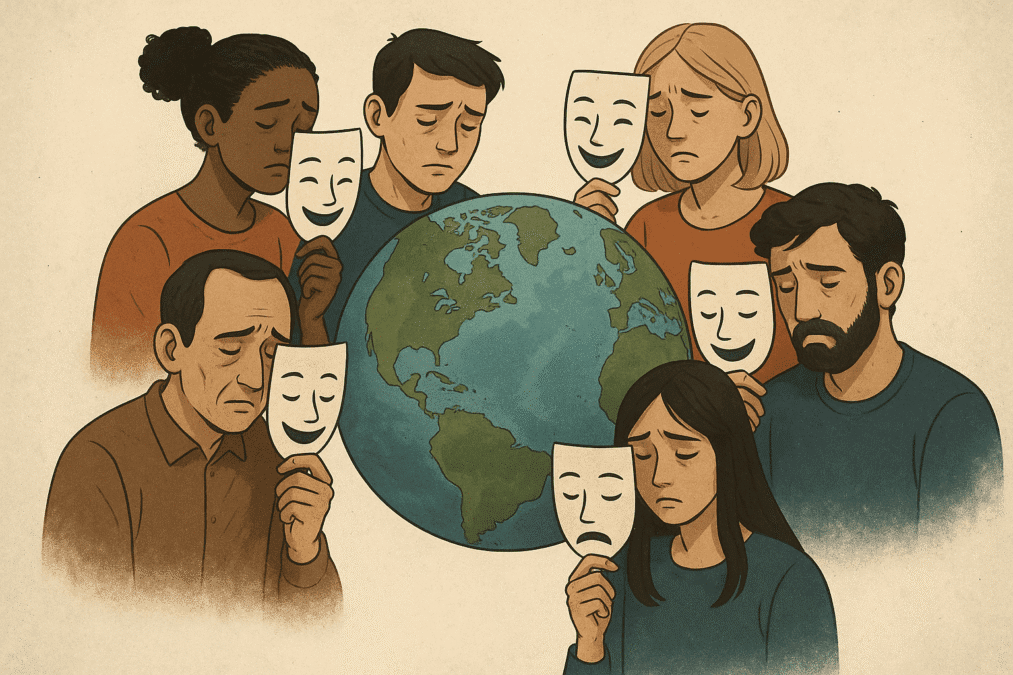
Mental health has finally entered mainstream conversations, but despite all the progress, we are still not addressing the Global Mental Health Crisis 2025 at the scale it demands. The pandemic exposed existing cracks, and while awareness campaigns have been helpful, the stigma, inequality, and systemic neglect continue to harm millions worldwide. In fact, according to the World Health Organization (WHO), nearly one billion people live with a mental disorder, yet the majority receive little or no treatment.
This article explores the silent aspects of the crisis, the challenges we don’t openly discuss, and the urgent changes needed to ensure mental health is treated with the same priority as physical health.
The Silent Epidemic of the Global Mental Health Crisis 2025 Nobody Wants to Face
Mental health struggles are often invisible. Unlike a broken bone, depression or anxiety cannot always be seen. This invisibility leads to underreporting, misdiagnosis, and, in many cases, dismissal. In countries with limited mental health infrastructure, it is common for people to suffer in silence, believing their struggles are “just in their head.”
The reality is that suicide is one of the leading causes of death among young people worlBusinessdwide, claiming more lives annually than war or natural disasters. Yet, mental health funding accounts for less than 2% of most countries’ health budgets. This shocking imbalance highlights how the crisis remains largely unspoken in global health discussions.
Why Stigma Still Holds Us Back
We’ve seen campaigns like Bell Let’s Talk and World Mental Health Day, but stigma remains a massive barrier. In many cultures, admitting to mental health struggles is still seen as a weakness. Men, especially, face societal pressure to remain “strong,” leading to suppressed emotions and untreated disorders.
The stigma doesn’t just come from society—it exists within workplaces, schools, and even healthcare systems. This stigma is one of the biggest barriers fueling the Global Mental Health Crisis 2025. A person with depression might avoid seeking therapy because they fear being labeled “unstable.” This silence continues to fuel the cycle of untreated illness.
The Unequal Reality of Global Mental Health
Another overlooked aspect is the global inequality in mental health care. High-income countries are beginning to integrate mental health services into primary care, but in low- and middle-income nations, mental health facilities are scarce or nonexistent.
For example, some African countries have fewer than one psychiatrist for every 500,000 people, compared to Europe where mental health professionals are far more accessible. This gap highlights how the Global Mental Health Crisis 2025 isn’t just about awareness—it’s about access, affordability, and systemic neglect.
Digital Solutions: A Double-Edged Sword
With the rise of digital health apps and teletherapy, access has improved for many. Platforms like BetterHelp and Talkspace are helping to bridge the gap, especially in countries where stigma prevents face-to-face therapy. These digital tools are becoming a lifeline in the Global Mental Health Crisis 2025, though they cannot replace systemic reforms.
However, relying too heavily on digital tools brings its own challenges:
- Privacy concerns around data security
- Accessibility issues in regions with poor internet coverage
- Quality control in unregulated online therapy services
Digital tools are promising, but they cannot replace systemic reforms and stronger global investment in mental health care.
What We’re Still Not Talking About
The Global Mental Health Crisis 2025 involves conversations that remain largely absent from public discourse. Many critical issues are overlooked, leaving millions without the support and recognition they urgently need.
- Mental health in conflict zones: Refugees and displaced people suffer extreme trauma, yet mental health is rarely prioritized in humanitarian aid.
- Economic cost of neglect: Untreated depression and anxiety cost the global economy over $1 trillion each year in lost productivity.
- Children and adolescents: While adult mental health is discussed, the growing crisis among teens—fueled by social media pressures, climate anxiety, and academic stress—is not given equal attention.
By not addressing these realities, we’re ignoring the future of global well-being.
Moving Forward: Building a World That Cares
Solving the global mental health crisis requires collective action:
- Governments must increase mental health budgets and integrate care into public health systems.
- Workplaces should adopt mental health-friendly policies that prioritize employee well-being.
- Communities need open dialogue to break the stigma and normalize seeking help.
- International organizations must address inequality in mental health access, ensuring no country is left behind.
Most importantly, individuals should feel empowered to talk about their struggles without fear. Mental health is not a luxury—it’s a human right. The Global Mental Health Crisis 2025 shows us that giving people a safe space to share can save lives. When society values mental health equally to physical health, real progress becomes possible.
Final Thoughts
The Global Mental Health Crisis 2025 isn’t just about awareness campaigns or hashtags. It’s about access, equity, stigma, and systemic neglect. By addressing what we’re not talking about, we can shift from surface-level discussions to real change.
It’s time we stop whispering about mental health and start treating it like the urgent global issue it truly is. The Global Mental Health Crisis 2025 reminds us that silence only deepens the problem. If we want a healthier and more resilient world, we must invest in awareness, access, and support. Every conversation, every reform, and every step toward breaking stigma brings us closer to real change. Together, we can ensure mental health is seen not as an afterthought, but as a priority for future generations.