

A display of national pride turned to tragedy on Friday when an Indian Air Force Tejas fighter jet crashed in a ball of fire during a performance at the Dubai Airshow, killing the pilot in front of a horrified audience.
The incident, which occurred on the final day of the prestigious aviation event, marks the second known crash of India’s homegrown fighter and casts a shadow over a key symbol of the nation’s military modernization efforts.
A Horrifying Scene Unfolds
Eyewitnesses described a scene of shock and disbelief as the sleek, light-combat aircraft, which had been performing aerobatic maneuvers, suddenly went into a nose-dive.
“I could see three different fireballs when it collided with the ground,” said Jignesh Variya, 46, who was attending the show with his family. He recounted that the jet had been flying for less than ten minutes. “Everybody in the crowd stood up there on their feet, and then maybe in around 30 seconds, the emergency vehicles rushed over to the location.”
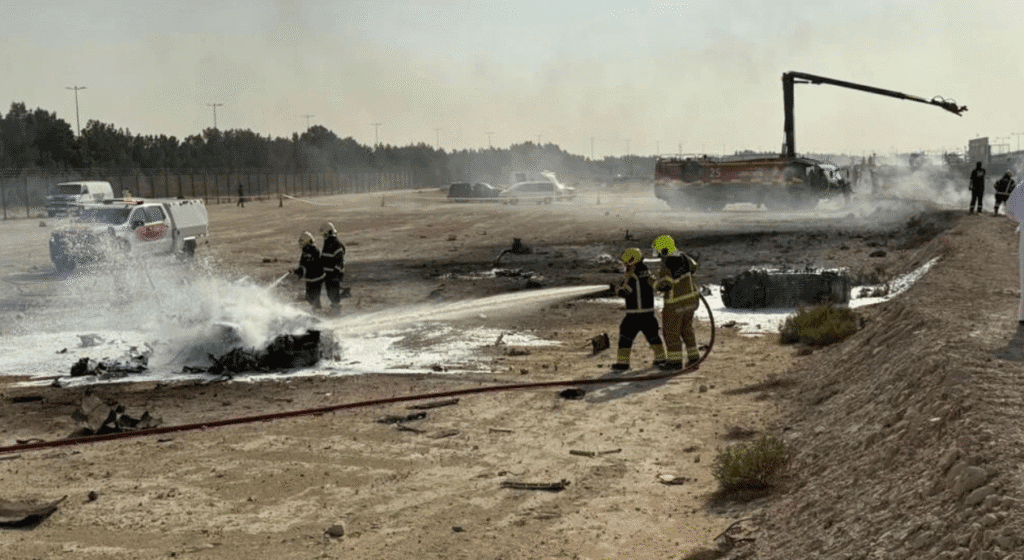
Photographs and video from the scene showed a thick column of black smoke rising from behind the airstrip at Al Maktoum International Airport. The Government of Dubai Media Office released images of firefighting teams swiftly dousing the smoldering wreckage.
Indian Air Force Confirms Pilot’s Death, Launches Inquiry
In an official statement, the Indian Air Force (IAF) confirmed the worst. “IAF deeply regrets the loss of life and stands firmly with the bereaved family in this time of grief,” it said, announcing that a court of inquiry is being constituted to ascertain the cause of the accident.
The identity of the pilot has not yet been released, but the loss represents a profound tragedy for the IAF community.
A Setback for the “Brilliant” Tejas Program
The crash deals a significant blow to the Tejas program, a cornerstone of India’s ambition to replace its aging fleet of Russian MiG-21s with a domestically produced fighter. The name “Tejas” means “brilliance” in Sanskrit, and the jet is built by state-owned Hindustan Aeronautics Ltd (HAL) with engines supplied by General Electric.
While the Tejas had a strong safety record since its first flight in 2001, with its first known crash only occurring in 2024, this very public tragedy at a major international airshow is a stark setback.
The jet was at the Dubai Airshow not just as a performer, but as a potential export commodity. Just days before the crash, India’s Vice Chief of Air Staff, Air Marshal Narmdeshwar Tiwari, had told media that the display was expected to “generate even more interest” and “showcase the capabilities of the aircraft” to a global audience.
Investigation Underway, GE Offers Support
As the investigation begins, all eyes will be on the court of inquiry to determine what led to the catastrophic failure. General Electric, which supplies the engines, expressed its condolences and stated it is “ready to support the investigation.”
The crash temporarily halted the airshow’s flying displays, but they resumed less than two hours later after emergency crews cleared the scene. Despite the show continuing, the memory of the fiery crash and the loss of a pilot serving his country will linger, raising urgent questions about the Tejas and the future of India’s aerospace ambitions.
The Indian Air Force, and the nation, now mourn a fallen aviator while seeking answers to prevent such a tragedy from ever happening again.