Close Menu
BlinkFeedBlinkFeed
    What's New

    Urgent Asda Recall: ‘Do Not Eat’ Warning Issued for Popular Product Over Safety Fears

    November 28, 2025

    Pakistan’s Winning Streak Ends in Collapse as Sri Lanka Steals Tri-Series Final Berth

    November 28, 2025

    A City in Mourning: Hong Kong’s Deadly Blaze Exposes Hidden Vulnerabilities

    November 27, 2025

    A Commander Falls, and Lebanon Holds Its Breath

    November 25, 2025

    Bollywood’s Eternal ‘He-Man’ Dharmendra Dies at 89, Leaving a Legacy of 300 Films

    November 24, 2025
    Facebook Instagram Pinterest WhatsApp
    Facebook X (Twitter) Instagram
    BlinkFeedBlinkFeed
    • Business
    • Finance
    • Health
    • Lifestyle
    • News
    • Technology
    • Travel
    • Contact Us
    BlinkFeedBlinkFeed
    Home » A City in Mourning: Hong Kong’s Deadly Blaze Exposes Hidden Vulnerabilities
    Blog

    A City in Mourning: Hong Kong’s Deadly Blaze Exposes Hidden Vulnerabilities

    Austin GeorgeBy Austin GeorgeNovember 27, 2025No Comments4 Mins Read
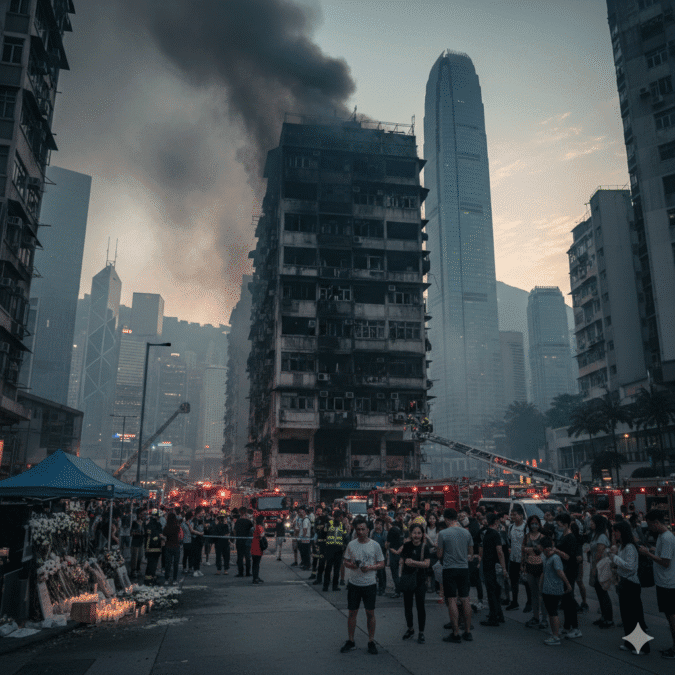
    A City in Mourning: Hong Kong's Deadly Blaze Exposes Hidden Vulnerabilities The vibrant, vertical heart of Hong Kong is cloaked in a somber silence today, a stark contrast to its usual relentless energy. A devastating fire that tore through a decades-old industrial building in the bustling Yau Ma Tei district has left at least 44 people dead, with hundreds more reported missing, plunging the city into one of its worst peacetime disasters in recent memory. The tragedy, which began in the late hours of the night, has done more than claim lives; it has ripped open a painful conversation about the shadowy spaces within one of the world's most modern metropolises. The Inferno in the Night The first calls to emergency services reported smoke and flames billowing from the New Lucky House on Jordan Road. What firefighters encountered upon arrival was a nightmare scenario. The blaze, believed to have started in a lower-level restaurant or commercial unit, raced upward with terrifying speed, fueled by dense, aging materials and creating a toxic, superheated chimney effect in the stairwells. Rescue efforts were immediately hampered by the ferocity of the fire. "The smoke was black and thick, it swallowed the corridors whole," one witness recounted, his voice trembling. "You could hear people calling for help from inside, but you couldn't see your own hand in front of your face." For hours, firefighters battled the flames while attempting daring rescues, using aerial ladders to pluck residents from upper-floor windows. The most heartbreaking scenes were of families gathered on the streets below, their faces illuminated by the flashing emergency lights, staring helplessly upward as they waited for news of loved ones trapped inside. Beyond the Headlines: A Tale of Two Cities While the initial focus is rightly on the search for survivors and the grieving families, the New Lucky House fire has exposed a harsh reality often overlooked in Hong Kong's gleaming facade. The building, constructed in the 1960s, represents a class of older structures that exist in a regulatory gray area. Many of these buildings are not just industrial relics but have become de facto mixed-use complexes, housing a precarious blend of small businesses, inexpensive hostels, and subdivided apartments. These "cage homes" and tiny flats are often the only affordable option for the city's low-income workers, new immigrants, and elderly population. This tragedy, therefore, is not just a story of fire, but one of urban inequality. The very individuals who form the backbone of the city's service economy are often the ones living in its most vulnerable and overlooked structures. The lack of mandatory, modern sprinkler systems in older buildings, cramped living conditions that act as fire traps, and labyrinthine internal layouts turned a building into a death trap. A Community's Resilience and a Government's Reckoning In the aftermath, the city's spirit of community has shone through the despair. Volunteers have flocked to the area, distributing water, masks, and food to displaced residents and exhausted rescue workers. Makeshift assistance centers have sprung up, offering counseling and logistical help to those who have lost everything. Yet, alongside this grassroots solidarity, difficult questions are being directed at the government. Officials have declared a period of mourning and launched a high-level investigation, but critics argue this disaster was a preventable one. For years, urban advocacy groups have warned of the fire risks in Hong Kong's thousands of aging buildings, calling for stricter enforcement of safety codes and subsidies for essential upgrades. This fire is a grim reminder that economic pressures can force people into unsafe living situations, and that regulatory frameworks must evolve to protect the most vulnerable. The hundreds still missing represent not just a number, but a profound failure—a sign that the city's rapid development has left some of its people behind in dangerously outdated structures. As the smoke clears and the long process of identification and grief begins, Hong Kong is left to confront an uncomfortable truth. The path forward requires more than mourning; it demands a renewed commitment to ensuring that safety and dignity are not luxuries reserved for those in its glittering towers, but fundamental rights for every single person who calls this city home. The memory of those lost in the New Lucky House must become the catalyst for a safer, more equitable urban future.
    Share
    Facebook Twitter LinkedIn Pinterest Email Copy Link

    Hong Kong New the vibrant, vertical heart of Hong Kong is cloaked in a somber silence today, a stark contrast to its usual relentless energy. A devastating fire that tore through a decades-old industrial building in the bustling Yau Ma Tei district has left at least 44 people dead, with hundreds more reported missing, plunging the city into one of its worst peacetime disasters in recent memory.

    The tragedy, which began in the late hours of the night, has done more than claim lives; it has ripped open a painful conversation about the shadowy spaces within one of the world’s most modern metropolises.

    The Inferno in the Night

    The first calls to emergency services reported smoke and flames billowing from the New Lucky House on Jordan Road. What firefighters encountered upon arrival was a nightmare scenario. The blaze, believed to have started in a lower-level restaurant or commercial unit, raced upward with terrifying speed, fueled by dense, aging materials and creating a toxic, superheated chimney effect in the stairwells.

    Rescue efforts were immediately hampered by the ferocity of the fire. “The smoke was black and thick, it swallowed the corridors whole,” one witness recounted, his voice trembling. “You could hear people calling for help from inside, but you couldn’t see your own hand in front of your face.”

    For hours, firefighters battled the flames while attempting daring rescues, using aerial ladders to pluck residents from upper-floor windows. The hingkmost heartbreaking scenes were of families gathered on the streets below, their faces illuminated by the flashing emergency lights, staring helplessly upward as they waited for Hong Kong New of loved ones trapped inside.

    Beyond the Headlines: A Tale of Two Cities

    While the initial focus is rightly on the search for survivors and the grieving families, the New Lucky House fire has exposed a harsh reality often overlooked in Hong Kong New’s gleaming facade. The building, constructed in the 1960s, represents a class of older structures that exist in a regulatory gray area.

    Many of these buildings are not just industrial relics but have become de facto mixed-use complexes, housing a precarious blend of small businesses, inexpensive hostels, and subdivided apartments. These “cage homes” and tiny flats are often the only affordable option for the city’s low-income workers, Hong Kong New immigrants, and elderly population.

    This tragedy, therefore, is not just a story of fire, but one of urban inequality. The very individuals who form the backbone of the city’s service economy are often the ones living in its most vulnerable and overlooked structures. The lack of mandatory, modern sprinkler systems in older buildings, cramped living conditions that act as fire traps, and labyrinthine internal layouts turned a building into a death trap.

    A Community’s Resilience and a Government’s Reckoning

    In the aftermath, the city’s spirit of community has shone through the despair. Volunteers have flocked to the area, distributing water, masks, and food to displaced residents and exhausted rescue workers. Makeshift assistance centers have sprung up, offering counseling and logistical help to those who have lost everything.

    Yet, alongside this grassroots solidarity, difficult questions are being directed at the government. Officials have declared a period of mourning and launched a high-level investigation, but critics argue this disaster was a preventable one. For years, urban advocacy groups have warned of the fire risks in Hong Kong New thousands of aging buildings, calling for stricter enforcement of safety codes and subsidies for essential upgrades.

    This fire is a grim reminder that economic pressures can force people into unsafe living situations, and that regulatory frameworks must evolve to protect the most vulnerable. The hundreds still missing represent not just a number, but a profound failure—a sign that the city’s rapid development has left some of its people behind in dangerously outdated structures.

    As the smoke clears and the long process of identification and grief begins, Hong Kong is left to confront an uncomfortable truth. The path forward requires more than mourning; it demands a renewed commitment to ensuring that safety and dignity are not luxuries reserved for those in its glittering towers, but fundamental rights for every single person who calls this city home. The memory of those lost in the Hong Kong New Lucky House must become the catalyst for a safer, more equitable urban future.

    Share. Facebook Twitter Pinterest LinkedIn WhatsApp Reddit Email Copy Link
    Austin George

      Related Posts

      A Commander Falls, and Lebanon Holds Its Breath

      November 25, 2025

      Zelenskyy’s Stark Warning: Ukraine Forced to Choose Between Sovereignty and Vital Support

      November 22, 2025

      UK News Today: From Gaza Crisis to Domestic Politics and Sports Highlights

      November 14, 2025
      Latest Posts

      Urgent Asda Recall: ‘Do Not Eat’ Warning Issued for Popular Product Over Safety Fears

      November 28, 2025

      Pakistan’s Winning Streak Ends in Collapse as Sri Lanka Steals Tri-Series Final Berth

      November 28, 2025

      A City in Mourning: Hong Kong’s Deadly Blaze Exposes Hidden Vulnerabilities

      November 27, 2025

      A Commander Falls, and Lebanon Holds Its Breath

      November 25, 2025

      Bollywood’s Eternal ‘He-Man’ Dharmendra Dies at 89, Leaving a Legacy of 300 Films

      November 24, 2025
      Follow Us
      • Facebook
      • Twitter
      • Pinterest
      • Instagram
      Popular Posts
      Travel

      Travel Mistakes to Avoid: How to Book Umrah Packages:

      By MubashirSeptember 3, 20250

      How to Book Umrah Packages is something every pilgrim should carefully consider, as planning for…

      How to Stay Focused in the Digital Age: Simple Habits That Actually Work

      October 17, 2025

      How 17-Year-Old Boy Made $6,389 Using n8n

      August 1, 2025

      World on 28th September, in the Asia Cup 2025.

      September 26, 2025

      CTR Meltdown? Google Search Traffic Plummets in New Study

      August 13, 2025
      About Us

      Blinkfeed is an engaging platform for the readers who seek unique and perfectly readable portals to be updated with the latest transitions all around the world whether it is Lifestyle, Business, Tech, News, or any new events around the world.

      Email: contact@blinkfeed.blog

      Most Popular

      Unveiling the Magic of Video Face Swap Technology

      September 2, 2025

      How to Stay Focused in the Digital Age: Simple Habits That Actually Work

      October 17, 2025
      Recent Posts

      Urgent Asda Recall: ‘Do Not Eat’ Warning Issued for Popular Product Over Safety Fears

      November 28, 2025

      Pakistan’s Winning Streak Ends in Collapse as Sri Lanka Steals Tri-Series Final Berth

      November 28, 2025
      Facebook Instagram Pinterest WhatsApp
      • About Us
      • Privacy Policy
      • Contact Us
      © 2025 Blinkfeed All Rights Reserved

      Type above and press Enter to search. Press Esc to cancel.