
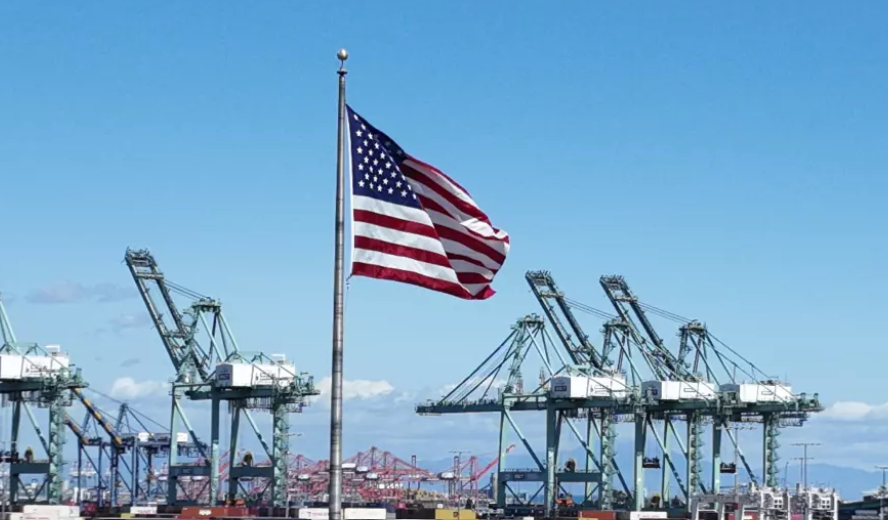
The debate over President Donald Trump’s tariff agenda is no longer just about trade balances and factory jobs. It is increasingly being framed as an inflation story and, by extension, a Social Security story because higher prices can feed into the cost-of-living adjustments that raise benefits for tens of millions of Americans each year.
Economists and market analysts broadly agree on one basic point: tariffs are a tax applied at the border, and someone has to pay. The open questions are how much of that cost shows up in consumer prices, how quickly it spreads through supply chains, and how governments respond if inflation starts to move higher again.
Those questions have become more urgent as Trump’s tariff plans and threats return to the center of economic news, including warnings from global institutions about the risk of escalation and retaliation.
In the United States, the inflation link matters politically because Social Security’s annual cost-of-living adjustment (COLA) is tied to a government inflation index. For 2026, the Social Security Administration said benefits would rise 2.8%, based on changes in the CPI-W inflation gauge measured from the third quarter of 2024 through the third quarter of 2025.That is why tariff policy is increasingly being discussed in the same breath as household budgets, retirement checks, and the purchasing power of fixed incomes even as the tariff debate also moves through the courts and into the risk calculations of global investors.
Tariffs meet the inflation argument
Tariffs are charged on imports. In practice, importers typically pay the duty to customs authorities, and then costs can be absorbed, negotiated, or passed along. Economists often describe that as “incidence” meaning who ultimately bears the burden of the tax.
A recent paper from Germany’s Kiel Institute for the World Economy, using shipment-level U.S. import data, argued that tariff increases have largely been passed through to U.S. import prices, rather than being offset by foreign exporters cutting prices.
Separate modelling work by the Penn Wharton Budget Model has also emphasized the role of higher import prices, reduced trade volumes, weaker investment, and broader uncertainty as channels through which tariffs can weigh on the economy over time even as tariffs can raise significant federal revenue.
In that analysis, the tariff policy described in early April 2025 included a baseline 10% tariff on imports and higher rates for a set of targeted countries, with the brief laying out expected revenue and import effects over a decade and beyond.
At the consumer level, the inflation question is less about whether a tariff can raise the price of an imported good it usually can and more about scale and spread. A tariff that hits a narrow category may change a few prices. A broad tariff can move costs across many categories, including intermediate inputs that are used to make other products.
That is one reason many economists say tariffs can behave like a consumption tax: they may raise the cost of imported goods directly, and they can also raise the cost of domestic goods if producers face higher input costs or gain room to lift prices when imports become more expensive.
The inflation impact, however, is not automatic or uniform. Companies can respond by changing suppliers, compressing margins, delaying price increases, or redesigning products. Currency moves can also soften or amplify the price effect. And demand can weaken if prices rise, which can limit how much businesses can pass through.
Markets tend to focus on two time horizons. The first is the near-term inflation impulse the direct price increase as costs show up in import prices and some consumer prices. The second is the longer-term growth hit if tariffs reduce trade flows, investment, and productivity, they can leave an economy smaller than it otherwise would have been.
Trade policy uncertainty can magnify both channels. Even the prospect of changing tariff rates can lead firms to delay investment, adjust inventories, or reroute supply chains at a cost effects that can be difficult to measure in real time but still show up in confidence indicators and business planning.
That uncertainty has also become part of the political argument. Democrats and some critics have repeatedly described broad tariffs as inflationary, while Trump and supporters have argued tariffs can be used to pressure trading partners, promote domestic production, and raise revenue. The balance between those claims depends on the design of the policy, how other countries respond, and what happens to prices.
Why Social Security is in the frame
Social Security benefits are adjusted each year using a formula tied to inflation as measured by the Consumer Price Index for Urban Wage Earners and Clerical Workers (CPI-W). In practical terms, higher measured inflation can lead to a higher COLA, while lower inflation can lead to a smaller increase.
For retirees, the headline number can be misleading. A higher COLA can mean larger monthly checks, but it usually arrives because prices have already risen. If costs for essentials rise faster than the index used for the COLA, some beneficiaries can still feel squeezed even after a benefit increase.
That is where tariffs can matter. If tariffs lift prices in categories that are heavily used by older households such as food, household goods, or certain services that rely on imported inputs the experience on the ground can be a higher cost of living. If those increases are broad enough to show up in CPI-W, they can also influence the future COLA calculation.
The interaction can create a political loop. If tariffs contribute to higher inflation, that can lead to a higher future COLA. But higher inflation can also create pressure for tighter monetary policy, which can slow growth, raise borrowing costs, and hit markets. Meanwhile, higher COLAs increase Social Security outlays, which can intensify broader debates about the federal budget and long-term fiscal pressures.
Economists also draw a distinction between price level changes and ongoing inflation. A tariff can cause a one-time jump in the price level for affected goods. Whether that becomes sustained inflation depends on whether wage growth, expectations, and broader pricing behavior adapt in a way that keeps pushing prices up.
For Social Security, what matters is the measured inflation rate in the relevant period, not the cause. The Social Security Administration’s 2026 COLA, for example, was calculated from CPI-W changes between two specific quarters, based on published CPI data.
That timing is why tariff-driven price changes can matter even if they are temporary. If tariffs cause prices to rise during the measuring window, they can affect the COLA. If tariffs are reversed or narrowed later or if businesses and consumers shift behavior the effect may fade.
Some of Trump’s tariff actions and signals have already shown how quickly policy can shift. Reuters has reported episodes where tariff plans were adjusted, paused, or partially rolled back amid market turmoil or inflation concerns, while other baseline duties remained in place.
For investors, that creates a different kind of risk: not just “Will tariffs raise inflation?” but “How unpredictable will policy be, and what does that do to business planning, supply chains, and consumer sentiment?”
For a deeper read on how markets can react to policy uncertainty around Trump’s broader agenda, see this BlinkFeed market view.
The legal fight over whether Trump tariffs are illegal
The question of whether “trump tariffs illegal” is not just political rhetoric. It is also an active legal issue that has moved through the U.S. trade court system, with decisions focusing on how much power a president has to impose broad tariffs under emergency authority.
In May 2025, the U.S. Court of International Trade ruled against major parts of Trump’s sweeping tariffs imposed under the International Emergency Economic Powers Act (IEEPA), saying the president exceeded his authority. Reuters reported the decision and noted that the administration appealed.
Legal and tax specialists tracking the case have said the dispute is not only about future policy but also about what happens to tariffs already collected if courts ultimately reject the legal basis a complex question because it touches refunds, customs processes, and the practical difficulty of unwinding a broad, economy-wide policy.
Some analyses have noted that appeals court actions allowed tariffs to remain in place temporarily while the case proceeded, prolonging uncertainty for importers and trading partners.
The legal fight matters for inflation and Social Security for a simple reason: courts can change the policy path. If tariffs are narrowed, delayed, or removed, the price impact can change. If they stay in place, or if new tariffs are threatened or added, businesses may adjust prices and supply chains in anticipation.
This legal backdrop also affects how other governments respond. Trading partners can be reluctant to make long-term concessions if the tariff policy might be overturned or revised. That can lead to a cycle of retaliation threats and countermeasures that further complicate the global outlook.
In early 2026, tariffs have again been a major headline in Europe after Trump threatened new duties on allied countries, adding to investor concern about a renewed trade confrontation between the United States and its largest partners.
For the UK and Europe, the near-term risk is not just exports. A large trade fight can disrupt supply chains, hit business confidence, and shift currency and interest-rate expectations. In that sense, the inflation question becomes global: costs can ripple across borders even when the tariff is charged in one country.
What to watch next
The first issue is the direction of tariff policy itself. Trump has used tariffs both as a long-term industrial tool and as leverage in fast-moving negotiations, and policy signals have at times shifted quickly. Markets typically look for clarity on what tariffs are actually in force, which ones are threatened, and which ones might be paused or reversed.
The second issue is the inflation pipeline. Investors watch import prices, producer prices, and consumer inflation measures to see whether tariff costs are spreading, especially into categories that matter for household budgets. Research based on shipment-level data has argued pass-through can be high, but real-world inflation outcomes can still vary depending on demand and broader economic conditions.
The third issue is the Social Security calendar. The COLA formula is mechanical: it depends on CPI-W readings during specific quarters. That makes the timing of inflation not just the size important for benefit adjustments.
The fourth issue is the courts. If the Supreme Court weighs in on emergency tariff authority, it could reshape how future presidents use tariffs and how quickly big tariff programs can be implemented or challenged.
Finally, the global response matters. The United States, the European Union, and the UK have deeply linked trade and investment ties, and large tariff moves can affect confidence beyond trade flows, including how businesses plan investment and where capital moves in search of stability.
Table: How tariffs can connect to inflation and Social Security
| Link in the chain | What could happen | Why it matters for households and retirees | What to watch |
|---|---|---|---|
| Tariffs raise import costs | Importers pay duties; costs may be passed through to prices | Higher prices can reduce purchasing power, especially on fixed incomes | Import prices; evidence on pass-through to U.S. prices |
| Broader inflation effects | Price increases may spread via supply chains and substitutes | Inflation can affect everyday costs and shape monetary policy expectations | CPI measures; whether price rises stay narrow or spread |
| Social Security COLA | COLA rises when CPI-W rises over the measurement window | COLA can lift benefits, but often because costs already increased | CPI-W path during the COLA measuring period |
| Legal uncertainty | Courts may uphold, narrow, or overturn tariff authority | Policy swings can change price pressures and business planning | Key court rulings and timelines on tariff authority |
| Global retaliation risk | Trading partners may respond with countermeasures | Trade conflict can hit confidence, growth, and some prices | EU/UK policy responses; market volatility around trade headlines |
For those trying to understand the economic logic behind large tariffs including channels such as higher prices, reduced trade, and uncertainty one detailed modelling discussion is the Penn Wharton analysis.
FAQ
Q1) Do tariffs always raise inflation?
Not always, and not evenly. Tariffs raise costs for targeted imports, but how much shows up in overall inflation depends on how broad the tariffs are, how firms adjust, and what happens to demand.
Q2) Why does Social Security get pulled into the tariff debate?
Because Social Security’s COLA is tied to inflation (CPI-W). If inflation runs higher during the measurement window, the COLA can be higher, even if the inflation was driven by policy changes like tariffs.
Q3) What is the 2026 Social Security COLA?
The Social Security Administration said the 2026 COLA is 2.8%, based on CPI-W changes from the third quarter of 2024 to the third quarter of 2025.
Q4) What does it mean when people say “trump tariffs illegal”?
It refers to court challenges arguing the president exceeded legal authority for certain broad tariffs, including disputes over using emergency powers statutes. Some cases have already produced major rulings and appeals.
Q5) Can tariffs be reversed quickly?
They can be adjusted through policy decisions, negotiations, or court outcomes, but the timing and scope can vary. Past reporting has described pauses and rollbacks in some cases, while other baseline duties remained.
Conclusions
Tariffs sit at an awkward crossroads of politics, prices and public finances. Trump’s push to broaden duties on imports is being sold as leverage and industrial policy, but critics argue it risks raising costs for households and businesses at a time when inflation is still a sensitive topic. The impact on Social Security is indirect but important: because benefits are adjusted using an inflation index, any tariff-driven price pressure that shows up in CPI-W could feed into future COLA calculations, even if it does not improve real purchasing power.
What happens next depends less on slogans than on mechanics. Markets will watch whether tariff proposals become enforceable policy, how quickly firms pass costs through, and whether inflation stays contained or spreads beyond a narrow set of goods. At the same time, court rulings over presidential tariff authority could reshape the timeline, the scale, and even the legality of sweeping duties, adding another layer of uncertainty for businesses and trading partners. For consumers, retirees and investors alike, the key question is whether the next phase of the tariff fight becomes a short-lived price shock or a longer period of higher costs and weaker confidence that spills across borders.