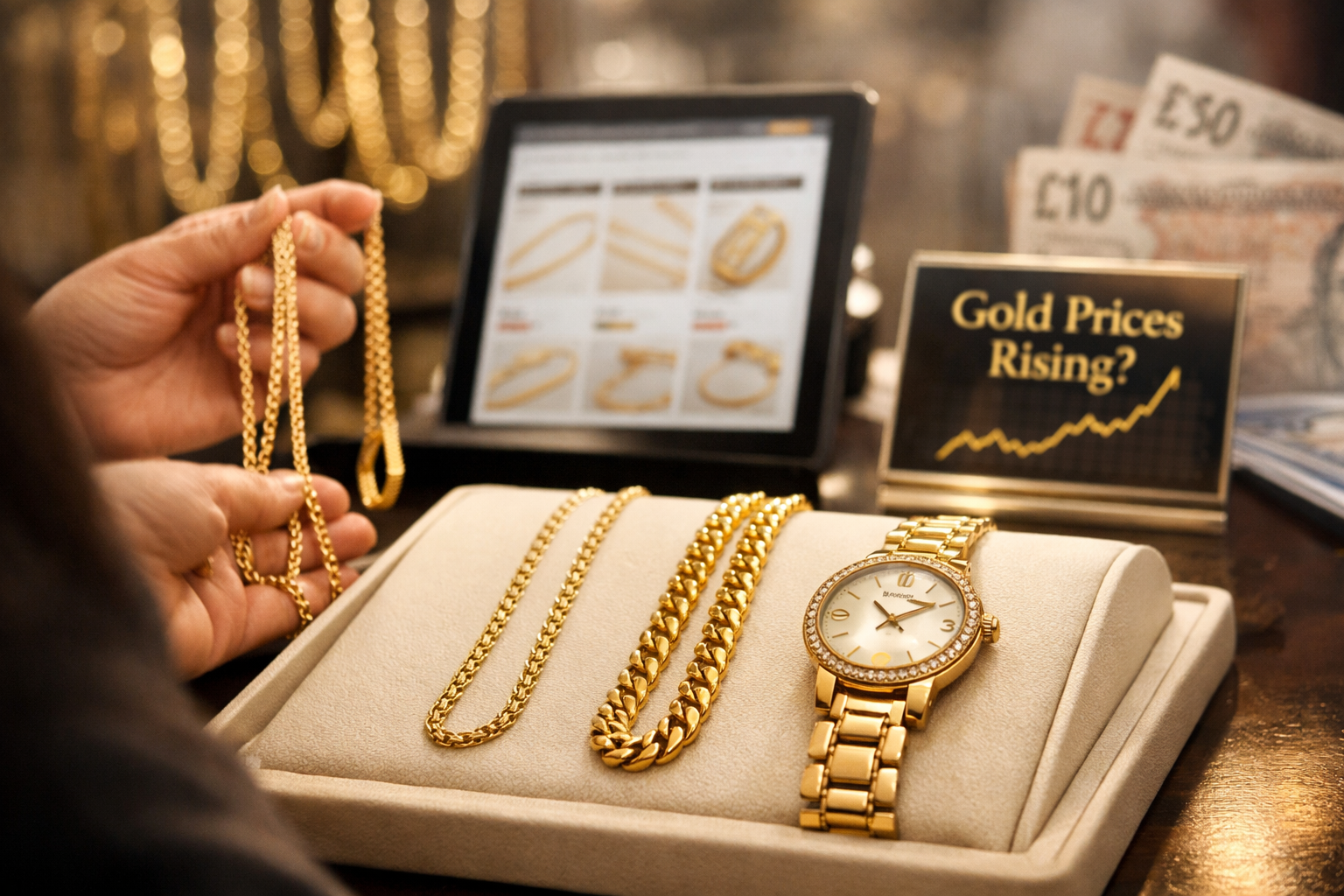
A gold chain is a simple product on the surface: links of metal, a clasp, and a price tag. Yet the decisions behind that purchase are starting to look like a snapshot of the wider economy, as shoppers weigh high living costs, interest rates, and the push-and-pull between “treat yourself” spending and tighter budgets.
In the United States, the United Kingdom and other major markets, jewellers and fashion retailers have been navigating a familiar tension. Gold often attracts attention when people are uneasy about inflation or financial volatility, but jewellery is also a discretionary purchase that can be postponed when households feel stretched. That mix has left brands and retailers looking for ways to keep demand steady without making bold promises about where prices go next.
Industry watchers said that dynamic is showing up in online search and shopping behaviour. Retailers see demand split between classic pieces that feel timeless and lower-commitment buys that still signal “premium.” Searches for basic terms such as “gold chain” sit alongside more specific intent, including “women’s 14k gold chain,” “24k gold chain,” and phrasing that reflects how people browse: “chain with gold” or even “gold chain and” a second item, such as a pendant or charm, in the same purchase.
In that environment, marketing language can look almost like a map of consumer psychology. Some shoppers want a piece that reads as investment-like, even if it is bought for style, while others prioritise brand recognition and perceived durability. The result is a market where a plain chain competes with a logo-driven accessory, and where gold’s role as a store of value sits uncomfortably next to the reality of making charges, markups, and returns policies.
Prices stay high, but jewellery demand is not one story
Gold prices are set in global markets and can react to many forces, including central bank policy expectations, currency moves, and shifts in risk appetite. When interest rates rise, non-yielding assets can look less attractive to some investors, though the relationship is not always stable. When inflation worries rise, gold can draw interest as a hedge, though outcomes vary by time period and by the reasons behind market stress.
For jewellery buyers, the connection is less direct but still visible. The metal price is only one part of what consumers pay. A chain’s final price can include design, labour, distribution, brand positioning and retailer margins. A piece marketed as “24k gold chain” may appeal because it sounds purer, but shoppers may also notice that higher purity can change durability for everyday wear, and that higher purity tends to be more expensive per gram. Meanwhile, “women’s 14k gold chain” tends to signal a balance: lower purity than 24k, but often a sturdier feel for daily use.
That nuance matters because the jewellery market is not moving in a single direction. Some consumers may trade down to smaller weights or lower karat pieces. Others may shift from solid to hollow designs, or from heavy chains to layered looks that stretch a budget. In the UK and US, where household budgets can be sensitive to changes in energy prices, rent and borrowing costs, retailers said promotions and financing options often become as important as design.
The same is true across parts of Asia and the Middle East, where gold jewellery can play a different cultural role, including gifting and wedding demand. Even there, pricing and timing can shift as buyers watch for currency changes or seasonal patterns. Analysts often point out that “demand” in gold jewellery can reflect both emotion and economics, which is why the market can stay active even when consumers complain about prices.
Brands lean on “affordable luxury” and search-driven shopping
While fine jewellers have long sold gold chains, the competitive set is wider now. Fashion houses, accessory labels and department-store brands have expanded their jewellery ranges, often mixing plated items with solid gold lines. That can make pricing harder to compare, especially online, where shoppers jump between product categories in the same session.
Retailers and marketers said search terms show how often jewellery shopping overlaps with watches and branded accessories. For example, phrases like “shop coach gold bracelet watch” can sit next to searches for a gold chain, reflecting a shopper deciding between a single statement item and a more versatile piece. In some cases, the same buyer may want both, but not at the same time forcing a choice between categories.
A brand like Coach, owned by Tapestry, sits in a segment often described as “accessible” or “affordable” luxury. That category can benefit when consumers still want recognizable branding but are more careful about big-ticket spending. A bracelet watch with a familiar name may feel like a safer purchase than a higher-priced solid gold chain, especially if the buyer is unsure about resale value or daily wear.
At the same time, jewellers argue that a simple chain can be a “foundation” piece. It can be worn alone, stacked, or paired with charms, which helps explain why shoppers search for “gold chain and” add-ons rather than for a single finished look. That versatility can support demand even when budgets are tight, though it can also encourage shoppers to wait for discounts.
E-commerce has also changed the purchase path. Buyers can compare karat levels, weights, clasp types and return policies quickly. That pushes sellers to compete on clarity and trust as much as on design. In a market where consumers are cautious about authenticity, reputable hallmarking and transparent product descriptions can matter, particularly for higher-purity items marketed as 24k.
Some retailers have responded by highlighting sourcing standards and manufacturing details, while others lean into branding and lifestyle imagery. Both approaches can work, but neither removes the underlying uncertainty: the price of gold can fluctuate, and the broader economy can influence how willing consumers are to buy discretionary items.
One area drawing attention is how payment options shape demand. Buy-now-pay-later providers are common in many markets, and even traditional credit options can make higher-priced accessories feel more attainable. However, consumer advocates and regulators in several countries have raised concerns about overextension and the cost of borrowing, which could make payment-led demand more fragile if household finances weaken.
What to watch: rates, confidence, and how gold’s “story” evolves
Market participants often say that gold sits at the intersection of fear and fashion. When investors worry about inflation or geopolitical risk, the metal can attract flows. When wages are rising and confidence is strong, jewellery demand can also improve because consumers feel comfortable spending. But when households feel squeezed, jewellery can become more promotion-driven, with buyers waiting for sales events or choosing smaller items.
For central banks like the Federal Reserve and the Bank of England, the path of interest rates influences more than just gold. Rates can affect credit card costs, personal loans and mortgage affordability, all of which shape discretionary spending. If rates stay higher for longer, consumers may remain cautious. If rates ease, budgets may loosen at the margin, though outcomes also depend on job markets and inflation trends.
Retailers are also watching supply chains. Gold is globally traded, but jewellery production depends on manufacturing capacity, shipping and inventory planning. Changes in trade rules, logistics costs or currency moves can influence where and how retailers stock products. For UK-based buyers, a weaker pound can make imported goods pricier. For US buyers, dollar strength can affect input costs in different ways, though the retail price still depends on brand strategy.
The role of technology in commerce is another factor. Search algorithms, social platforms and AI-driven recommendations can move attention quickly from one product category to another. That matters for terms like “gold chain,” which can be boosted by trend cycles, celebrity styling and short-form video.
It also matters for how consumers compare gold to other “stores of value.” Over the last decade, digital assets have become part of the broader conversation about hedges, though they behave very differently from gold and carry different risks. Some retailers and content platforms increasingly talk about how technology is reshaping markets and consumer habits, including the intersection of AI, finance and digital ownership topics discussed in this explainer.
For most jewellery buyers, the decision is more practical. They want to know whether a chain will hold up, whether it is truly solid gold, how it will look, and whether the price makes sense relative to their budget. The investor narrative around gold may be part of the background, but it is rarely the only reason someone buys a chain.
Still, industry observers said the “story” around gold can influence sentiment. When headlines focus on inflation risks or market volatility, gold tends to get more attention. When headlines focus on strong growth and risk-taking, gold can fall out of fashion in financial discussions even if jewellery demand remains steady. That gap between gold as an asset and gold as a consumer product helps explain why the jewellery market can look resilient even when investors are uncertain.
Brands are likely to keep testing how they position products. For one buyer, the appeal of a “women’s 14k gold chain” may be durability and everyday use. For another, a “24k gold chain” may be about purity and cultural preference. For another, a branded alternative may win because it feels like a complete fashion statement especially if the shopper is already searching “shop coach gold bracelet watch” and comparing it with a chain.
For retailers, the challenge is to meet those different motives while keeping marketing honest and pricing clear. In a category where counterfeit risks exist and where consumers can be sensitive to price moves, trust can be as important as trend.
And for the broader economy, the humble gold chain remains a small but revealing signal showing how people respond when inflation, rates and confidence collide with the desire for something lasting.
Table
| Factor shaping a gold chain purchase | What it affects | Why it matters to shoppers | What to watch next |
|---|---|---|---|
| Global gold price swings | Base metal cost | Can raise or lower retail pricing pressure | Big moves around central bank signals and market volatility |
| Interest rates (Fed, BoE and others) | Borrowing costs and sentiment | Higher rates can tighten budgets and reduce discretionary spending | Whether rates stay high or begin easing |
| Karat choice (14k vs 24k) | Purity, durability, price | 14k often balances strength and cost; 24k signals purity but is usually pricier | How retailers explain quality and care |
| Brand positioning | Markups and perceived value | Branded pieces can compete with “plain” gold items on status and design | How “affordable luxury” performs if consumers cut back |
| Retail promotions and financing | Final paid price | Discounts and instalment plans can support demand, but may be sensitive to household stress | Regulation and consumer credit conditions |
| Currency moves (USD, GBP and others) | Import costs and pricing | Can influence retail prices, especially for imported inventory | FX volatility and supply chain planning |
FAQ (3–6; concise; factual)
Q1: Why do gold chain prices vary so much between retailers?
Prices reflect more than the metal. Design, labour, branding, retail margins, and policies like returns and warranties can all change the final price.
Q2: Is a 24k gold chain always “better” than a 14k chain?
Not always. 24k is higher purity, but 14k can be more durable for everyday wear. The better choice depends on use, preference and budget.
Q3: Why do searches for watches and jewellery overlap?
Many shoppers treat watches and jewellery as interchangeable “one big accessory” purchases. That is why terms like “shop coach gold bracelet watch” can appear alongside gold chain searches.
Q4: Do interest rates really affect jewellery demand?
They can. Higher rates may increase borrowing costs and pressure household budgets, which can reduce discretionary spending. But jewellery demand also depends on culture, gifting seasons and fashion trends.
Conclusion
The gold chain market is being pulled in two directions at once: gold’s global price is shaped by macro forces like interest-rate expectations and shifts in risk sentiment, while real-world jewellery demand depends on everyday budgets, brand appeal and how clearly retailers explain quality. Shoppers comparing a women’s 14k gold chain, a 24k gold chain, or even alternatives such as “shop coach gold bracelet watch” are often making a practical choice as much as a style one. For now, the main signals to watch are consumer confidence, promotion activity, and whether rate expectations shift, because those factors may influence whether higher prices curb demand or simply change what people buy.