
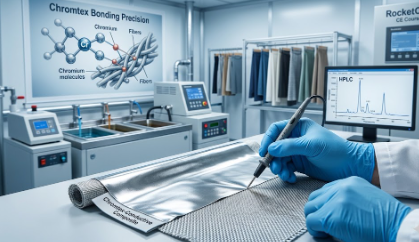
In the global race for industrial efficiency and material longevity, we often focus on giant breakthroughs new alloys, autonomous robots, and quantum computing. Yet, the true battles are often won in the nanometers. Success in industries ranging from automotive to aerospace isn’t about making things bigger; it’s about making them more resistant, more precise, and more reliable. In many highly specialized engineering and chemical circles, there is a term that embodies this pursuit of microscopic excellence: Chromtex.
Whether you perceive Chromtex as a specialized advanced textile plating solution or a niche chromatographic analysis technique, one thing remains constant: it is a process defined by extraordinary precision. It is the silent guarantee that makes critical components last longer under pressure. To understand the impact of Chromtex is to understand the difference between a material that survives and one that dominates its operational environment.
What is Chromtex? A Niche Force in a Technical World
Chromtex is not a household name. You won’t find it on a product label in a supermarket. Instead, it exists in technical specifications and engineering blueprints.
Depending on the specific industrial vertical, the term “Chromtex” carries different, though somewhat related, meanings. It primarily serves two sophisticated fields:
1. Advanced Plating and Coating Solutions
In the context of material science, Chromtex often refers to a proprietary or highly specialized process for chromium-based plating on unconventional substrates, such as specialized textiles or composites. This isn’t standard shiny bumper plating; this is plating designed to give flexible materials the wear resistance, conductivity, or corrosion protection of metal without sacrificing their lightness or flexibility. This involves a balance between material confidence and engineering control that is extremely difficult to achieve.
2. Chromatographic Analysis Niche
In other contexts, particularly in laboratory and textile manufacturing QA, Chromtex is associated with specialized chromatography solutions geared toward analyzing dyes, finishes, and chemical treatments on fabrics. Here, it represents the analytical precision required to guarantee that a textile meets strict regulatory and performance standards.
3 Lessons in Technical Mastery: Applying the Chromtex Mindset
Using the same framework of professional success, precision, and controlled expertise that we’ve established in other high-stakes service industries (such as luxury towing), we can analyze how the “Chromtex mindset” dominates the technical landscape:
1. Consistent Education on Substrate Dynamics
Just as a top-tier operator must keep learning to stay certified, a Chromtex technician must possess an exhaustive understanding of substrate dynamics. You cannot apply a plating solution to a basic cotton fabric the same way you apply it to a high-strength aramid fiber or a carbon composite.
One small mistake in weight distribution during the chemical activation phase, or an incorrect assessment of the fabric’s porosity, can lead to a coating that peels or cracks under minimal stress. This field demands continuous education on the interplay between chemistry and textile engineering to ensure the results can ruin a reputation in ways you will struggle to recover.
2. Move Slow to Validate Bond Integrity
While “speed creates unwarranted risk” in towing luxury vehicles, the same principle applies during the sensitive phase of substrate coating. Rushing the curing or deposition process in a Chromtex application creates immediate concerns before the job is even finished.
To deliver excellent results, you must be intentional with every move, from validating the chemical bath temperature to ensuring consistent current density. Many high-value clients appreciate the time you took to handle every step with maximum care, knowing that true quality in bonding cannot be rushed. Moving slowly is sometimes the fastest way to achieve a durable, low-clearance finish.
3. Use the Right Equipment: The Throwing Power Problem
You cannot achieve a high-level service in Chromtex without equipment that matches the level of service. In electroplating, this means having rectifiers capable of incredibly precise current control and plating baths with high “throwing power” (the ability to plate evenly in recessed areas). In the analytical Chromtex niche, it means having advanced HPLCs with specialized detectors for textile dyes.
Showing up with worn or mismatched equipment not only hinders precision but also raises immediate concerns about reliability even before you begin the job. To meet clients’ expectations in these highly regulated fields, you must invest in the right equipment designed for high-value work.
Building Relationships in High-End Technical Networks
One fact about Chromtex-level opportunities is that they rarely come from random calls. Much like specialized luxury towing, they are linked to trusted networks.
Aerospace engineers, medical device manufacturers, and high-end automotive restoration specialists like working with a small, proven group of operators they can trust. Once you prove yourself on one critical, low-volume project perhaps coating a satellite housing or analyzing a medical implant coating the referrals will come naturally.
The key, however, is consistency. You must deliver the same level of care on each job, regardless of the size or public visibility. Being reliable when others aren’t gives you a less obvious advantage that promotes success in this high-end technical field.
Capturing High-Value Traffic Angle: Why Chromtex Matters
For a technical website or a material science portal, writing about Chromtex is a crucial strategy to capture “High-Intent” professional traffic. Here’s why this keyword attracts a quality reader:
- B2B Procurement Interest: Procurement managers in sectors like aerospace don’t search for “shiny metal.” They search for specific terms like “textile chrome coating,” “conductive textile plating,” or “Chromtex solutions.” This traffic is looking to make large-scale, high-value purchasing decisions, not just browse.
- MRO (Maintenance, Repair, and Operations): Maintenance teams in factories using coated textiles often look for troubleshooting guides or repair protocols. Providing an expert guide builds authority that can lead to lucrative service contracts.
- Global Engineering Terminology: Capturing a term like Chromtex allows you to tap into traffic from European and Asian engineering hubs where this specialized nomenclature is common, giving you a unique demographic that general “chrome plating” keywords will miss entirely.
Conclusion: Commitment to Higher Standards
Chromtex may be a niche keyword, but it represents the very foundation of modern technical achievement. Success in this field is demanding, requires intense specialized training, and carries significant pressure, but it is also one of the most rewarding paths within the advanced materials industry.
By committing to higher standards, investing in your understanding of chemical substrate interactions, and approaching each delicate coating or analytical job with the highest level of precision and care, you aren’t just applying a finish you are selling confidence. In the age of high-performance machinery and critical aerospace operations, there is no higher value than that.