
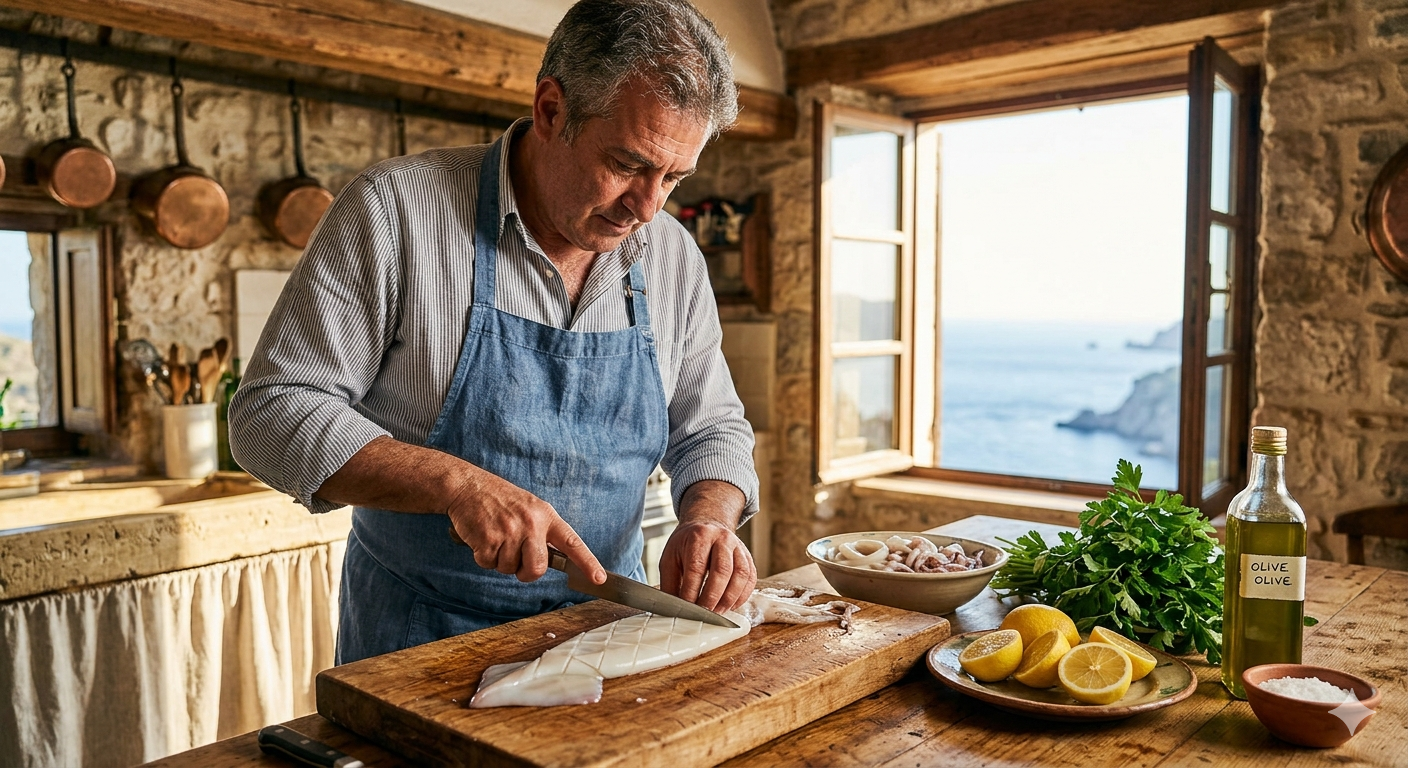
There is a specific kind of magic that happens in a coastal Italian kitchen just before the sun dips below the horizon. It is a symphony of clinking stainless steel, the hiss of cold seafood hitting hot oil, and the focused silence of a master at work. In the world of high-end Mediterranean gastronomy, this master has a name: the Calamariere.
While many casual diners view squid as a simple appetizer, the true Calamariere knows that calamari is a temperamental ingredient that demands respect, precision, and an almost intuitive understanding of heat and texture. In this guide, we dive deep into the world of the Calamariere, exploring why this role is the heartbeat of seafood culture and how you can bring that same mastery to your own table.
Introduction: More Than Just a Chef
To the uninitiated, a “Calamariere” might sound like a simple job title. But in the hyper-specialized world of traditional seafood preparation, it represents a specialist a person whose entire culinary identity is built around the perfect preparation of cephalopods.
The term originates from the deep-rooted traditions of the Mediterranean, where squid (calamari) isn’t just food; it’s a staple of life. A true Calamariere understands the biology of the creature, the chemistry of the sear, and the delicate balance of acids and fats required to elevate a humble mollusk into a gourmet masterpiece. If you are looking to drive high-value traffic to a culinary or lifestyle platform, understanding this “niche within a niche” is your golden ticket.
The Evolution of the Calamariere: From Docks to Michelin Stars
Every great culinary tradition starts with necessity. Centuries ago, the original Calamarieres were the fishermen’s families on the docks of Naples and Sicily. They didn’t have high-tech kitchens; they had fresh catches and open flames.
The Rustic Beginnings
In the early days, preparation was about speed. The squid was cleaned on the spot, sliced into rings, and quickly fried in local olive oil. This “street food” version of the Calamariere’s art is still what many people think of today when they order “fried calamari.”
The Modern Gastronomy Shift
Today, the role has evolved. Modern Calamarieres are experimenting with sous-vide techniques, nitrogen freezing for texture modification, and complex infusions. They have moved beyond the deep fryer to explore the “Third Way” of cooking squid somewhere between the raw translucency of crudo and the heavy char of a grill.
The Technical Mastery: The Calamariere’s Secret Handbook
Why does calamari often turn out rubbery or tasteless in home kitchens? Because most people skip the technical nuances that a Calamariere lives by. If you want to write content that provides real value, you must focus on these three pillars:
1. The Pre-Cook Ritual (The Cleaning and Scoring)
A Calamariere knows that the “skin” of the squid is the enemy of a tender bite. They painstakingly remove the purple outer membrane and, more importantly, they employ the Diamond Score. By making shallow, crisscross cuts on the interior of the squid body, they increase the surface area for heat and seasoning, ensuring the meat curls into a beautiful, tender shape rather than toughening up.
2. The 45-Second Rule vs. The 45-Minute Rule
This is the most crucial lesson in the Calamariere’s arsenal. Squid follows a “U-shaped” tenderness curve.
- The Flash Sear: You cook it for 45 to 60 seconds at extremely high heat. It stays sweet and tender.
- The Danger Zone: Between 2 minutes and 40 minutes, the proteins tighten into rubber bands.
- The Braise: After 45 minutes of slow simmering, the collagen finally breaks down again, resulting in a buttery, melt-in-the-mouth texture.
A master Calamariere never gets lost in the middle ground.
3. pH Balancing
Calamari is naturally alkaline. To make it “pop,” a Calamariere uses acidity not just lemon, but fermented chili vinegars, preserved citrus, or even a splash of dry white wine mid-sear to deglaze the pan and balance the flavor profile.
Comparing Styles: The Calamariere’s Global Variations
While the heart of the craft is Italian, the “spirit” of the Calamariere exists worldwide. Providing this global context adds “High Value” to your article by appealing to a broader audience.
| Region | Style | Signature Technique |
| Mediterranean | Calamari Fritti | Light semolina dusting and rapid olive oil frying. |
| East Asian | Salt and Pepper Squid | Wok-tossing with Sichuan peppercorns and high-velocity heat. |
| Spanish | Chipirones en su Tinta | Slow-braising in the animal’s own ink for a rich, umami depth. |
| Modern Nordic | Squid “Pasta” | Slicing raw squid into thin ribbons and gently “cooking” with warm oils. |
Why the “Calamariere” Approach Beats Standard Cooking
In the modern world, we are obsessed with “quick fixes” and “one-pot meals.” The Calamariere approach is the opposite it is a celebration of intentionality.
When you adopt the mindset of a Calamariere, you stop looking at ingredients as commodities. You start noticing the difference between Loligo (long-finned squid) and Illex (short-finned squid). You begin to realize that the temperature of your oil isn’t just a suggestion it’s the difference between a soggy mess and a golden, crisp delight. This level of detail is what separates a “food blogger” from a “culinary authority.”
Common Pitfalls: What Every Amateur Should Avoid
Even with the best intentions, things can go wrong. A Calamariere identifies these “sins” instantly:
- Overcrowding the Pan: If you put too much squid in at once, the temperature drops, and the squid “stews” in its own juices instead of searing. This leads to that grey, rubbery texture everyone hates.
- Using Frozen “Rings” Only: A true master uses the tentacles. They provide a different texture and a deeper “ocean” flavor.
- Ignoring the “Rest”: Just like a steak, flash-fried calamari benefits from 30 seconds of resting on a wire rack (not paper towels, which trap steam and make the coating soggy).
The Calamariere as a Lifestyle: High-Value Content Strategy
For your website, the keyword “Calamariere” shouldn’t just be about a recipe. It should be about a lifestyle of quality.
High-value traffic comes from readers who are tired of generic content. They want to know the why behind the how. By positioning the Calamariere as a figure of tradition and artisanal skill, you tap into the “Slow Food” movement and the growing trend of “Home Professionalism.”
How to drive traffic with this keyword:
- Build Authority: Create a series called “The Calamariere Sessions” focusing on different seafood techniques.
- Equipment Guides: Suggest the best carbon steel pans or high-smoke-point oils used by professionals.
- Pairing Logic: Discuss the mineral-heavy white wines (like Vermentino or Assyrtiko) that complement a Calamariere’s work.
Conclusion: Embracing the Spirit of the Calamariere
The journey to becoming a Calamariere even if only in your own kitchen is a journey toward culinary mindfulness. It’s about taking a simple, affordable ingredient and treating it with the same reverence one might give to a prime cut of Wagyu beef.
As we have explored, the art of the Calamariere is built on technical precision, respect for tradition, and the courage to use high heat. Whether you are a professional chef looking to refine your seafood station or a home cook wanting to impress at your next dinner party, the principles remain the same.
Master the flame, respect the product, and never, ever settle for rubbery squid again. The ocean has provided us with a masterpiece; it is our job as Calamarieres to ensure we don’t ruin it.