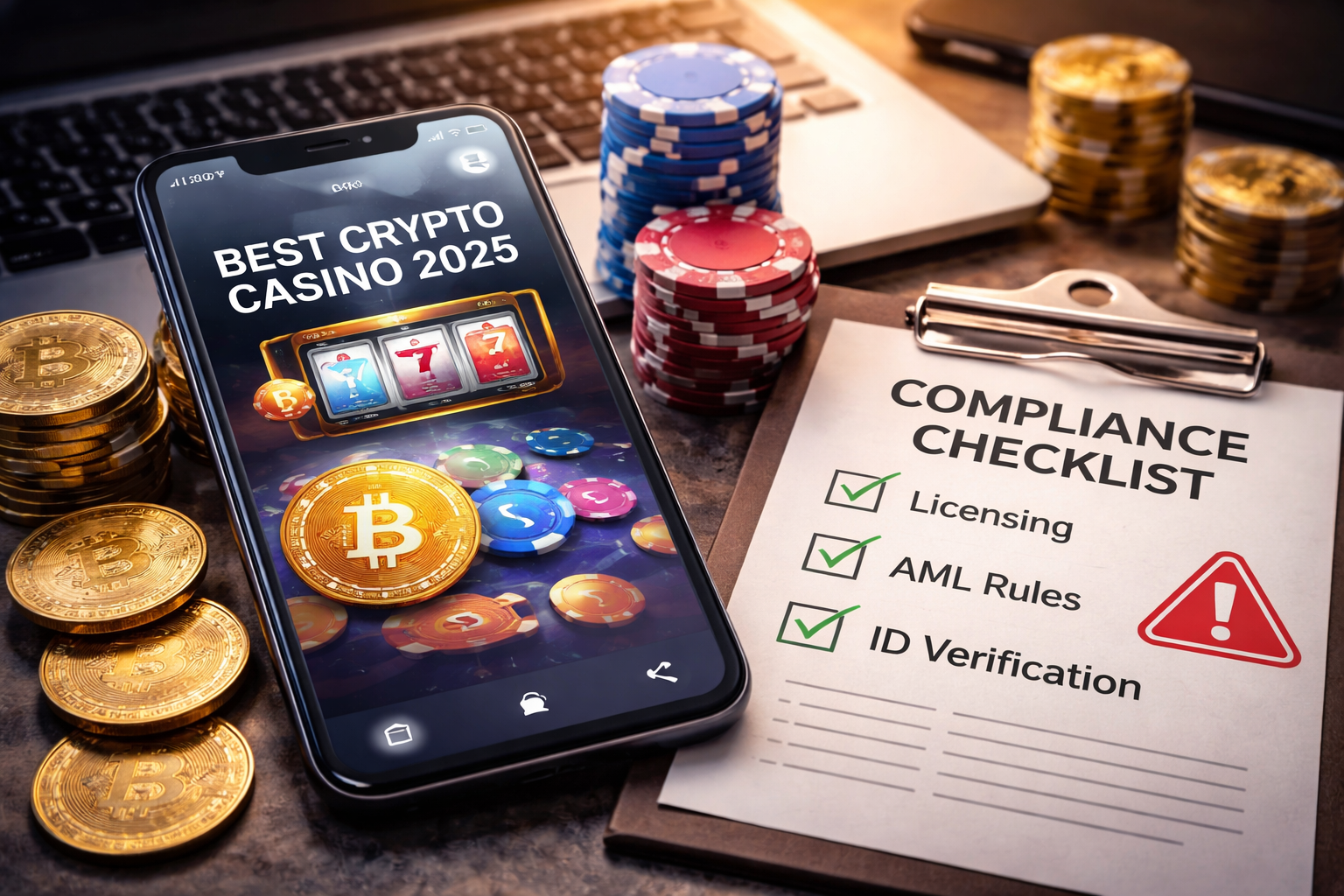
Search interest around the phrase “best crypto casino toptiercasinos.com 2025” points to a broader reality in digital finance: crypto has moved beyond trading screens into everyday consumer services, including online gambling. What looks like an SEO query is also a signal of two forces colliding growing demand for faster, borderless payments and a regulatory push to control how high-risk products are marketed, funded and monitored.
A snapshot on a keyword analytics page linked here as a keyword overview captures that demand in real time. But the bigger story is not a ranking list. It is the risk-and-trust gap that opens when crypto payments meet offshore gambling, and how enforcement headlines are increasingly shaping what consumers see, what platforms can advertise, and what “best” is supposed to mean in 2026.
In recent weeks, the UK’s Gambling Commission has publicly accused Meta of “turning a blind eye” to illegal online casino ads, pointing to promotions that explicitly mention they are “Not on GamStop,” the UK’s national self-exclusion scheme. The warning is not just about a social platform. It reflects a larger clampdown on how unlicensed gambling is promoted, discovered, and normalised online often through advertising funnels, influencer culture and affiliate-driven review sites.
Search demand meets scrutiny
Crypto casinos sit at the intersection of two systems that regulators typically supervise differently: gambling and payments. Traditional online casinos are usually governed by local licensing rules, advertising limits, and responsible gambling controls. Crypto, by contrast, was built to move value with fewer intermediaries. When the two combine, authorities worry about weak identity checks, cross-border marketing, and money-laundering risks especially when sites operate from offshore jurisdictions but attract users in tightly regulated markets.
Industry researchers and media investigations have argued that crypto gambling has expanded rapidly in recent years, helped by marketing and the ease of moving funds digitally. The Financial Times, citing data from a specialist firm, reported that crypto casinos generated tens of billions of dollars in gross gaming revenue in 2024 and that enforcement is complicated when platforms operate offshore and can reappear under new web domains or brands.
That backdrop matters for how readers should interpret “best crypto casino” content. Review pages can look like consumer guides, but many function as marketing infrastructure designed to convert clicks into sign-ups. Even where a review site is trying to be responsible, it sits in an ecosystem that often rewards hype: bigger welcome offers, faster withdrawals, fewer questions asked. The UK regulator’s criticism of “Not on GamStop” promotions highlights the stakes when marketing steers consumers toward products that may bypass local protections.
This is where crypto enforcement news becomes part of the product story. Enforcement does not only target gambling operators; it increasingly targets the surrounding machinery advertising, payment rails, and entities alleged to enable illicit flows. A US Treasury action in 2025, for example, described how criminal networks used casino-linked infrastructure in parts of Southeast Asia and tied the issue to broader financial crime, including virtual currency flows. Even when these cases are not “crypto casino” cases in the narrow sense, they shape the compliance expectations that banks, payment providers, and platforms face.
At the same time, the broader crypto narrative keeps producing viral attention spikes that can spill into gambling demand. Tokens like VWA crypto have drawn warnings from market commentators who point to thin documentation and social-media driven hype, a reminder of how quickly narratives can outrun verification in the crypto economy. Meme-driven tokens linked to the 67 kid crypto trend show how youth-oriented internet culture can become “onchain” almost overnight, with major price trackers noting the origin story and exchanges flagging tokens as unverified. None of that proves a direct link between meme coins and gambling. But it does show the same attention mechanics at work: short-form virality, low friction entry points, and a constant feed of new “things to do with crypto.”
For publishers covering this space, the challenge is to describe the market without endorsing it. For consumers, the challenge is to separate marketing language from regulatory reality. For regulators, the challenge is that the market’s distribution is online, global, and often routed through third parties.
A patchwork of rules, and why payments matter
Unlike listed equities or bank deposits, online gambling is regulated mostly by jurisdiction—and those rules differ sharply across the US, the UK and the EU. In the UK, the Gambling Commission has been explicit that crypto-related funding can raise “source of funds” problems for licence applicants, and that it may refuse applications that cannot fully evidence the origin of crypto wealth used to finance a gambling business. That stance matters because it signals a policy direction: crypto itself is not treated as a neutral payment method if it undermines transparency.
Globally, standard-setters have long warned that casinos can be vulnerable to money laundering, and that controls such as customer due diligence and monitoring are central to reducing misuse. Crypto can add additional complexity because the movement of funds may be rapid and cross-border, and because compliance obligations can become fragmented when operators, payment providers and marketing partners sit in different countries.
This is also why “best” lists are increasingly judged not only on game selection or user experience, but on compliance signals licensing claims, dispute mechanisms, identity checks, and advertising practices. The issue is not theoretical. UK authorities have repeatedly taken enforcement actions against licensed operators for compliance failures, while also warning about illegal operators and marketing channels outside the licensed system.
In the US, online casino gambling legality depends on the state, and regulators tend to focus on consumer protection, illegal gambling, and financial crime risks. Offshore crypto casinos often market globally even where licensing is unclear, which can leave consumers without the protections they would expect in a regulated system. The result is a market that can look seamless on a phone screen but is legally uneven beneath the surface.
This patchwork also explains why large consumer crypto portals have moved into gambling content. The secondary keyword crypto casino bitcoin.com reflects that: Bitcoin.com, for example, publishes crypto gambling directories and casino review pages that present themselves as ranked lists. For readers, the key point is not which brand sits at number one on any list; it is that crypto gambling has become mainstream enough to be embedded into major consumer crypto publishing, which intensifies debates about marketing standards, disclosures, and platform responsibility.
To understand how “best crypto casino” lists are built and where risks concentrate it helps to break down the typical scoring logic used by affiliate and review sites.
| What review sites often evaluate | Why it matters for consumers and markets | What can go wrong (common risk points) |
|---|---|---|
| Licensing and jurisdiction | Signals whether an operator is overseen by a regulator | “Offshore” licences may offer different protections than local licences; licence claims can be unclear or misleading |
| Identity checks (KYC) and self-exclusion | Links to responsible gambling controls and fraud prevention | Weak checks can increase underage access and financial crime exposure; “Not on GamStop” marketing can bypass UK protections |
| Payment rails and withdrawal practices | Directly affects customer experience and dispute risk | Delays, disputes, and unclear fee disclosures can create consumer harm |
| Transparency (terms, ownership, disclosures) | Helps users understand incentives and conflicts | Affiliate sites may be compensated for referrals, which can bias rankings |
| Compliance posture (AML language, sanctions awareness) | Indicates seriousness about financial crime controls | Global standards highlight casinos as ML/TF risk areas; weak monitoring can draw enforcement attention |
In other words, “best” is increasingly a shorthand for “least risky within a risky category,” not a guarantee of safety or value.
The affiliate economy behind “best crypto casino” searches
The “toptiercasinos.com” part of the primary keyword hints at the modern distribution model for online gambling: affiliate publishing. Review sites compete on search results, publish comparisons, and route readers to operators through tracking links. That model exists across many consumer categories, but gambling and high-risk financial products attract extra scrutiny because incentives can be strong and harms can be serious.
Regulators have repeatedly pointed to advertising and affiliate channels as a weak link. The UK Gambling Commission’s complaint about illegal ads on large platforms is one example of the attention shifting from operators alone to the wider marketing ecosystem. For publishers, that spotlight raises practical questions: Are disclosures clear? Are claims verifiable? Are vulnerable groups targeted?
For markets, the affiliate model can distort what consumers perceive as “best.” Search rankings can reflect strong SEO and advertising budgets as much as consumer outcomes. And in crypto specifically, where projects and platforms can appear quickly, the pace of change can make it difficult for any “2025 list” to stay accurate into 2026 without frequent updates and careful verification.
This is also where broader crypto trends bleed into gambling narratives. In a market shaped by memes, influencers and rapid token launches, attention can be monetised quickly. When a meme coin narrative like the 67 kid crypto trend circulates across social platforms, it can pull new users into the crypto ecosystem who then encounter adjacent services, including gambling promotions and “casino” content. Likewise, fast-moving stories about VWA crypto and other viral tokens can reinforce the idea that crypto is about quick results, even when the underlying facts are contested or incomplete.
None of that means every consumer who searches for “best crypto casino” is chasing hype. Some may simply want to use crypto as a payment tool. But the market’s marketing language often leans on the same emotional drivers as speculative trading: speed, anonymity, and big upside precisely the claims regulators tend to question.
For a broader view of how AI, DeFi, and blockchain narratives are shaping consumer finance behaviour and product design, see BlinkFeed’s explainer on the crypto tech wave.
What to watch next in 2026
Several developments are likely to shape how “best crypto casino” content evolves in 2026.
First, ad platform enforcement is becoming a headline issue. If regulators push major platforms to block illegal gambling promotions more aggressively, discovery may become harder for unlicensed operators and more valuable for whatever channels remain. The UK regulator’s recent comments on illegal ads show that this issue is now being discussed publicly and at industry events, not only in private enforcement letters.
Second, compliance expectations are moving upstream. Even when a casino is offshore, it may depend on payment providers, marketing partners, software suppliers, and banks that face their own legal obligations. Actions that link casino infrastructure to wider criminal activity increase the reputational and enforcement risk for counterparties, which can change who is willing to do business with whom.
Third, the content layer is maturing. The presence of crypto gambling directories on mainstream crypto publishing platforms captured by the keyword crypto casino bitcoin.com suggests that “crypto gambling” is no longer niche. That mainstreaming can bring better disclosure practices and clearer standards, but it can also normalise a high-risk activity for new audiences.
Finally, the consumer risk conversation is widening beyond traditional “problem gambling” language into financial crime, identity checks, and advertising accountability. Standard-setters have repeatedly emphasised the vulnerability of casinos to illicit finance, and crypto’s global payment rails keep that debate active.
For readers searching best crypto casino toptiercasinos.com 2025, the key takeaway is not a single site or brand. It is that the phrase now sits inside a fast-changing policy environment. What is discoverable today may not be discoverable tomorrow. What looks reputable in a search result may still sit outside local protections. And what reads like neutral guidance may be marketing in disguise.
In financial terms, this is what a market transition looks like: consumer demand surges first, governance catches up later, and the definition of “best” changes along the way.
FAQ
Q1: What does “best crypto casino” usually mean in search results?
It typically refers to ranking pages that compare operators on factors like licensing claims, payments, game selection, and promotions. Rankings can be influenced by affiliate marketing incentives.
Q2: Why is crypto gambling getting more regulatory attention?
Authorities and standard-setters have long flagged casinos as vulnerable to money laundering, and crypto can add cross-border complexity. Regulators also focus on advertising practices and consumer protections.
Q3: Is “Not on GamStop” marketing legal in the UK?
The UK Gambling Commission has warned about illegal online casino ads and criticised promotions that highlight “Not on GamStop,” framing it as part of an illegal advertising problem.
Q4: Why do keywords like “VWA crypto” and “67 kid crypto” show up near gambling searches?
They reflect the wider crypto attention economy viral narratives, meme-driven tokens, and fast-moving trends that can pull new users into crypto-related content ecosystems.
Q5: What kinds of enforcement actions affect the crypto gambling ecosystem?
Actions can target operators, marketing channels, and financial crime infrastructure connected to casinos or casino-like hubs, especially where illicit finance is alleged.
Conclusion
Search terms like “best crypto casino toptiercasinos.com 2025” show how quickly crypto-powered gambling has entered the mainstream online economy. But the same forces driving that growth affiliate marketing, social media distribution, and frictionless payments are also drawing tougher scrutiny from regulators and enforcement bodies. For readers in the US, UK and beyond, the practical takeaway is that “best” in this space often means “best-marketed,” while the real differentiators are harder to see: licensing clarity, advertising compliance, identity checks and dispute protections. In 2026, the direction of travel looks clear: tighter ad controls, stronger compliance expectations, and a market where transparency is becoming as important as product features.