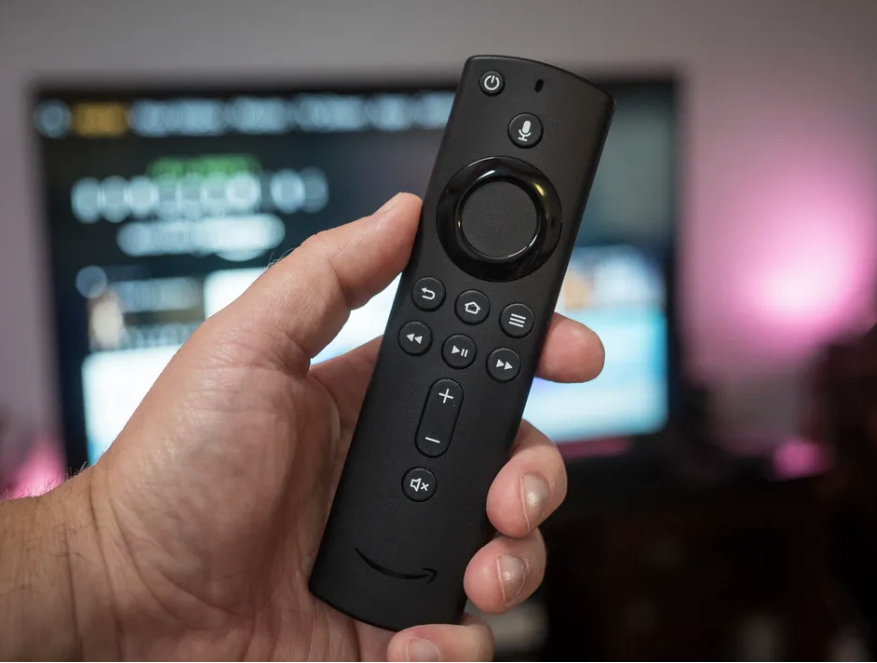
When a streaming remote fails, it can feel like a tiny household glitch. In practice, it can trigger a chain reaction that touches subscription viewing, advertising impressions, customer support queues, and replacement spending. “Firestick remote not working” is one of those searches that looks simple but sits inside a bigger story about how modern entertainment is delivered and how easily that delivery can break.
Streaming platforms and device makers have spent years trying to make TV feel effortless: tap a button, speak a title, and a show starts. A remote that suddenly stops responding flips that promise on its head. It can turn a low-cost device into an unexpected cost, measured not only in money but also in time spent troubleshooting, waiting for deliveries, or contacting support.
Amazon’s Fire TV business, which has long competed with Roku, Google, Apple and smart-TV makers, has relied on keeping the device experience smooth enough that viewers keep watching and keep buying services or interacting with ads and commerce tie-ins. Amazon has previously disclosed the scale of Fire TV’s user base, a reminder that even “small” reliability issues can affect millions of households at once.
In that sense, a remote failure is not just a consumer inconvenience. It is also a reminder of how streaming has become a high-volume, low-friction industry where friction anything that interrupts a session can matter.
The hidden economics of a remote that won’t respond
The most direct cost of a broken remote is replacement. Even when a company offers low-priced devices or discounts, households still face an unplanned expense. For some users, the immediate workaround is a smartphone app or a universal remote, but that also shifts the experience away from “sit down and watch” toward “set up and manage,” which can change how often a device gets used.
For the companies involved, the cost structure is different but still real. Device makers absorb warranty claims, returns, refurbishment, and shipping. Retailers and logistics networks handle extra deliveries. Customer support teams see a surge in contacts. And streaming services can face a softer, harder-to-measure hit: lower engagement when people give up for the night.
That dynamic has become more important as the streaming industry leans more heavily on advertising and on-device discovery. If a viewer can’t navigate a home screen, they can’t see promoted content or ads, and they are less likely to rent a movie, add a channel, or click into a storefront. Analysts have long framed the living room as a battleground not only for subscriptions but also for data, advertising and commerce leverage.
A remote issue also highlights a broader point about the digital economy: reliability affects trust. People search for fixes using the same language across very different problems everything from “gst website not working” (a government portal outage) to “why is my face id not working” (a phone authentication failure). The phrase “not working” has become a shorthand for modern dependence on systems that are assumed to be always-on.
Even unrelated searches like “signs probiotics are working” or “o’keeffe’s working hands” point to the same idea: consumers want confirmation that what they paid for is delivering what it promised, whether it is a health product, a hand cream, or a piece of home electronics. The difference is that with a remote, the confirmation is immediate: either the TV responds, or it doesn’t.
What “firestick remote not working” usually means in practice
A Fire TV remote problem is often not a single problem. It can be power, pairing, interference, software, or physical wear. Amazon’s own support pages describe common situations: a remote that won’t pair, a Fire TV device that can’t detect the remote, or a remote that needs a reset before it reconnects.
One important detail is that many Fire TV remotes rely on a wireless connection (often Bluetooth) rather than a simple “point and shoot” infrared signal. That can be convenient no need for line-of-sight but it can also introduce issues that feel unfamiliar to people used to older TV remotes. A connection can be disrupted by depleted batteries, distance, interference, or a device that is stuck mid-update.
Battery issues sound basic, but they are at the center of many remote failures. A remote that still lights up can still fail to maintain a stable connection if the power is inconsistent. The battery story is also a reminder that streaming is not purely digital. It still depends on physical components that degrade, and on supply chains that deliver replacements.
Pairing limits can matter too. Amazon notes that if multiple controllers are already paired, a new pairing attempt may fail until one is removed. That is not a common household scenario, but it can show up in homes where people use game controllers or have moved a device between rooms over time.
Software updates can be another factor. Streaming devices are updated frequently to improve performance, add features, or adjust advertising formats. Those updates can be good for security and stability, but they also raise the odds that something changes in a way the user notices only when it breaks. A device that is “updating in the background” can look, to a viewer, like a remote that has suddenly stopped working.
Then there is physical wear. Remotes fall behind couches, get spilled on, or suffer from stuck buttons. That type of failure is not unique to Fire TV, but it becomes more visible when the remote is the primary interface for everything on screen.
The broader industry context is that the device layer is becoming more important. Streaming services increasingly differentiate through interface design, recommendations, and ad technology. A remote is the gatekeeper to all of it. A failure that blocks access is a bigger deal today than it was when TV choices were limited and channel changes were simple.
Why reliability now matters to household budgets and to big tech
For households, entertainment spending has become a mixture of recurring charges and one-off purchases. Many people stack multiple streaming subscriptions. At the same time, they buy devices, add smart home products, and replace accessories. A remote that fails can feel small, but it sits on top of that broader spending environment.
For businesses, reliability is tied to churn. A household that can’t watch tonight might not cancel immediately, but repeated friction can push people to use another device, another platform, or a built-in smart TV interface. The risk is not only losing a single customer but also losing that home’s viewing time time that drives advertising, data collection, and cross-selling.
Amazon, for its part, has positioned Fire TV not only as a device but also as a distribution channel for apps and services. In the past, it has added major apps to the platform and highlighted the ecosystem nature of Fire TV. The business logic is straightforward: the more time people spend inside the Fire TV environment, the more opportunities exist for content discovery, channel add-ons, and commerce.
That’s also why customer support documentation is so explicit. Amazon provides specific reset and re-pair guidance for different remote models, including instructions that hinge on button combinations and pairing steps. From a corporate perspective, every issue resolved without a human support interaction can reduce costs.
There is another angle that is increasingly relevant in both the US and UK: waste. Remote failures can lead to replacements, and replacements can lead to more electronics discarded. Research and policy discussions around e-waste have highlighted the environmental and health consequences of improper disposal and informal recycling, especially as small devices proliferate. A remote is small, but the pattern millions of small items replaced frequently adds up.
That creates a subtle tension for the industry. Hardware makers want to sell devices and accessories, but they also face growing attention on durability, repairability, and responsible disposal. In the UK and EU in particular, consumer expectations around product lifespan can influence brand perception, even when regulations vary by category.
What to watch next: support policies, device updates, and consumer behavior
Remote failures are unlikely to become a headline on their own, but they can become a useful lens for understanding where the streaming market is heading.
One area to watch is how companies push control away from physical remotes and toward phones, voice assistants, and on-screen controls. Those alternatives can reduce dependency on a single device, but they also create new dependencies on a phone battery, on Wi-Fi stability, and on accounts being properly linked. A remote problem can become, quickly, a home network problem.
Another area is the pace of software changes. As platforms add features and redesign home screens, the user experience can improve but also becomes more complex. A complex system can be more fragile, especially in households that do not update hardware often.
A third area is consumer spending patterns. When budgets tighten, people delay upgrades and keep older devices longer. That can increase the odds of compatibility issues and hardware fatigue. It can also increase the importance of support and clear communication. The moment a device feels unreliable, a household might rely more on built-in smart TV apps or a competing stick.
Finally, there is the broader trust story. People increasingly judge institutions and brands by whether their systems “work” when needed. That includes not only streaming devices but also essential services hence why searches like “gst website not working” can trend during outages, and why “why is my face id not working” spikes when authentication fails after an update. The shared theme is reliance, and the cost of failure in a world that expects instant access.
For readers tracking consumer-tech economics, it’s also a reminder that the most important problems are not always the flashiest. Sometimes they are the small interface failures that keep a household from pressing “play.”
If you’re interested in how short-term costs and cash-flow pressures show up in everyday business decisions from replacements to support staffing—see our explainer on short-term finance and how companies manage near-term obligations.
Table
| Where the failure shows up | What it may indicate (high-level) | Why it can matter financially | What to watch (without assuming outcomes) |
|---|---|---|---|
| No response, no light | Power or battery problem, or hardware failure | Replacement purchases and returns can rise; support demand increases | Retail pricing for replacement remotes; warranty and return experiences |
| Remote light works but device won’t react | Wireless pairing or connection instability | Lost viewing time can reduce engagement; more support contacts | Software update notes and device prompts about pairing |
| Remote pairs, then disconnects again | Interference, distance, or intermittent power | Repeated friction can shift usage to other devices | Household behavior changes (using phone apps, switching inputs) |
| Device says it can’t detect the remote | Lost pairing state or device-side issue | Customer support and self-help usage increases | Official troubleshooting guidance and reset steps |
| Buttons feel stuck or inconsistent | Physical wear, spills, debris | More replacements; more e-waste over time | Durability expectations and disposal/recycling discussions |
FAQ
What kind of connection does a Fire TV remote use?
Many Fire TV remotes pair wirelessly rather than relying only on line-of-sight control, which is why pairing and detection steps matter when connectivity breaks. Amazon’s help pages focus heavily on re-pairing and resetting, reflecting that wireless link.
Can software updates affect whether a remote seems to work?
They can, in the sense that updates change device behavior and can temporarily interrupt connectivity during restarts or installation. Companies generally frame updates as performance and security improvements, but any change introduces the possibility of user-visible friction.
Why do “not working” problems feel more common now?
Because more daily tasks depend on systems that must function instantly streaming, payments, logins, and government portals. That is why unrelated searches like “gst website not working” and “why is my face id not working” can trend alongside consumer electronics issues: they reflect a broader expectation of always-on services.
Does replacing a remote have any bigger impact beyond the household?
At scale, frequent replacement of small electronics adds to the broader e-waste challenge. Research and policy discussions have highlighted environmental and health risks tied to improper disposal and informal recycling, even when the individual item is small.
What does a remote issue mean for streaming businesses?
It can mean lower engagement in the moment and higher support costs. In an advertising- and discovery-driven streaming economy, interruptions can reduce time spent on the platform and the chances a user explores paid add-ons or promoted content.
Conclusion
A “firestick remote not working” moment can look like a minor home-tech annoyance, but it sits at the intersection of household spending, device reliability, and the streaming industry’s push to keep viewing friction close to zero. When access breaks, the immediate impact is lost time and sometimes replacement cost. For companies, the same failure can translate into higher support demand and lower engagement, at least temporarily, in an economy where minutes watched can matter for ads, subscriptions, and on-platform sales. The bigger takeaway is simple: as more everyday services from TVs to logins to public portals depend on always-on systems, reliability becomes part of the value consumers are really paying for, even when the problem starts with one small remote.