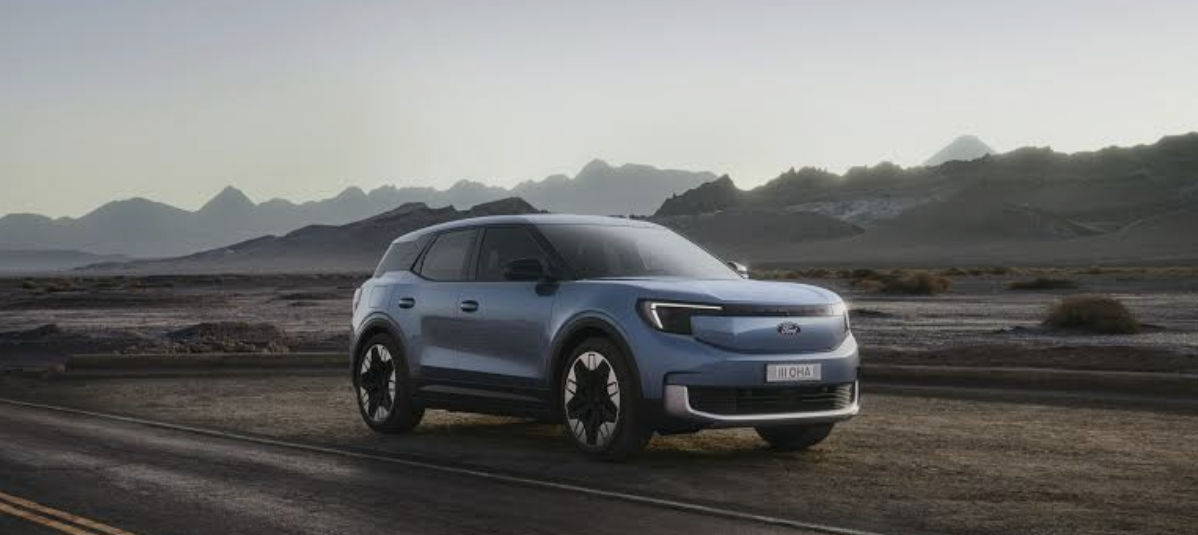
The Ford Explorer is emerging as a central model in Ford Motor Co.’s effort to balance its traditional strength in sport utility vehicles with the rising demand for electric vehicles across the United States and Europe. As the global auto market slows after a post-pandemic rebound, the Explorer’s latest versions including electric variants aimed at European buyers highlight how legacy carmakers are reshaping their product lines without abandoning their core identity.
The shift comes at a time when higher interest rates in the US and UK, along with slower economic growth in parts of Europe, are putting pressure on car sales. Large purchases such as vehicles are often sensitive to borrowing costs, and central bank tightening by the Federal Reserve and the Bank of England over the past two years has made financing more expensive. In this environment, established nameplates like the Ford Explorer carry added importance because they combine brand familiarity with newer technology.
Ford has framed its strategy around strengthening profitable segments while investing in electric platforms. According to material published on the company’s official site, the Explorer remains one of its best-known SUVs, positioned as a family vehicle with space, technology features and, in some markets, electrified options. That mix reflects a broader industry trend in which automakers aim to protect margins in larger vehicles while meeting regulatory and consumer pressure to cut emissions.
A Core SUV in a Changing Market
The Ford Explorer has long been associated with the US market, where SUVs and pickup trucks dominate sales. In recent years, however, the model has taken on a new role in Europe as Ford expands its battery electric lineup. The European Explorer EV is built on a dedicated electric platform and is part of Ford’s wider push to comply with stricter emissions rules set by the European Union and the UK.
The move underlines a basic shift in the car business. Carmakers once competed mainly on engine size and fuel economy. Today they must also compete on battery range, charging speed and software features. For global brands, this means balancing different regulatory systems. The US has introduced incentives for domestic EV production, while the EU and UK have set timelines to reduce or phase out new petrol and diesel car sales over the coming decades.
At the same time, consumer demand has become less predictable. Data from industry groups show that while EV sales continue to grow, the pace has moderated compared with earlier surges. Some buyers remain concerned about charging infrastructure and resale values. Others are waiting for prices to fall further as battery costs decline.
Against that backdrop, established models such as the Ford Explorer can act as a bridge. Buyers who might hesitate to switch to a new brand may be more willing to consider an electric version of a familiar nameplate. Analysts say brand recognition often reduces perceived risk in large purchases.
Brand Strength and Consumer Identity
In the automotive sector, branding plays a role similar to that in luxury goods. Consumers often associate vehicles with lifestyle, reliability and long-term value. That is why carmakers invest heavily in marketing and model heritage.
The way the Ford Explorer name has been extended into electric variants mirrors how other industries manage legacy brands. In fashion and fragrance, for example, companies often build new product lines around well-known names such as Tom Ford Ombre Leather, Tom Ford Black Orchid and Tom Ford Oud Wood. While those products operate in a different market, the principle is similar: leverage a trusted brand to introduce customers to new offerings without losing the core identity.
For Ford, the Explorer badge carries decades of recognition, particularly in North America. By applying that badge to both traditional internal combustion models and newer EV versions, the company signals continuity even as the underlying technology changes.
The strategy also reflects cost discipline. Developing entirely new models requires high investment. Updating or electrifying established models can spread research and development costs across multiple markets and years, which may help protect profitability during periods of softer demand.
US, UK and European Outlook
The performance of the Ford Explorer in different regions may offer clues about broader auto industry trends. In the US, SUV demand remains relatively resilient, supported by consumer preference for larger vehicles and, in some areas, lower fuel costs compared with Europe. However, higher borrowing rates have led some buyers to delay purchases or opt for lower-priced trims.
In the UK and the European Union, environmental regulations play a stronger role in shaping product offerings. Governments have set emissions targets that encourage electric adoption, though subsidy programs have evolved over time. Charging networks continue to expand, but coverage is uneven in rural areas.
The table below outlines how the Ford Explorer fits into regional market dynamics.
| Region | Market Context | Role of Ford Explorer | What to Watch |
|---|---|---|---|
| United States | Higher interest rates; strong SUV preference | Core family SUV; mix of petrol, hybrid | Consumer financing costs; fuel prices |
| United Kingdom | Tight emissions rules; evolving EV incentives | Electric Explorer aimed at urban buyers | Charging infrastructure growth; policy changes |
| European Union | Aggressive climate targets; cross-border competition | EV platform expansion; brand repositioning | Battery supply chains; trade policies |
Industry analysts often note that policy clarity can influence buyer confidence. When governments signal long-term support for EV infrastructure and incentives, demand may strengthen. Uncertainty, by contrast, can lead consumers to postpone decisions.
Ford’s approach with the Explorer suggests an attempt to hedge across markets. By maintaining internal combustion versions in the US while expanding electric versions in Europe, the company avoids overcommitting to one path in an uncertain environment.
Competition and Model Strategy
Competition in the midsize SUV segment is intense. Global automakers, including European and Asian rivals, are investing heavily in electric crossovers. In Europe, compact and midsize EV SUVs have become one of the fastest-growing categories.
Ford has also revived other historic nameplates, including the Capri in Europe. The return of the Capri, sometimes referred to in online discussions as ford capri ford, shows how manufacturers are mining their archives to reconnect with customers. Like the Explorer, the revived Capri name is linked to modern electric technology rather than its original petrol-powered roots.
This blending of heritage and innovation reflects a broader tension in the industry. Carmakers must fund costly EV development while continuing to generate cash from conventional vehicles. Investors often scrutinize margins in electric divisions, which can be thinner in early years due to battery costs and factory upgrades.
Market participants have become more cautious about pure growth narratives in the EV space. After a period of rapid expansion, some manufacturers have scaled back production targets or adjusted timelines. Analysts say demand remains structurally positive over the long term, but short-term volatility is likely as supply chains and consumer behavior adjust.
In that context, diversified portfolios may provide stability. Ford’s lineup includes trucks, commercial vehicles and SUVs alongside its electric offerings. The Ford Explorer, sitting at the center of the SUV category, remains a pillar of that portfolio.
Financial and Industrial Considerations
Automotive manufacturing is capital-intensive. Companies must invest in factories, tooling and battery supply agreements years before seeing returns. The transition to EVs adds complexity, as new supply chains for lithium, nickel and other materials must be secured.
Ford has outlined plans to expand battery production capacity in both North America and Europe. Such investments are often influenced by government incentives, trade rules and local labor conditions. Currency fluctuations between the dollar and the pound or euro can also affect reported earnings and export competitiveness.
While precise financial impacts vary by quarter, analysts generally assess automakers on metrics such as operating margin, free cash flow and vehicle pricing power. Large SUVs like the Ford Explorer have historically contributed higher margins than smaller cars, due in part to their pricing and consumer demand.
The shift to electric versions may alter cost structures. Battery packs represent a significant share of EV production costs. Over time, economies of scale and technological improvements may reduce these expenses, but the pace remains uncertain.
Recent reporting on global technology disruptions, including cloud outages affecting industries beyond automotive, has also underscored how interconnected modern manufacturing has become. As discussed in analysis of global tech infrastructure risks, supply chain resilience is increasingly tied to digital systems and cloud providers. Any disruption can ripple across production schedules and dealer inventories, affecting sales performance and investor sentiment.
Consumer Behavior and Financing
For many households in the US and UK, vehicle purchases are financed through loans or leases. Higher benchmark interest rates can translate into higher monthly payments. Even modest increases in rates may reduce affordability for mid-range SUVs.
In the US, auto loan rates have risen from pandemic-era lows, reflecting broader monetary tightening. In the UK, mortgage and consumer credit rates have also increased. As a result, some buyers may trade down to smaller vehicles or delay purchases.
Ford and its financing arm, like other automakers, may offer promotional rates or incentives to maintain sales volumes. However, such measures can affect margins if not carefully managed.
Consumer perception of electric vehicles also continues to evolve. Early adopters were often motivated by environmental concerns or new technology. More mainstream buyers tend to weigh practical factors such as driving range, charging time and total cost of ownership.
The Ford Explorer EV in Europe is positioned as a practical family vehicle rather than a niche product. By integrating familiar SUV design with electric drivetrains, Ford appears to be targeting buyers who want continuity in size and utility but are open to lower emissions.
What to Watch
Looking ahead, several factors may shape the trajectory of the Ford Explorer and similar models.
First, interest rate policy in the US and UK could influence financing conditions. If inflation eases and central banks slow or reverse tightening, borrowing costs may decline, potentially supporting auto demand. Conversely, prolonged high rates could keep pressure on sales volumes.
Second, battery supply chains and raw material prices will remain critical. Any disruption could delay production or raise costs. Trade tensions or new tariffs may also affect cross-border vehicle shipments, especially between the UK and the EU.
Third, consumer confidence levels are closely linked to vehicle purchases. Employment data, wage growth and fuel prices all play roles in shaping household budgets. A stable labor market may support SUV sales even if broader growth slows.
Finally, competition in the electric SUV segment is likely to intensify. As more models enter the market, pricing pressure may increase. Carmakers will need to differentiate through technology, software integration and after-sales service.
For Ford, the Explorer represents more than a single model. It is a test case for how a traditional SUV brand can adapt to a changing regulatory and economic landscape without losing its identity. By maintaining a presence in both internal combustion and electric formats, the company is attempting to navigate uncertainty while protecting its core revenue streams.
The global auto industry is at a crossroads. Growth has normalized after the sharp disruptions of the pandemic years, and the shift to electric mobility is reshaping investment priorities. In this environment, the performance of established nameplates such as the Ford Explorer may offer a clearer signal of long-term trends than short-term market swings.
FAQ
What is the Ford Explorer?
The Ford Explorer is a midsize SUV produced by Ford. It is sold in the United States and, in electric form, in parts of Europe. It is positioned as a family vehicle with space, safety features and modern technology.
Is the Ford Explorer available as an electric vehicle?
Yes. In Europe, Ford offers an electric version of the Explorer built on a dedicated EV platform. In the United States, the model lineup includes petrol and hybrid variants, depending on the market year.
Why is the Ford Explorer important to Ford’s strategy?
The Explorer is one of Ford’s best-known SUV models. It combines brand recognition with evolving technology, making it central to the company’s efforts to manage the transition from petrol engines to electric vehicles.
How do interest rates affect Ford Explorer sales?
Higher interest rates can increase monthly loan payments for car buyers, which may reduce demand for larger vehicles. Lower rates could support affordability and improve sales conditions.
What risks does the model face in global markets?
Risks may include economic slowdowns, changes in government policy, supply chain disruptions and growing competition in the electric SUV segment.
Conclusion
The Ford Explorer sits at the intersection of tradition and transition. As Ford balances steady demand for established SUVs with the long-term shift toward electric vehicles, the model illustrates how legacy carmakers are adapting to tighter regulations, changing consumer behavior and uncertain economic conditions in the US, UK and Europe. Its performance across regions may offer a useful gauge of how quickly mainstream buyers embrace electrification and how effectively global automakers manage the costs and risks of that shift.