The longest government shutdown in American history is finally over. After 43 grueling days, federal employees will once again see paychecks, national parks will reopen their gates, and the gears of government will slowly grind back into motion. But as the dust settles in Washington, the political fallout is just beginning to crystallize. The narrative of who won and who lost is being fiercely contested, with a triumphant Donald Trump celebrating a “very big victory” while Democrats face a storm of internal fury and accusations of surrender.
The Government Shutdown, triggered by Senate Democrats using the parliamentary filibuster, was a high-stakes gamble. Their line in the sand was the demand for Republicans to agree to extend crucial health insurance subsidies for low-income Americans, which are set to expire. For over a month, they held firm. Yet, the end came not with a negotiated compromise, but with a fracture in their own ranks. When a handful of Democrats broke ranks to vote with Republicans on a bill to reopen the government, the party’s leverage evaporated. In return, they received little more than a promise of a future Senate vote on the subsidies pledge with no guarantee of passage.
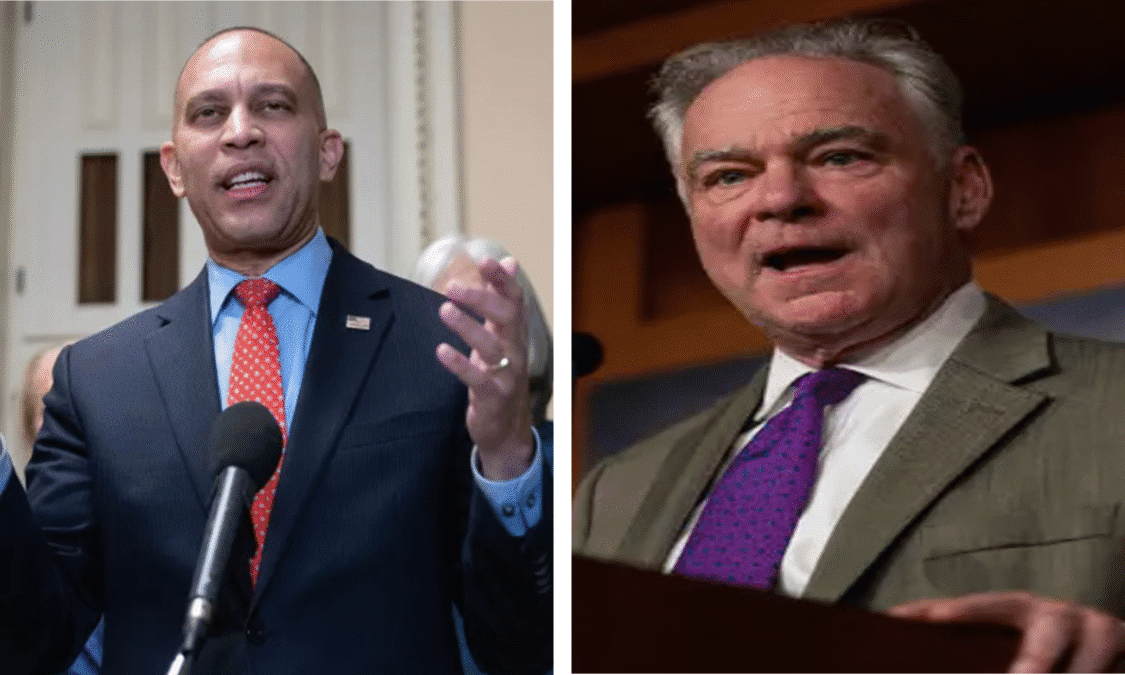
The reaction from the Democratic base has been one of raw anger. The party’s left flank is livid, feeling that their leaders folded after weeks of sacrifice. Mainstream voices within the party are echoing this frustration. California Governor Gavin Newsom, a loyal ally of President Biden, called the deal “pathetic” and a “surrender.” His pointed criticism signals a deep unease within the party’s establishment, suggesting that many Democrats believe their leaders are still “playing by the old rules” against a political adversary like Donald Trump who has rewritten the game entirely.
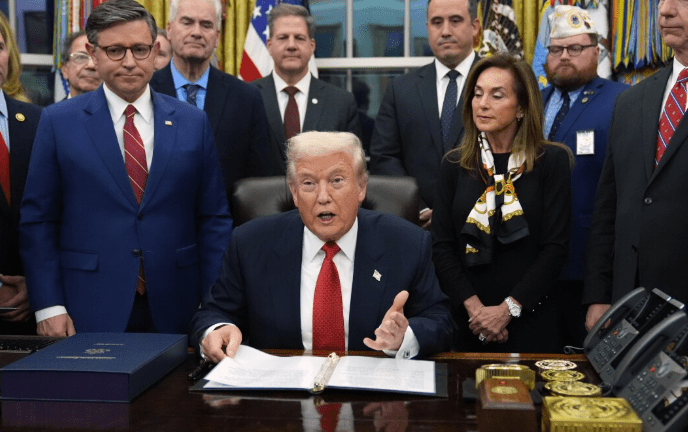
Meanwhile, President Trump’s mood has shifted from cautious optimism to outright celebration. He quickly moved to claim credit, congratulating congressional Republicans and framing the reopening as a triumph of his party’s resolve. In a pointed jab, he took aim at Senate Democratic leader Chuck Schumer, declaring, “He thought he could break the Republican Party, and the Republicans broke him.” For Trump, emerging from the Government Shutdown without having to make substantive concessions is a clear political win, allowing him to project an image of strength.
However, the victory lap may be short-lived. The very issue that Democrats fought over, the looming expiration of health insurance subsidies, remains a ticking time bomb that could cause premiums to skyrocket for millions of voters, creating a significant political peril for Republicans who ignore it. Furthermore, the political landscape can shift in an instant. On the very day the House voted to end the shutdown, attention was diverted by a successful petition to force a vote on releasing the Justice Department’s files on the Jeffrey Epstein case, a reminder that in Washington, today’s triumph can be quickly eclipsed by tomorrow’s scandal.
While the immediate crisis has passed, the funding agreement is only a temporary fix, with another deadline looming at the end of January. Democrats, now licking their wounds and facing internal turmoil, may be hankering for a rematch, ensuring that the political battles that defined this historic Government Shutdown are far from over.