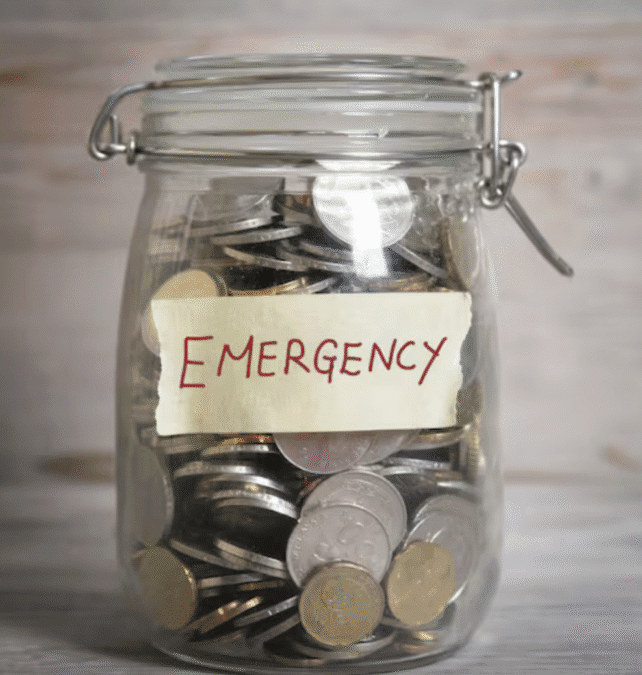
The question “how much is in your emergency fund UK?” sounds simple, but the right number depends on your monthly essentials, job stability, and whether your costs could jump suddenly. UK guidance typically starts with a clear benchmark: keep three to six months’ essential outgoings in an instant-access savings account, then adjust for your situation.
What an emergency fund is and what it’s for
An emergency fund (sometimes called “rainy day savings”) is money set aside for financial shocks: a broken boiler, a car repair, a sudden rent gap, or a period of reduced income.
HSBC’s emergency fund calculator describes it as money you save to cover a shock, such as losing your job or an unexpected expense like fixing a broken boiler, and says it can reduce the need to take on debt.
MoneyHelper also frames it as savings for both unexpected repairs and tougher situations like job loss or relationship breakdown, where you may need time to recover.
The core purpose is resilience: it buys you time and options so you don’t have to rely on high-cost borrowing or rushed decisions.
The UK rule of thumb: 3 to 6 months of essential outgoings
This is the benchmark most UK readers see because it is easy to apply.
MoneyHelper’s rule of thumb is three to six months’ essential outgoings held in an instant access savings account. MaPS
HSBC’s calculator uses a similar range and says ideally 6 months of essentials (rent/mortgage, utility bills, groceries), but if you’re starting out, 3 months is a useful first target. “Any emergency fund is better than nothing.”
Why the “essential outgoings” wording matters
People often calculate emergency funds using “total spending”. That can inflate the target and make saving feel impossible.
“Essential outgoings” typically mean:
- rent or mortgage
- energy and water
- Council Tax
- groceries/household basics
- Travel needed for work/study
- childcare
- minimum debt repayments
It usually does not include every discretionary spend (holidays, premium subscriptions, frequent takeaways). That’s why the rule feels achievable.
How to calculate your number in 10 minutes
If you want one clean answer for how much money is in my emergency fund, use this simple equation:
Emergency fund target = monthly essential outgoings × 3 to 6
MoneyHelper even provides a concrete example: if essentials are £1,000 a month, a target could be £3,000 to £6,000.
Step-by-step
- Open your last 30 days of bank statements
Highlight essentials only: housing, bills, food, commuting, and childcare. - Total your essentials for one month
If energy or commuting varies, use an average across a few months. - Pick your “months cover” (3, 4, 5, or 6)
- Start with 3 months if building from zero.
- Aim for 6 months if you want a stronger cushion.
- Multiply and set a deadline
Example: essentials £1,600/month → 3 months = £4,800; 6 months = £9,600. - Automate it
Make it a standing order on payday so it happens without willpower.
A quick “reality check” test
Ask: “If my income stopped next month, could I keep housing and bills paid while I look for solutions?”
That’s what the fund is meant to cover.
Who should aim for 3 months vs 6 months
The 3–6 month range is a starting point, not a strict rule. Here’s how to adjust it.
When can 3 months be reasonable
- Stable income (secure employment, reliable hours)
- Low fixed costs relative to income
- Strong support network (family help if needed)
- Two-income household where one income could cover essentials temporarily
This matches the idea of a “starter” target that is still meaningful HSBC explicitly says 3 months is a smaller goal to begin with.
When is 6 months smarter
- You’re the sole earner, or your dependents rely on you
- Your sector has volatile hiring or commission-based pay
- You’re a renter facing potential rent increases at renewal
- You’re a homeowner with repair risk (boiler, roof, plumbing)
- You have health uncertainty or limited sick pay
HSBC calls 6 months “ideal”, while MoneyHelper says 3–6 months gives a “solid financial cushion.”
When you might consider more than 6 months
MoneyHelper and HSBC focus on 3–6 months, but some households choose larger buffers if income is uncertain or costs are unusually hard to cut. If that’s you, the practical approach is:
- keep the core 3–6 months in instant access, then
- build extra “secondary buffer” savings separately (for example, a longer-term pot).
Why it matters: what an emergency fund changes (in real UK terms)
An emergency fund is not an abstract “good habit”. It directly affects:
- Debt risk: HSBC notes the fund can prevent the need to take on debt.
- Bill’s stability: Housing and utilities are more manageable when a shock hits.
- Decision quality: you can choose the best option, not the fastest one (e.g., not selling investments at the worst time).
- Mental load: Knowing you can absorb an unexpected bill reduces day-to-day stress.
Benefits and risks (what readers miss)
Benefits
- Stops small emergencies from turning into long-term debt
- Helps you stay on track with financial goals (saving, investing)
- Makes job changes less risky (you can wait for the right role)
- Gives households a “shock absorber” during cost spikes
Risks and trade-offs
- Opportunity cost: money in cash may grow more slowly than long-term investments.
- Inflation risk: if prices rise, your buffer may buy less over time.
- Over-saving: Some people hold very large cash balances while carrying expensive debt that can be inefficient.
That’s why many guides position emergency funds as a foundation: build it, then consider investing afterwards (HSBC’s calculator page even nudges that once the fund is in good shape, investing can be the next step).
Where to keep an emergency fund in the UK
The key requirement is instant access (or close to it). MoneyHelper explicitly says the 3–6 months of essentials should be available in an instant access savings account.
Safety: deposit protection in 2026
If you’re holding cash savings, safety is about understanding FSCS deposit protection.
From 1 December 2025, FSCS deposit protection rose to £120,000 per eligible person, per authorised firm.
So the limit applies across those accounts combined.
Practical implication:
Most emergency funds sit well below £120,000. But if you’re holding a large cash buffer (or temporary high balances after a house sale), it’s worth knowing how protection works.
Best-fit account types for emergency cash
- Instant access savings: easiest for emergencies (fits MoneyHelper’s guidance).
- Current account buffer: useful for day-to-day, but can be too tempting to spend.
- Premium Bonds: accessible, but returns aren’t guaranteed (good for some, not for everyone).
- Fixed-term savings: usually not ideal for emergencies because access can be restricted.
Real-world UK examples (numbers people can compare)
Single renter with a stable job
- Essentials per month: £1,300
- 3 months target: £3,900
- 6 months target: £7,800
A 3-month target may be a workable first milestone, with a path to 6 months if rent is likely to rise.
A Couple with one child and higher fixed costs
- Essentials per month: £2,500 (housing, childcare, bills, groceries)
- 3 months target: £7,500
- 6 months target: £15,000
Childcare and housing make fixed costs high, so 6 months often feels safer.
Self-employed/variable income household
- Essentials per month: £1,900
- Base target (6 months): £11,400
- Extra buffer: secondary pot for tax timing / quiet months
If your income fluctuates, the “months cover” approach matters more than a single headline number.
Pros & cons of different emergency fund sizes
Smaller fund (1–2 months)
Pros
- Achievable quickly
- Better than nothing
Cons
- Can be wiped out by one large event (boiler + car repair)
- Doesn’t cover longer disruptions
Medium fund (3 months)
Pros
- Strong starter safety net (and HSBC’s suggested starter target)
- Helps cover many common shocks
Cons
- Maybe tight for job loss, relationship change, or long illness (MoneyHelper flags these tougher situations)
Larger fund (6 months)
Pros
- More breathing space for major life disruption (also within MoneyHelper’s rule of thumb)
- Less likely to force debt
Cons
- Larger opportunity cost if you delay investing for long-term goals
Comparisons: emergency fund vs. “investing for emergencies.”
Some people ask whether they can “just invest it” instead of holding cash.
A newsroom-style answer is blunt: investing can fall at exactly the wrong time. If you might need money within months, cash (instant access) is usually the safer tool, which is why MoneyHelper’s rule of thumb points to instant access savings for emergency funds.
A practical compromise some UK savers use:
- Core emergency fund (3–6 months) in instant access
- Longer-term goals invested (pension, Stocks & Shares ISA)
- Annual costs pot (insurance, gifts) held separately
Best practices: how to build it without feeling overwhelmed
Use a two-stage goal
HSBC explicitly suggests starting at 3 months, then building from there.
Stage 1: reach 1 month essentials
Stage 2: reach 3 months
Stage 3: move towards 6 months (if appropriate)
Make the savings automatic
- Standing order the day after payday
- Increase it gradually (e.g., +£10 a month) so it doesn’t feel like a shock
Keep it separate from daily spending
A separate savings account reduces “accidental spending” risk.
Review once a year (or after big life changes)
Recalculate essentials if:
- You move house,
- Have a child,
- Switch jobs,
- Or your bills materially change.
Key insights
- UK guidance commonly starts with 3–6 months of essential outgoings.
- The number should be based on your essentials, not your total lifestyle spend.
- Start at 3 months if you’re building from zero; 6 months is the stronger cushion.
- Keep emergency cash instantly accessible, and know the FSCS protection rules for larger balances.
Table
| Situation (UK) | Suggested target | Why | Simple example (essentials £1,500/month) |
|---|---|---|---|
| Stable PAYE job, low dependants | 3 months | Starter cushion for common shocks | £4,500 |
| Stable job but high fixed bills (kids / high housing) | 4–6 months | Less flexibility in essentials | £6,000–£9,000 |
| Variable income / self-employed | 6 months (plus extra pots) | Income can dip unexpectedly MaPS | £9,000 |
| Homeowner with repair risk | 6 months + home repair pot | Income can dip MaPS unexpectedly | £9,000 + repair pot |
| Building from zero | 1 month → 3 months | Momentum matters; “any is better than nothing.” | £1,500 → £4,500 |
Useful Tips Section
- Don’t wait for the “perfect” target: build a 1-month buffer first, then move to 3 months (HSBC’s “start smaller” logic).
- Base your calculation on essentials only: it’s more realistic and easier to sustain.
- Protect your cash: if you hold large balances, remember FSCS protection is per person, per authorised firm, and can depend on shared licences.
- Use “pots” for annual bills: separating car insurance/gifts/repairs prevents “emergencies” that aren’t really emergencies.
- If debt is expensive, build a small buffer, but don’t ignore high-interest debt for too long; otherwise, interest can outpace your savings progress.
FAQ
1) How much money should I put in my emergency fund?
A common UK starting point is three months of essential outgoings, building towards six months if you want a stronger cushion.
2) How much is in an emergency fund UK on average?
There isn’t one official “average” that fits everyone because household costs vary widely. A more useful benchmark is the 3–6 months of essentials rule, calculated from your own bills.
3) How much is a good amount for an emergency fund?
For many households, a “good amount” is the one that covers essential bills through a shock: 3 months for a starter cushion, 6 months for more resilience.
4) How much money is in my emergency fund if I rent vs own a home?
Renters often focus on rent gaps and deposits; homeowners may prefer the top end of the range because repairs can be expensive and sudden. HSBC’s guidance points to 6 months as ideal, with 3 months as a starter target.
5) How much is the average emergency fund for a UK family?
Families often have higher fixed costs (housing, childcare), so the cash amount can be larger even if the “months” rule is the same. Start by calculating essentials, then multiply by 3–6.
6) Where should I keep emergency savings in the UK?
MoneyHelper’s rule of thumb is to keep emergency savings in an instant-access savings account, so the money is available quickly.
7) Is my emergency fund protected if my bank fails?
FSCS protection rose to £120,000 per eligible person, per authorised firm from 1 December 2025, but shared banking licences can affect how accounts are grouped for compensation.
Conclusion
If you’re asking how much is in your emergency fund UK, the most reliable answer is a formula, not a fixed number: total your essential monthly outgoings and aim for three to six months held in instant access savings.
The next thing to watch is whether your target still matches your life: housing changes, dependants, job security, and bill inflation can all shift what “enough” looks like, and for larger cash balances, it’s also worth understanding FSCS protection rules.
Read our explainer on whether the UK is heading for a recession for more context on how growth risks can affect sterling and markets.