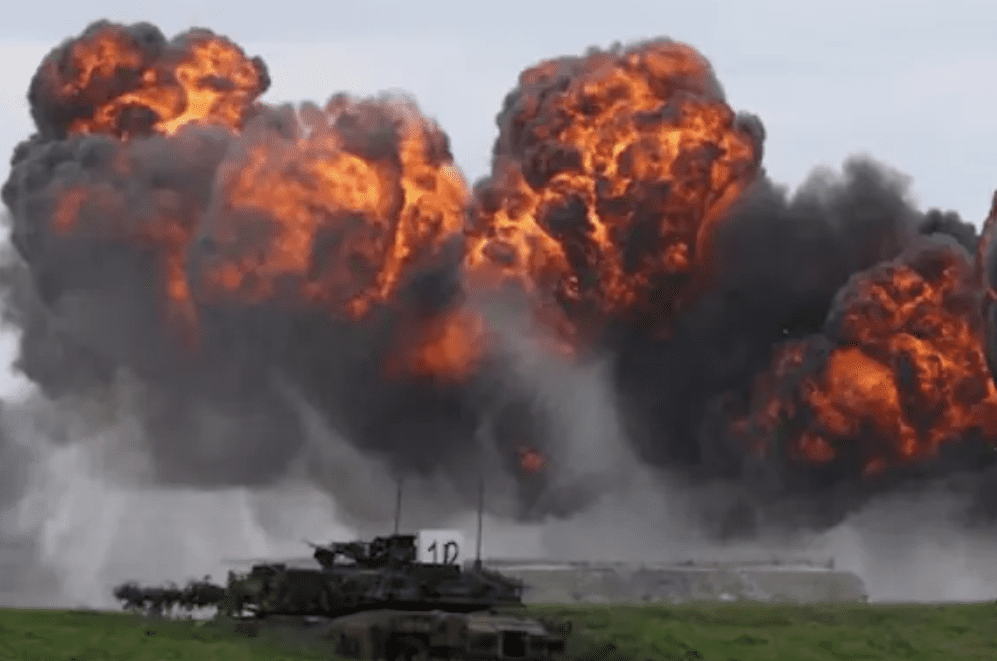
NATO’s defense policy is at a turning point. In late 2025, U.S. officials told Europe to assume the bulk of the alliance’s conventional defense by 2027. This article will explain what NATO defense policy means, why collective security matters, and outline the key strategies and pillars behind modern defense.
What Is NATO Defense Policy? (Overview)
NATO (North Atlantic Treaty Organization) is a collective defense alliance. Its core idea is Article 5: an attack on one ally is an attack on all. In practice, this means members commit forces and capabilities to defend each other. NATO’s strategy is defensive and deterrent: it maintains a credible mix of nuclear, conventional, and missile-defense forces, plus space and cyber capabilities. The goal is to prevent conflict by deterrence, ensuring enemies know the alliance can and will defend any member.
- Collective defense: Allies pledge to protect each other (Article 5 of the NATO treaty).
- Deterrence posture: NATO keeps a strong military presence (troops, missiles, cyber defenses) so no adversary dares attack.
- Burden-sharing: Members pool resources. The U.S. has historically led, but current policy pushes Europe to increase its share of defense.
A credible defense policy means every NATO member contributes. The alliance’s Strategic Concept emphasizes maintaining freedom and security against threats from all directions, adapting to new challenges (like cyberattacks) while reinforcing conventional defense.
Why Collective Defense Matters (Importance & Benefits)
Shared defense policy strengthens security in several ways:
- Stronger deterrence: When all allies invest in defense, threats are deterred more effectively. For example, Russia’s invasion of Ukraine has shown the need for a united response. NATO has since bolstered forces on its eastern flank.
- Cost-sharing: Defense is expensive. Pooling resources means each country spends less individually. NATO’s target (endorsed by all members) is 5% of GDP on defense by 2035. This “Hague Commitment” encourages fairer spending across Europe.
- Political solidarity: A common defense plan cements alliances. Working together in NATO builds trust and cooperation, which has economic and diplomatic benefits.
Benefits of strong defense cooperation include:
- Enhanced security: An attack on one ally triggers a unified response (Article 5), providing small nations with the protection of the entire alliance.
- Peace and stability: Credible military strength can prevent wars. As NATO notes, credible deterrence is “the backbone” of collective defense.
- Economic backing: Defense investment can boost technology and industry (e.g. joint arms procurement), though it must be balanced against social needs.
US Deadline for Europe: 2027 and Reaction
In December 2025, Pentagon officials announced a 2027 deadline for Europe to shoulder the majority of NATO’s non-nuclear defense. This bold demand means: if by 2027 Europe hasn’t built up capabilities (troops, ships, missiles, etc.), the U.S. might withdraw from some NATO planning channels.
What this means:
- The U.S. is tired of carrying the lion’s share of conventional defense in Europe. American officials said Europe needs to step up faster.
- Europeans responded that 2027 is tight. Building new military forces (and training personnel) takes years. Some allies have “production backlogs” for equipment.
Europe’s commitments:
- In June 2025, NATO leaders agreed on the “Hague Commitment” – reaching 5% GDP on defense by 2035. Most members had already pledged 2%, but few met it. This new target is much higher.
- In October 2025, EU leaders agreed Europe must be able to defend itself by 2030, focusing on air defense, drones, cyber and munitions. The UK and Norway even launched a joint effort to patrol and protect the Arctic region.
Key takeaway: The US is pushing for “Europe to lead conventional defense,” not just pay lip service. As one NATO official put it: “Allies have recognized the need to invest more in defense and shift the burden…from the U.S. to Europe”.
Key Pillars of National Defense
Modern defense is multi-dimensional it goes beyond just armies and tanks. Many experts highlight several pillars of defense, covering military, civilian, economic, and societal resilience. For example, Singapore’s “Total Defence” concept outlines five (now six) pillars:
| Pillar | Role in Defense |
|---|---|
| Military Defense | Emergency services and infrastructure resilience (e.g. police, hospitals, disaster response). |
| Civil Defense | Emergency services and infrastructure resilience (e.g. police, hospitals, disaster response). |
| Economic Defense | A robust economy and critical industry that can sustain defense (maintain production/supply). |
| Social Defense | National unity and social cohesion – trust among citizens and communities during crises. |
| Digital (Cyber) Defense | Protection of digital infrastructure and data; cybersecurity and information resilience. |
| Psychological Defense | Public morale, willpower and resolve to endure threats and uphold way of life. |
These pillars create a whole-of-society defense. For instance, in war or crisis:
- Economic defense means secure supply chains, food and energy independence, and the ability to quickly mobilize resources.
- Social defense stresses harmony and trust – a divided society is vulnerable to disinformation or unrest.
- Digital defense is critical today: protecting cyber networks and preventing online attacks on government and businesses.
By strengthening each pillar, nations increase overall resilience. NATO itself has begun integrating non-military factors into security planning, recognizing that a strong economy and an informed, united population are part of defense.
Strengthening Defense: Practical Steps (How-To)
Countries and alliances can take concrete steps to bolster their defense strategy. Here are some key actions:
- Assess threats and capabilities: Regularly review what threats (e.g. regional conflicts, cyberattacks) may affect security. Conduct joint exercises (e.g. NATO war games) to test readiness.
- Boost defense spending wisely: Meet agreed targets (like NATO’s 5% goal) with smart investments. Focus on high-priority areas (air defense, cyber units, missile defense).
- Modernize and diversify forces: Develop new technologies (drones, AI, cyber tools) and mix defensive strategies (conventional forces and advanced systems).
- Enhance alliances: Work closely with allies through NATO. Share intelligence and logistics. Joint procurement can save money (several countries buying U.S. equipment is encouraged).
- Strengthen infrastructure: Harden critical infrastructure (power grids, ports) against attack or sabotage. Build stockpiles of supplies (fuel, ammunition, medical).
- Engage society: Train civilians for emergencies (evacuations, first aid). Promote unity campaigns so the public supports defense policies.
By following these best practices, nations turn strategy into action. As the U.S. Defense Department notes, its 2025 strategy will prioritize homeland defense and increased burden-sharing with allies. This means working together now to prevent future crises.
Examples of Defense Strategies
Real-world examples illustrate these concepts:
- NATO Exercises: Large-scale drills (e.g. Defender Europe, Saber Strike) practice moving troops across borders quickly. This test logistics and shows military strength.
- EU Defense Planning: The EU’s 2022 Strategic Compass (not yet referenced, but part of 2030 plan) aims to coordinate European forces. In October 2025, EU leaders agreed the continent must deter attacks by 2030.
- Bilateral Cooperation: The UK and Norway deal to patrol Arctic waters is an example of allies covering each other’s weaknesses (Norway’s northern flank, UK’s navy).
- National Models: Singapore’s Total Defence (all six pillars) is a known framework for small states. Many countries now talk about “comprehensive defense” – covering cyber, economic and social fronts, not just military.
These examples show that defense strategy can be regional, alliance-based, or national. The common thread is planning across all domains and sharing the load with partners.
Pros & Cons of NATO Defense Policy
Like any strategy, NATO’s approach has advantages and trade-offs:
- Pros:
- Collective Security: Small allies gain protection from bigger powers. An attack on Estonia, for example, triggers defense by the whole alliance.
- Resource Sharing: Costs and capabilities are pooled (e.g. shared intelligence, joint bases).
- Deterrence: A united front makes aggression less likely. Seeing unified NATO troops in Eastern Europe strengthens deterrence against Russia.
- Cons:
- High Costs: Meeting defense targets (e.g. 5% GDP) means diverting funds from social programs or taxes.
- Dependence: If allies don’t contribute enough, a heavier burden falls on willing members (hence the U.S. push). This can strain relations if demands are seen as unfair.
- Risk of Escalation: Visible military buildup can provoke tensions. For instance, some fear that NATO exercises near Russia’s border could heighten risks.
- Complex Coordination: With 32 members (30 in 2025), getting consensus is slow. Different threat perceptions can lead to friction.
On balance, however, NATO members generally view collective defense as net-positive. The key insight is that a unified strategy and credible forces keep peace, but only if all stick to the plan
NATO vs. Other Defense Frameworks (Comparison)
It’s useful to compare NATO’s model with other security arrangements:
- NATO vs. European Union (EU) Defense:
- NATO is a military alliance including the U.S. and Canada. It has a clear mutual defense clause (Article 5).
- EU defense initiatives (like PESCO and the Strategic Compass) focus on European cooperation and crisis management, but the EU has no NATO-equivalent Article 5. Some EU members (Sweden, Finland) only recently joined NATO, making the EU’s defense role complementary.
- Both coordinate closely, but NATO handles collective military defense, while the EU may support through industry policy, research and non-military tools.
- Defensive vs. Offensive Strategy:
- NATO’s philosophy is largely defensive (deterring attacks). An offensive strategy (pre-emptive action beyond alliance territory) is generally not NATO’s stated aim.
- Some countries (e.g. the U.S. Indo-Pacific strategy) have more proactive elements (deterring China), but in Europe, NATO sticks to protecting territory and allies.
- Global Alliances:
- Compared to UN peacekeeping (global, multi-purpose) or bilateral pacts (e.g. US-Japan), NATO is specifically military and collective. Its members train and operate together, unlike more ad-hoc coalitions.
Each model has its pros. NATO’s collective defense is stronger with the U.S. on board, while purely regional defense (EU-only) would struggle to match it. But Europe’s recent push for autonomy (2030 plan) shows interest in a more independent defense capability.
Best Practices in Defense Policy
From the above, some best practices emerge for any nation or alliance:
- Fair Burden-Sharing: Honor commitments. Aim for planned spending targets (e.g. 2–5% GDP in NATO). Share roles (some countries specialize in air defense, others in cyber, etc.).
- Alliance Interoperability: Train forces to work together (common equipment standards, joint drills). This maximizes combined strength.
- Dual-Use Investment: Fund technologies useful in peace and war (transport, IT). This makes rapid mobilization easier.
- Societal Resilience: Educate and involve citizens (civil defense drills, public awareness of threats). A united populace is harder to destabilize.
- Strategic Flexibility: Update defense plans frequently. The world changes (e.g. Russia’s war in Ukraine altered NATO priorities). Adapt doctrines to new threats like cyber or space warfare.
- Global Collaboration: Work with partners beyond NATO (like the UN, partner countries). Coordinating sanctions, intelligence and training with global allies increases overall security.
These actions follow the guidance of major strategies. For example, the U.S. 2025 defense strategy statement explicitly calls for increased burden-sharing and strong homeland defense. In short, best practice is “Pool, modernize, and prepare.”
Useful Tips for Strengthening National Defense
- Build Stockpiles: Keep reserves of essentials (fuel, ammo, food, medicine). In crises, supply chains can break. Having on-hand reserves keeps forces and civilians supplied.
- Protect Critical Infrastructure: Harden power grids, data centers, ports and other vital assets. Attacks often target infrastructure to cripple a nation.
- Diversify Suppliers: Avoid dependence on a single country or company for weapons and technology. A mix of domestic production and allied purchases ensures stability.
- Cyber Hygiene: Encourage strong cybersecurity for businesses and government. Simple measures (regular updates, backups, encryption) prevent easy cyber incursions.
- Public Awareness: Teach citizens basic emergency skills (first aid, fire safety). A prepared population can better support defense efforts in wartime.
- Foster Alliances Beyond NATO: Engage in multilateral forums (e.g. UN, G7) to build diplomatic and security ties. The broader the network, the more support available in crises.
These practical steps can be started at home and built over time. Even small countries can improve security dramatically by following them.
Frequently Asked Questions (FAQs)
Q: What is NATO defense policy?
A: NATO’s defense policy is based on collective defense and deterrence. All 32 member nations agree that an attack on one is an attack on all (Article 5). NATO maintains a mix of conventional forces, nuclear deterrence, and missile defense to protect allies. Today, policy emphasizes strengthening Europe’s own capabilities so that the U.S. and Europe share the defense burden.
Q: What does the U.S. National Security Advisor do?
A: The U.S. National Security Advisor is a senior aide to the President on security and foreign policy. This official chairs the National Security Council meetings and helps coordinate defense, intelligence, and diplomatic strategy. In 2021–2025, for example, Jake Sullivan served in this role under President Biden. The advisor works closely with the State Department and Pentagon, but is not a Senate-confirmed position.
Q: What are the three types of defensive strategies?
A: Defense strategies are often categorized as preventive, detective, and corrective. Preventive strategies aim to stop threats before they happen (e.g. firewalls to block cyberattacks). Detective strategies focus on spotting breaches (like security monitoring and alarms). Corrective strategies deal with recovering from an incident (incident response and system repair). Together, these approaches form a comprehensive defense plan.
Q: What are the five pillars of defense?
A: One widely cited model (from Singapore’s “Total Defence”) lists five main pillars: Military, Civil, Economic, Social, and Psychological defense. In this view, Military covers armed forces; Civil covers emergency services and infrastructure protection; Economic means a strong, crisis-resilient economy; Social means national unity across communities; and Psychological means public will and resolve. (Singapore later added a sixth “Digital” pillar for cybersecurity, reflecting modern needs.)
Q: Why did the US set a 2027 deadline for Europe?
A: U.S. officials believe Europe must speed up its defense efforts. The 2027 target means that by then, European NATO members should handle most conventional defense tasks. If Europe lags, the U.S. warned it might pull back some troops and coordination to pressure allies to improve. This deadline is part of the U.S. strategy to get allies to meet higher spending and capability goals faster.
Q: What is burden-sharing in NATO?
A: Burden-sharing means distributing defense costs and responsibilities fairly among members. NATO encourages members to spend a certain percentage of GDP on defense (a long-standing goal is 2%, recently increased to 5% by 2035). It also means training forces to take on specific missions, so not all tasks fall on one or two countries.
Q: How does NATO’s strategy address current threats like cyberattacks?
A: NATO now includes cyber and hybrid threats in its defense posture. The alliance has a Cyber Defence Pledge and integrates cyber defense into exercises. It also created specialized units (like a cyber rapid-response team). As mentioned, one of the defense pillars is digital/cyber defense (Cyber), reflecting its importance in modern strategy.
Q: What’s the difference between NATO and collective defense under the UN?
A: The UN Charter allows collective self-defense, but it requires UN Security Council approval, which can be blocked by vetoes. NATO, by contrast, is a standing treaty alliance with its own command structure. If a NATO member is attacked, NATO can act immediately under Article 5 without waiting for UN approval.
Conclusion
NATO defense policy today emphasizes strong alliances, shared responsibility, and comprehensive security. The United States’ 2027 deadline is pushing Europe to accelerate its defense spending and capabilities. At the same time, policymakers recognize that a nation’s security rests on multiple pillars – military strength plus social and economic resilience. By committing to agreed spending targets, investing in new technologies, and working together, allies make the whole alliance safer. In short, modern defense means planning ahead, pooling resources, and keeping society ready for any crisis.