The internet has always been good at turning attention into money. What has changed is how quickly a single unfamiliar term can become a monetised “asset,” whether or not it represents a real product, a real publisher, or a durable brand.
Two keywords senaven and cricfooty show how that process can play out. “Cricfooty” appears as a sports identity on social platforms that positions itself around cricket and football coverage. “Senaven,” by contrast, is showing up in fragments across the web: a newly active WordPress site that still displays the default “first post” template, plus a growing number of SEO-style explainer pages that describe it in broad, flexible terms.
In finance terms, this is not just a content story. It is a distribution story, and distribution is where costs and risks accumulate. Advertising platforms price clicks in real time. Publishers and affiliates chase high-intent searches. Apps and download pages capture traffic from users trying to find the “real” destination. When a keyword gains momentum without a clear, verifiable anchor, the gap between perception and reality can widen quickly.
Regulators and law enforcement have warned that modern fraud often begins with the same mechanics as marketing: targeted messages, sponsored placements, convincing landing pages and frictionless payment flows. In the US, the FBI’s Internet Crime Complaint Center said reported cyber and online crime losses topped $16 billion in 2024. The Federal Trade Commission has also said investment scams are among the fraud categories linked to some of the largest reported losses it tracks. Not every niche keyword is a scam, but the economic incentives that reward fast monetisation can also reward deception.
When a keyword becomes a “brand” overnight
At first glance, senaven looks like a brand in search results short, memorable, and not obviously tied to an existing institution. But “brandable” does not mean “verified.”
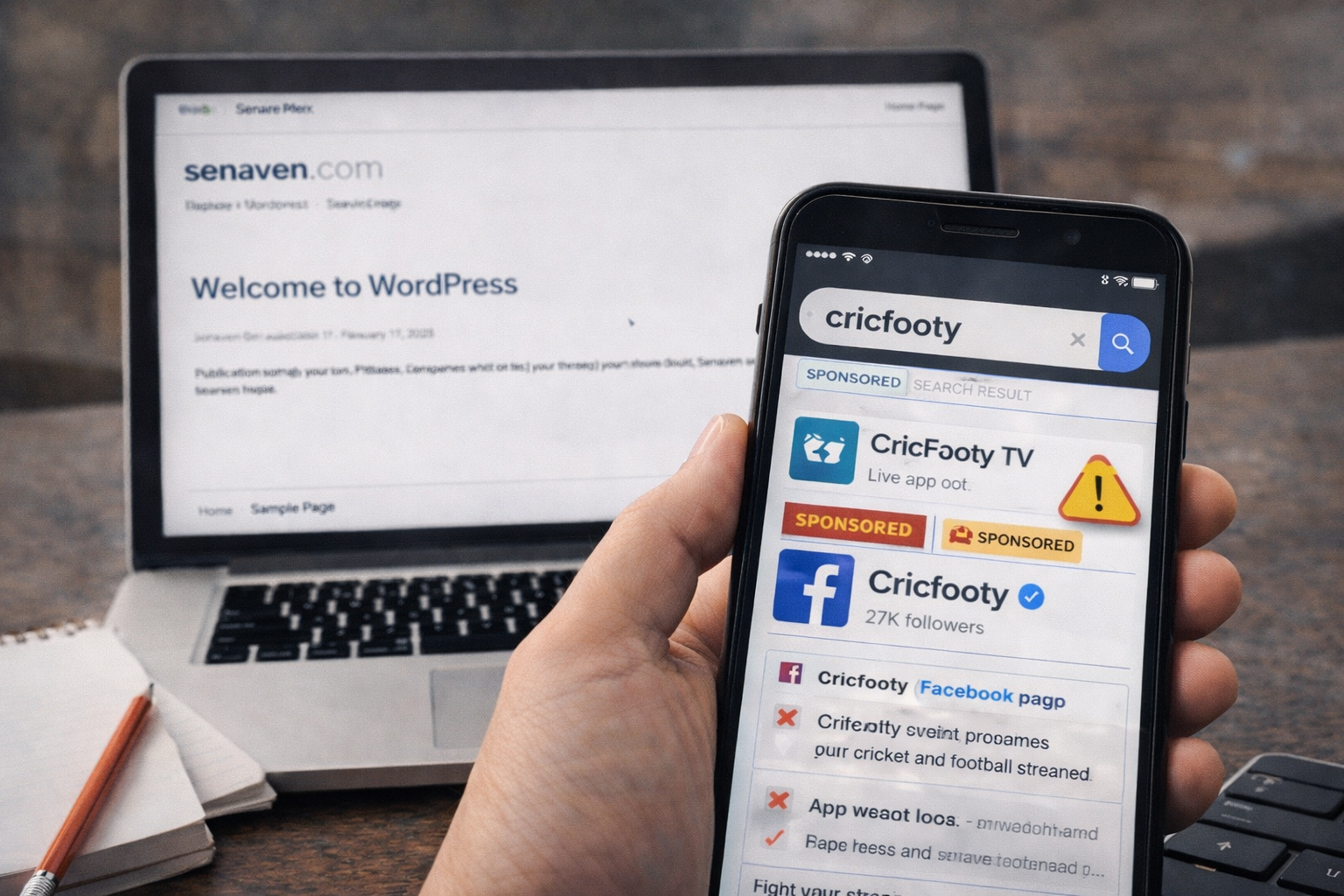
The most concrete, checkable footprint for senaven is that senaven.com currently shows a default WordPress setup with the familiar “Welcome to WordPress” starter post dated January 17, 2026, suggesting a site that is either newly launched or not fully built out. Around that, a patchwork of sites has started publishing “what is senaven” explainers that describe it as a modern, adaptable term or concept, often without sourcing and without consistent definitions.
For the ad ecosystem, that ambiguity is not a bug it can be a feature. A vague keyword can pull in multiple audiences: people looking for a product, a tool, a community, or simply an explanation. That broad top-of-funnel traffic can be monetised through display ads, affiliate links, and lead-generation forms, even if the user never finds a definitive answer.
This is where finance meets SEO. A keyword with low competition can be attractive to publishers because it is easier to rank for. If it starts trending through social posts, short videos, or ad placements more sites rush in to capture the demand. The business model is often less about building a durable brand and more about capturing spread-out revenue across many small pages.
The same pattern appears in app ecosystems, where ambiguous queries can funnel users toward unofficial listings, copycat names, or “download” pages that sit between a user and the destination they intended to reach.
Cricfooty and the economics of sports attention
Cricfooty shows the flip side: a keyword that points more clearly to sports content. The Cricfooty Facebook page describes itself as bringing “in-depth coverage of cricket and football.” That kind of positioning can be commercially valuable because sports audiences are both large and time-sensitive. When a match is live, users search quickly, click quickly, and share quickly perfect conditions for ad monetisation.
But sports also sits on top of an expensive rights economy. Legitimate broadcasters pay large sums for league and tournament rights, then recoup that spend through subscriptions, advertising, and distribution deals. That financial structure creates an opening for lookalikes and unofficial apps that attempt to capture demand for “free” access, often wrapped in aggressive advertising.
The keyword ecosystem around cricket-and-football streaming is crowded, and the line between legitimate apps and unofficial offerings can be hard for casual users to spot. For example, listings and download pages exist online for “CricFooty TV” that present it as a free live TV app for cricket and football on Android. Separately, there are multiple pages promoting “CricFy TV,” another sports-focused app name with prominent download prompts and broad claims about live sports access. These look similar in naming and audience, which is exactly the kind of environment where confusion and opportunistic marketing can thrive.
For platforms, the financial exposure is real. If users associate a keyword like cricfooty with unsafe downloads, intrusive ads, or scams, legitimate publishers can lose trust even if they are not responsible for the misleading pages. For advertisers, brand-safety risk rises when ads appear next to questionable “download” funnels. For payment providers, disputes can increase when users pay for services that do not match the marketing pitch, or when subscriptions are enrolled through unclear flows.
This is why brand owners and platforms treat “keyword integrity” as an operational issue. It is not only about content quality; it is about protecting the pathways that lead to transactions.
The risk is not the keyword it’s the gap
There is nothing inherently dangerous about searching senaven or cricfooty. The risk builds when a keyword’s online footprint is fragmented:
- A brand presence on one platform
- A default or newly launched website elsewhere
- A cluster of SEO pages repeating each other
- App listings and “download” pages that look official but may not be
In that environment, a user’s first click matters more than their intent. A curious search can turn into a download. A download page can turn into a subscription. A subscription can turn into a dispute. At each step, money moves ad spend, affiliate payouts, and, sometimes, consumer payments.
For financial institutions, the story shows up later as fraud claims, chargebacks, and customer support costs. For markets, it shows up as rising compliance spend and greater pressure on ad platforms to improve enforcement. The FBI’s and FTC’s reported loss figures provide a reminder of the scale of the broader ecosystem in which these keyword funnels operate.
Table
| Keyword | What can be verified quickly | What remains unclear | Why it matters financially |
|---|---|---|---|
| senaven | senaven.com currently shows a default WordPress “first post” dated Jan 17, 2026. | Whether it is a real brand, product, or community versus an SEO-driven “concept” keyword | Ambiguity attracts arbitrage pages, increases misdirection risk, and makes brand attribution harder |
| cricfooty | A Cricfooty social presence positions itself around cricket and football coverage. | Whether users are being routed to official pages or to lookalike apps and download funnels | Sports attention is high-value; confusion can increase unsafe installs, ad fraud, and customer disputes |
FAQ
Q1: What is senaven?
Public web results are inconsistent. The clearest verifiable point is that senaven.com currently appears as a basic WordPress starter site dated January 17, 2026, while many third-party pages describe “senaven” in broad, non-standard ways.
Q2: What is cricfooty?
Cricfooty appears as a sports identity online, including a Facebook page describing cricket and football coverage.
Q3: Why is this a finance story?
Because keyword-driven traffic is monetised through ads, affiliates, and app funnels, and the same mechanics can be exploited for fraud. US agencies report large online-crime and scam losses, highlighting the broader economic stakes.
Q4: Are “Cricfooty” and “CricFooty TV” the same thing?
They appear in different contexts online. “CricFooty TV” is also used as an app name in some listings, which can add confusion for users trying to find an official destination.
Conclusion
Senaven and cricfooty show how quickly a keyword can become a monetised pathway whether it points to a real, established brand or a loose cluster of pages, apps, and ads. When the online footprint is fragmented, confusion becomes the product: attention is bought, clicks are sold, and the costs often arrive later as disputes, enforcement pressure, and lost trust. In a market where platforms increasingly police risky funnels, the long-term winners are usually the names that can be verified quickly and consistently across every touchpoint.