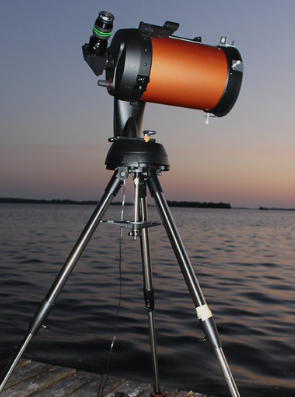
The telescope Celestron NexStar 8SE is drawing renewed attention as consumer interest in astronomy equipment expands across the United States, the United Kingdom and other developed markets. Retailers and industry observers say steady demand for premium hobby products is supporting sales, even as broader consumer spending patterns remain mixed.
The NexStar 8SE, produced by Celestron, sits near the higher end of the company’s consumer range. It combines an 8-inch Schmidt-Cassegrain optical tube with a computerized mount that helps users locate celestial objects automatically. That combination has made it one of the most recognized models in the firm’s NexStar line.
Industry analysts say interest in telescopes often rises during periods of heightened public attention to space exploration, astronomical events and science education. Solar eclipses, planetary alignments and high-profile missions by agencies such as NASA and the European Space Agency have, in past cycles, helped stimulate purchases of home astronomy equipment.
While precise global sales data for individual models are not publicly disclosed, retailers in both the US and UK describe the NexStar 8SE as a consistent performer within the mid-to-premium price tier. The product’s positioning reflects a broader shift in consumer goods markets, where buyers may reduce discretionary purchases in some areas but continue to spend on specialized hobbies.
Product Positioning and Market Context
The telescope Celestron NexStar 8SE is often described as a bridge between entry-level telescopes and advanced astrophotography systems. Its 8-inch aperture the diameter of the main mirror allows users to observe planets, star clusters and certain deep-sky objects with relatively high clarity compared with smaller models. Aperture is a key measure in telescope performance because a wider opening collects more light, making faint objects easier to see.
By contrast, smaller models such as the nexstar se 4, formally known as the NexStar 4SE, feature a 4-inch aperture. The celestron telescope nexstar 4se is lighter and more portable, typically aimed at beginners or younger users. It offers similar computerized object-tracking software but with less light-gathering capacity.
Retail pricing in the United States often places the NexStar 8SE in a significantly higher bracket than the nexstar 4se celestron model, reflecting both the larger optics and the mount system. In the UK market, pricing is affected not only by exchange rates but also by shipping costs and value-added tax (VAT). Currency swings between the US dollar and British pound may influence how competitively such imported equipment is positioned in each region.
In recent years, hobby spending has shown resilience despite economic uncertainty. Data from consumer research firms indicate that while households may trim travel or luxury goods during slower economic periods, interest in home-based activities can remain steady. Telescopes fall into this category, as they are typically a one-time purchase with long-term use.
According to industry coverage in specialized tech and hobby publications, including reporting by Nexstar Competition, Celestron’s NexStar series has benefited from its brand recognition and established distribution network. The company’s longstanding presence in educational and amateur astronomy markets has helped sustain product visibility.
Features Driving Demand
The NexStar 8SE’s computerized “GoTo” mount is central to its appeal. A GoTo system uses a database of celestial objects and motorized controls to automatically point the telescope toward selected targets. For beginners, this reduces the learning curve associated with manually locating objects in the night sky.
The system operates through a hand controller that stores thousands of object coordinates. Once aligned a process in which the telescope is calibrated using known stars the device can track planets or stars as the Earth rotates. This automated tracking helps keep objects centered in the field of view.
The NexStar 8SE also features a single-arm fork mount, which balances portability with stability. While heavier equatorial mounts are often preferred for long-exposure astrophotography, they can be complex to set up. The NexStar design focuses on visual observation, though some users adapt it for basic imaging.
The table below outlines how the telescope Celestron NexStar 8 compares with smaller models in the same family.
| Model | Aperture Size | Typical User Segment | Key Feature | Portability |
|---|---|---|---|---|
| NexStar 4SE | 4 inches | Beginners, students | Computerized GoTo system | High |
| NexStar 6SE | 6 inches | Intermediate hobbyists | Larger light-gathering capacity | Moderate |
| NexStar 8SE | 8 inches | Advanced amateurs | Enhanced deep-sky viewing | Moderate |
The differences in aperture may appear incremental, but in optical terms, an 8-inch mirror collects roughly four times as much light as a 4-inch mirror. That increase can significantly affect what users are able to observe under dark skies.
Broader Economic Environment
Sales of discretionary consumer technology products often correlate with income levels, inflation trends and consumer confidence. In the United States, policy decisions by the Federal Reserve influence borrowing costs and household spending. In the United Kingdom, similar signals come from the Bank of England.
Higher interest rates can make financing purchases more expensive, which may weigh on higher-priced goods. However, telescopes are generally purchased outright rather than financed, limiting direct exposure to credit conditions. Instead, broader economic sentiment may play a larger role.
In Europe, trade policy and import regulations can also affect availability and pricing. Celestron products are manufactured through global supply chains, with components sourced internationally. Changes in shipping costs or tariffs could influence final retail prices in both US and UK markets.
Despite these pressures, the consumer hobby segment has shown signs of adaptability. During previous periods of economic slowdown, companies in adjacent sectors including photography equipment and home fitness devices reported that engaged enthusiasts continued spending, even as casual buyers stepped back.
Education and Science Interest
Another factor supporting demand for the NexStar 8SE and related models is educational outreach. Schools, universities and science clubs often use mid-range telescopes for demonstrations and public observation events. An 8-inch aperture strikes a balance between performance and portability for such institutional buyers.
Public interest in space exploration remains elevated following recent lunar and Mars missions. While large-scale government projects do not directly translate into telescope sales, they may contribute to awareness and curiosity.
Astronomy is also frequently cited as an accessible science hobby that requires limited ongoing cost after the initial purchase. Unlike subscription-based entertainment or sports equipment that demands regular upgrades, a telescope can remain functional for many years with proper care.
Competitive Landscape
Celestron competes with other optics manufacturers that target amateur astronomers. Brand loyalty can be significant in this market, as experienced users often share recommendations through astronomy clubs and online forums.
The NexStar 8SE occupies a niche where performance is prioritized without moving fully into professional-grade systems. Larger, more advanced telescopes can cost several thousand dollars or pounds, while entry-level models are available at a fraction of that price.
Retailers in both North America and Europe note that customers often begin with smaller systems, such as the nexstar se 4, before upgrading. This step-up pattern may support continued demand across the NexStar product family.
Global Consumer Trends
Broader consumer trends may also shape future demand. E-commerce has expanded access to specialty equipment, allowing smaller retailers to reach global buyers. This has reduced reliance on physical astronomy shops, which historically played a central role in product education.
Online reviews, video tutorials and social media groups now influence purchasing decisions. While Celestron has an established brand identity, visibility in digital channels is increasingly important.
In the UK, urban light pollution remains a constraint for amateur astronomers. Larger-aperture telescopes such as the NexStar 8SE can partially offset this issue by collecting more light, though truly dark skies remain a limiting factor. In the US, regional differences in geography mean rural areas may offer more favorable viewing conditions.
What to Watch
Industry observers say several factors could influence the outlook for the telescope Celestron NexStar 8 and related models over the coming years.
First, currency movements between the US dollar and British pound may affect relative pricing in transatlantic markets. A stronger dollar could make imports more expensive for UK consumers, while a weaker dollar might have the opposite effect.
Second, supply chain stability remains a consideration. Global shipping disruptions in recent years demonstrated how sensitive consumer electronics markets can be to logistical delays.
Third, evolving consumer priorities may play a role. If economic growth slows significantly in major markets, discretionary purchases could soften. On the other hand, continued interest in home-based hobbies and educational tools may provide support.
The optics segment, while smaller than mainstream electronics, benefits from a dedicated customer base. For Celestron, maintaining product quality and technological reliability may be as important as pricing strategy.
As the consumer technology landscape shifts, the NexStar 8SE remains positioned as a recognizable benchmark in amateur astronomy. Whether demand accelerates or stabilizes may depend less on short-term trends and more on sustained interest in science and exploration across US, UK and global markets.
FAQ
What is the telescope Celestron NexStar 8SE designed for?
The NexStar 8SE is designed mainly for amateur astronomers who want detailed visual observation of planets and deep-sky objects using a computerized tracking system.
How does the NexStar 8SE differ from the NexStar 4SE?
The NexStar 8SE has an 8-inch aperture, which gathers significantly more light than the 4-inch aperture of the NexStar 4SE. This allows for clearer views of faint celestial objects.
Is the NexStar 8SE suitable for beginners?
While beginners can use it, the NexStar 8SE is generally considered more advanced than entry-level models due to its size and price.
Does economic uncertainty affect telescope sales?
Like other discretionary products, telescope sales may be influenced by consumer confidence, currency movements and broader economic conditions, though hobby spending can sometimes remain resilient.
Conclusion
The telescope Celestron NexStar 8SE reflects how specialized consumer products can hold steady appeal even as broader economic conditions shift. Positioned between entry-level and advanced systems, it serves a segment of hobbyists and educational users seeking stronger optical performance without moving into professional-grade equipment.
Future demand may depend on factors such as consumer confidence, currency trends and continued public interest in space science. While the optics market remains relatively niche compared with mainstream electronics, the NexStar 8SE’s established reputation suggests it is likely to remain a reference point within the global amateur astronomy segment.