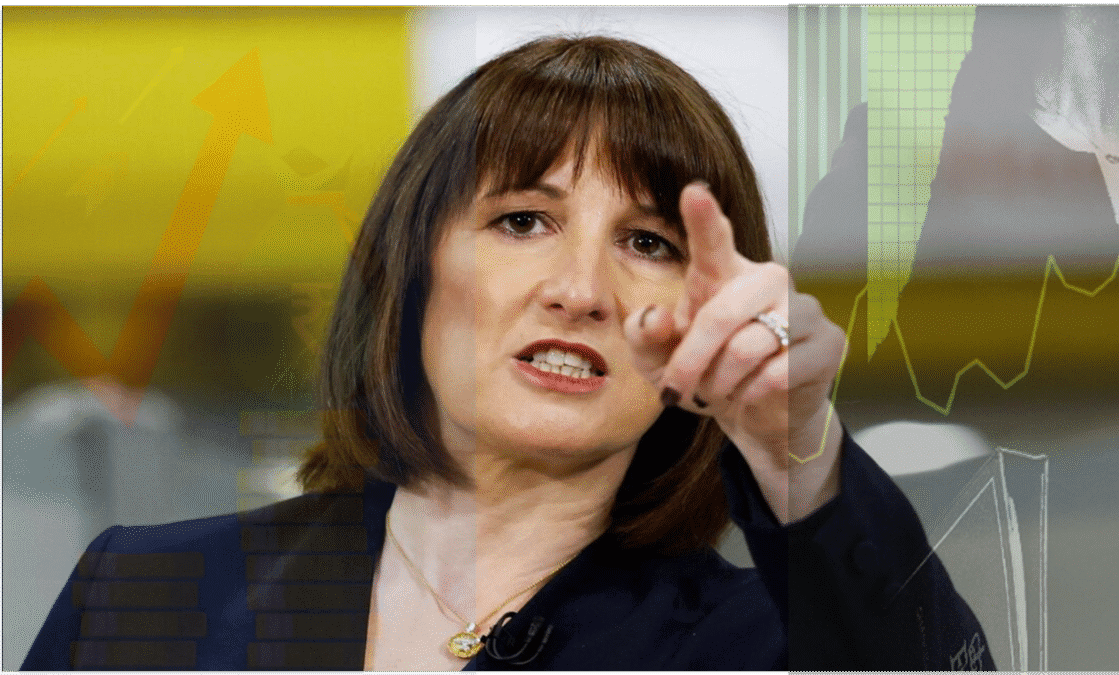
The air in Westminster is thick with that particular brand of pre-Budget dread. It’s a familiar feeling, but this year it carries a new, sharper edge. Chancellor Rachel Reeves Budget 2025, just over a year into the job, is preparing to make the hardest choices of her political career, and everyone from Scottish party leaders to the Governor of the Bank of England is bracing for the impact.
For weeks, the whispers have been circulating through the corridors of power and the pages of the press: the Chancellor needs to find billions, and the manifesto promises that swept Labour to power are looking increasingly fragile. The central pledge – not to raise income tax, National Insurance, or VAT – now appears to be on the chopping block.
Reeves herself set the stage for a dramatic U-turn in a sobering speech earlier this month. Gone was the language of only targeting those with the “broadest shoulders.” Instead, she delivered a stark message: “If we are to build the future of Britain together, we will all have to contribute to that effort.” The phrase “hard choices” was uttered, a political euphemism that rarely precedes good news for the public’s wallets.
A Political Hot Potato in Scotland
The implications are already causing political tremors north of the border. Scottish Labour leader Anas Sarwar has found himself in an awkward dance, repeatedly refusing to be drawn on the speculation. It’s a tricky position. While a hike in UK-wide income tax wouldn’t directly change the rates Scots pay—as Scotland controls its own bands—it would trigger a cut to the Scottish Government’s Rachel Reeves Budget through the complex devolved funding system, known as the fiscal framework.
This has handed SNP First Minister John Swinney a potent attack line. He’s warned that such a move from Westminster could force him to “revisit” his own promise not to raise income tax in Scotland, a prospect that allows him to blame any future tax hikes squarely on London. Sarwar, in turn, has labelled Swinney “economically illiterate” and his government’s “strongest advocate” for UK tax rises, pointing out the SNP leader had previously called for higher taxes south of the border.
The political squabbling masks a simple, uncomfortable truth: whoever is in charge, the money has to come from somewhere.
The Chancellor’s Unenviable In-Tray: Inside Rachel Reeves Budget 2025
So, why the need for such drastic measures? The Chancellor’s in-tray is a collection of grim reading. The national debt stands at a staggering £2.6 trillion, with interest payments eating up a growing portion of public funds. The Office for Rachel Reeves Budget Responsibility (OBR) has delivered a downgraded assessment of the UK’s productivity, meaning the economy’s engine is sputtering worse than previously thought. As Reeves bluntly put it, “We’re putting in more, we’re getting out less.”
Rachel Reeves Budget Economists at the respected National Institute of Economic and Social Research (NIESR) have laid out the scale of the challenge, suggesting Reeves needs to find up to £50 billion to stabilise the ship. Their controversial prescription? A 2p rise in the basic rate of income tax and a jaw-dropping 10p hike for higher-rate earners, taking their tax rate to 50p in the pound. While such a dramatic move seems politically toxic, it highlights the sheer size of the fiscal black hole.
But it’s not just income tax on the table. The Treasury is reportedly considering a whole menu of revenue-raisers, from an “exit charge” for wealthy individuals leaving the country to increased levies on expensive properties. It’s a long-list of difficult options, and the final Rachel Reeves Budget will likely see the Chancellor picking the ones she deems the least damaging.
The Chilling Effect on the Economy
The uncertainty itself is already taking a toll. The Bank of England has warned that fears over the looming “tax raid” are causing households to hold back on spending and businesses to delay investment. In a remarkable statement, the Bank’s survey found that business uncertainty is now higher than in the aftermath of Liz Truss’s ill-fated mini-Rachel Reeves Budget, with contacts not expecting demand to pick up until “well into 2026.”
Business groups are sounding the alarm bell. The Institute of Chartered Accountants in England and Wales (ICAEW) warned that over half of employers would cut jobs or freeze hiring if faced with another tax increase on business, following the recent hike in employer National Insurance. “Business confidence is fragile, investment is stalling,” said their chief executive, Alan Vallance, describing confidence as being “in free fall.”
As November 26th draws nearer, the political and economic pressure on Reeves Rachel Reeves Budget is reaching a boiling point. She must perform a near-impossible balancing act: raising enough revenue to reassure the financial markets without choking off the very economic growth she desperately needs, and without breaking her promises so blatantly that she shatters the trust of the voters who put her in power.
Conclusion
The Chancellor has promised to be guided by the “interests of working people.” The nation is about to find out exactly what she thinks that means. One thing is certain: after the Rachel Reeves Budget, the political landscape, and the pockets of millions, will look very different.