President Trump is considering a major F-35 jet deal with Saudi Arabia, despite urgent warnings from US intelligence that it could expose stealth technology to China. We analyze the risks and the strategic calculus.
A High-Stakes Decision: Stealth Jets for a Key Ally
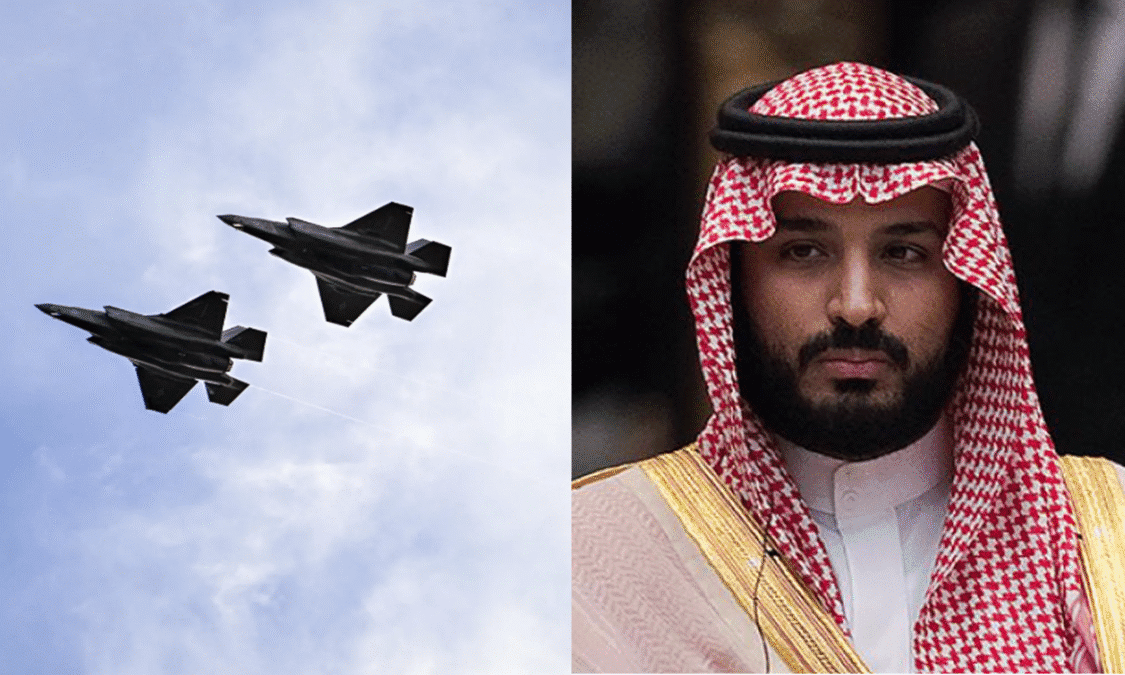
In a move that pits strategic alliance against national security concerns, President Donald Trump has confirmed he is actively considering the sale of advanced F-35 stealth fighter jets to Saudi Arabia. The potential deal, which would involve a “lot of jets” according to the President, emerges as the White House prepares to host Saudi Crown Prince Mohammed bin Salman.
However, this significant arms transfer is shadowed by a stark warning from a Pentagon intelligence assessment, reported by the New York Times, which cautions that the sale could allow China to access the F-35’s sensitive stealth technology.
The Strategic Push: Deepening Ties and the Israel Factor
The context for this potential sale is multifaceted. The Trump administration has consistently prioritized strengthening the US-Saudi partnership, viewing Riyadh as a cornerstone of its Middle East strategy and a vital counter to Iranian influence.
President Trump’s comments to reporters aboard Air Force One, “They wanna buy a lot of jets… I’m looking at that,” signal a strong willingness to proceed. He framed the upcoming meeting with the Crown Prince not just as a discussion, but as “honoring” the longstanding ally.
A key strategic objective underpinning this move is the administration’s hope to broker a historic normalization deal between Saudi Arabia and Israel, known as the Abraham Accords. While Riyadh has thus far resisted joining the Accords without a clear path to Palestinian statehood, a blockbuster defense deal, such as the F-35 sale, could be leveraged as a powerful incentive.
The Security Alarm: Could China Get a Look at the F-35?
The most significant obstacle to the sale is a grave security concern raised by US intelligence. The F-35 Lightning II is the most advanced fighter jet in the world, and its stealth capabilities, sensor fusion, and avionics represent the pinnacle of American military technology.
The core of the intelligence community’s fear is that once the F-35 is operated by Saudi Arabia, its sensitive technology could be vulnerable to espionage. China has a documented history of aggressively seeking to acquire advanced Western military technology through various means. The concern is that, either through cybertheft, indirect access, or leveraging its growing influence in the region, China could acquire critical data that would compromise the jet’s stealth advantages and inform the development of China’s own next-generation fighters, such as the J-20.
This would not only undermine a multi-trillion-dollar US investment but also erode a critical tactical edge for the US and its allies worldwide.
A Precedent for Caution: The Israeli Qualitative Military Edge
The potential sale to Saudi Arabia also bumps up against a long-standing US policy: maintaining Israel’s Qualitative Military Edge (QME). For decades, US law has required that any arms sales to Middle Eastern nations must not compromise Israel’s technological military superiority.
Israel itself operates the F-35 and has historically been wary of such advanced weapons being deployed by neighboring states. While recent diplomatic warming under the Abraham Accords has changed the regional dynamic, a direct sale of the region’s most potent fighter jet to Saudi Arabia would force a redefinition of QME. The administration would likely have to provide assurances to Israel, potentially involving even more advanced technology or data-sharing agreements, to secure its acquiescence.
Broader Implications: A Geopolitical Gambit
This potential deal is more than an arms sale; it’s a high-stakes geopolitical gambit.
- Countering Iran: Strengthening Saudi Arabia’s air force directly aligns with containing Iranian influence.
- Economic Boost for Lockheed Martin: A major sale would be a significant boon for the defense contractor Lockheed Martin and its supply chain.
- Straining Alliances: Proceeding against intelligence advice could create friction within the Pentagon and the intelligence community.
- Global Proliferation Concerns: If the US sells the F-35 to Saudi Arabia, it sets a precedent that could lead to increased pressure to sell to other volatile regions, further raising global proliferation risks.
Conclusion: A Clash of Priorities
As President Trump and Crown Prince Mohammed bin Salman prepare to meet, the proposed F-35 sale sits at the intersection of diplomacy, security, and global strategy. The administration sees an opportunity to lock in a key alliance and push forward its vision for a new Middle East.
However, the warnings from the US intelligence community represent a formidable counter-argument, highlighting the risk of losing a crown jewel of American military technology to a strategic adversary in China. The final decision will reveal much about which prioritizes immediate strategic gain or long-term technological security ultimately carries the day in Washington.