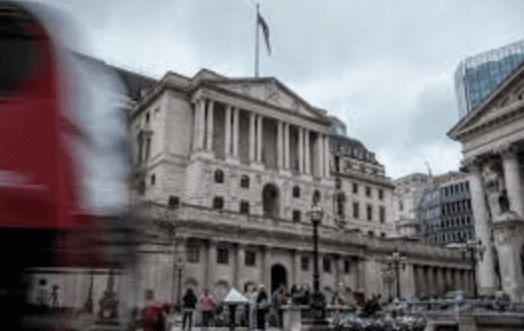
The UK’s slow economic growth is when the economy expands only slightly (or stalls) over time, making it harder for incomes, profits, and tax revenues to rise. For UK readers, it matters now because weaker growth can influence the Bank of England’s interest-rate path, mortgage pricing, and the government’s budget choices.
What does “UK slow economic growth” mean in plain English
Slow growth doesn’t always look dramatic. It’s often a pattern of:
- small GDP gains that don’t keep up with population growth
- Consumers staying cautious
- Businesses delaying investment
- Certain sectors (like manufacturing) are dragging, while services hold up
In data terms, the UK has recently shown signs of that “patchy” picture. The ONS estimated monthly GDP showed no growth in July 2025, after growth in June and a fall in May.
Slowdown economics definition: growth vs recession
A slowdown is not the same as a recession.
- Slowdown: GDP still grows, but more slowly than before (or flat some months).
- Recession: a sustained fall in activity (often discussed as two quarters of GDP decline, though official bodies look wider than that).
Slowdowns can still feel painful because wages and job opportunities tend to improve more slowly, while bills don’t always slow down at the same pace.
The latest UK context: what the numbers are saying
The clearest way to see “UK economy slowing down” is to compare momentum across months and quarters.
Monthly GDP signals a “stop-start” economy
In the ONS monthly GDP release for July 2025:
- GDP: 0% (no growth) in July 2025
- Services +0.1% on the month; construction +0.2%; production -0.9%
That mix matters because services dominate the UK economy, but persistent weakness in production/manufacturing can weigh on overall momentum.
Three-month trend: still positive, but softer than earlier in 2025
The ONS also estimated GDP grew 0.2% in the three months to July 2025, and noted growth had slowed from a stronger earlier period.
Quarterly GDP: slowing from a strong start
Reuters reported UK GDP growth slowed to 0.3% in Q2 2025 after 0.7% in Q1 2025, with business investment falling 4% from Q1 and household spending described as weak.
Why that matters: slow growth driven by government spending or stock-building can look less “sticky” than growth driven by strong private demand and investment.
Why slow growth matters for UK households (mortgages, savings, jobs)
Slow growth filters into day-to-day finances through a few main channels:
1) Interest rates and mortgage pricing
The Bank of England uses the Bank Rate to bring inflation back to its 2% target. When growth is weak, the case for keeping rates very high becomes harder unless inflation pressures stay stubborn.
As of the Bank’s latest decision page:
- Current Bank Rate: 3.75%
- Next due: 5 February 2026
- The Bank’s summary says it expects rates on a gradual downward path, but decisions depend on inflation and pay/services inflation easing.
For borrowers, the key point is that mortgage rates are driven by expectations of where Bank Rate goes next (plus banks’ funding costs), not just today’s headline rate.
2) Savings returns (and “real” returns after inflation)
In a slowdown, banks may compete less aggressively for deposits especially if they expect rates to fall. Even when savings rates look decent, what matters is the gap between:
- your savings rate, and
- inflation (the “real return”)
If inflation stays above savings rates, your purchasing power still erodes just more slowly than before.
3) Wages, hiring, and job switching
When activity cools, employers often:
- slow hiring
- reduce overtime or bonuses
- Get tougher on salary jumps for job switchers
That doesn’t mean layoffs are guaranteed, but it can mean less bargaining power and slower wage growth over time.
4) Government budgets and public services
Slower growth tends to weaken the public finances because tax revenues rise more slowly. That can increase pressure for either spending restraint, tax rises, or both, especially if borrowing costs are elevated.
What’s driving the slowdown? UK-focused forces to watch
The UK’s growth performance often comes down to a handful of repeat drivers.
Consumer caution and “big-ticket” spending
When households worry about job security or bills, they delay large purchases (cars, home improvements, expensive holidays). Even if inflation cools, confidence can lag.
Business investment and productivity
Investment is the engine for future growth, new equipment, software, skills, and capacity. Reuters noted weak business investment in Q2 2025.
If investment stays soft, productivity gains tend to be limited, making growth slower over the medium term.
Global demand and trade uncertainty
The UK is sensitive to global demand for services and high-value manufacturing. Shocks (tariffs, commodity moves, supply-chain disruptions) can hit confidence and trade volumes quickly.
Policy uncertainty
The Bank of England’s November 2025 Monetary Policy Report noted subdued underlying momentum and pointed to uncertainty around fiscal policy as a factor weighing on some survey indicators.
Benefits and risks of slow economic growth
A slowdown is not “good” overall, but it can come with trade-offs.
Potential benefits
- Lower inflation pressure: weaker demand can cool price rises over time.
- Scope for rate cuts: if inflation is easing, slow growth strengthens the case to reduce Bank Rate gradually.
- Less overheating in asset markets: fewer boom–bust risks in some sectors.
Main risks
- Higher recession probability: slow growth leaves less buffer if another shock hits.
- Stagnant living standards: wage growth may slow while essentials remain expensive.
- Weaker investment loop: low confidence → lower investment → weaker productivity → slower growth again.
- Fiscal squeeze: tighter budgets can reinforce the slowdown.
Real-world UK examples: how slow growth shows up
Here’s what “economic slowdown UK” can look like in practice:
- Mortgage renewals: fixed-rate deals priced higher than pre-2022 norms, while borrowers wait for clearer evidence of rate cuts.
- Retail and hospitality pressure: ONS noted consumer-facing services output fell over the three months to July 2025, with retail trade down and travel-related services notably weaker.
- Manufacturing softness: ONS reported production fell over the three months to July 2025, and manufacturing was a key drag.
Step-by-step: how to track whether the UK slowdown is easing
If you want a simple routine (without drowning in charts), use this checklist.
- Monthly GDP trend (ONS)
- Look for 3–6 months of steady positive prints, not one-off spikes.
- Services vs production split
- Services holding up while production falls can mean growth is fragile.
- Inflation progress vs the 2% target
- If inflation is easing, the Bank can consider cuts more confidently.
- Bank of England decision dates and guidance
- Watch what the MPC says about pay growth and services inflation.
- Investment and confidence indicators
- Business investment weakness can be an early warning that the recovery will be slow.
Pros & cons for UK readers
Pros
- Potentially lower borrowing costs later in 2026 if inflation continues to cool and Bank Rate eases.
- Greater chance of stable inflation over time, improving real income planning.
Cons
- Job market cooling can make pay rises and switching harder.
- Returns on cash may fall if banks anticipate rate cuts.
- Government support can be constrained if tax receipts weaken.
Comparisons (UK-focused): how slow growth interacts with Bank Rate
The Bank’s current framing is that inflation has fallen from its peak and rates have been cut to 3.75%, but future cuts are a “closer call” and depend on incoming evidence.
That means UK households often face a two-speed reality:
- Rates may drift down gradually, but
- economic growth may not bounce back quickly, especially if investment remains weak.
Best practices: what households can do in a slow-growth economy
These are practical moves that tend to help across most scenarios:
- Stress-test your mortgage: check affordability if your deal resets at a higher rate than your current fix.
- Keep an emergency buffer: slow growth can increase job uncertainty even without a recession.
- Compare savings accounts frequently: in turning rate cycles, the best rates can move quickly.
- Avoid overreacting to one data release: look for trend confirmation (three-month measures matter).
Key insights (quick summary)
- The UK has shown patchy growth, with 0% monthly GDP in July 2025 and sector splits that suggest uneven momentum.
- Quarterly growth slowed in mid-2025, with investment weakness flagged by Reuters.
- Bank Rate is 3.75%, and the next decision is due 5 February 2026; the Bank signals a gradual downward path, conditional on inflation and pay dynamics.
Table: “Slow growth dashboard” what to watch and why
| Indicator | Latest signal (from sources) | Why it matters in a slowdown | What to watch next |
|---|---|---|---|
| Monthly GDP (ONS) | 0% in July 2025, | Shows near-term momentum | A run of positive months |
| 3-month GDP growth (ONS) | +0.2% to July 2025 | Smoother trend than one month | Whether the trend re-accelerates |
| Sector mix (ONS) | Services up; production down | Uneven growth can be fragile | Production stabilisation |
| Bank Rate (BoE) | 3.75%; next due 5 Feb 2026 | Drives borrowing and savings rates | MPC guidance on inflation/pay |
| Q2 2025 GDP (Reuters) | Signs of investment recovers | Investment shapes future growth | Signs of investment recovery |
Useful Tips Section (for UK readers)
- If you’re remortgaging in 2026, compare “fee + rate” together (a slightly lower rate can be worse if fees are high).
- If you’re on a tracker: plan for volatility around MPC meetings, markets can reprice fast after guidance.
- If you’re saving, look at easy-access vs fixed-term trade-offs; if rates fall, fixed accounts can lock in today’s rate.
- If you’re budgeting: prioritise essentials, then high-interest debt, then savings, slow growth can make income less predictable.
- If you invest: diversify and avoid assuming quick rebounds, slow growth can mean choppy markets.
FAQ
What does “UK slow economic growth” mean?
It means the economy is expanding only slightly (or stalling some months), so wages, profits, and tax revenues tend to rise more slowly than usual.
Is the UK economy slowing down right now?
Recent official data shows a mixed picture, including no monthly GDP growth in July 2025 and slower momentum compared with earlier in 2025.
What is the slowdown economics definition in simple terms?
A slowdown is when growth continues but at a weaker pace. It’s different from a recession, which is a broader and sustained contraction in activity.
How does slow growth affect mortgages in the UK?
Slow growth can increase expectations of future Bank Rate cuts, potentially easing mortgage pricing over time if inflation is also falling. The Bank Rate is currently 3.75% and the next decision is due 5 February 2026.
Does slow growth mean interest rates will definitely fall?
Not definitely. The Bank of England says the path depends on evidence, especially pay growth and services inflation, and each cut becomes a “closer call”.
Why is business investment important when the economy slows?
Investment supports productivity and future growth. Weak investment can keep growth slow for longer; Reuters noted investment fell in Q2 2025.
Can the UK have slow growth without a recession?
Yes. You can have long periods where GDP is flat-to-slightly-positive, especially if some sectors grow while others shrink.
Conclusion
UK’s slow economic growth is best understood as a trend, not a single headline: recent ONS data points to stop-start momentum, while mid-2025 figures showed slower quarterly growth and weaker investment.
For UK households, the two big things to watch next are: (1) inflation’s progress back toward 2% and (2) the Bank of England’s rate guidance, with the next Bank Rate decision due on 5 February 2026.
Read our explainer on whether the UK is heading for a recession for more context on how growth risks can affect sterling and markets.