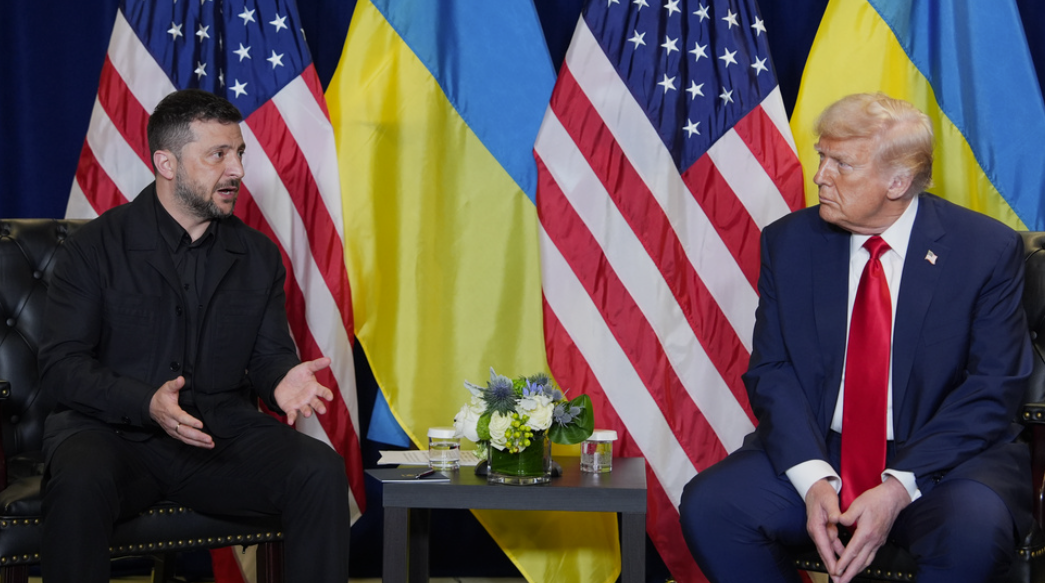
Ukrainian President Volodymyr Zelenskyy meets with U.S. President Donald Trump at a moment when the war in Ukraine, tensions with Russia, and debates inside Western capitals are converging into a single strategic question: how long and how deeply the United States and its allies will remain committed to Kyiv.
The meeting comes as Ukraine continues to face pressure on the battlefield and as Washington reassesses its global priorities. It also arrives against a backdrop of political debate in the United States and Europe about military aid, domestic economic pressures, and the broader risks of escalation with Russia. For Ukraine, the stakes are immediate. For Washington and its allies, the implications extend beyond Ukraine’s borders to NATO security, energy markets, and global financial confidence.
The encounter between the two leaders has drawn close attention not only from diplomats and military planners but also from investors and policymakers who see geopolitical stability as a key driver of economic and market conditions. In recent years, geopolitical shocks have repeatedly influenced currencies, energy prices, and government bond markets, making high-level meetings like this one more than symbolic events.
Strategic context of the meeting
The relationship between Zelenskyy and Trump has been shaped by both cooperation and friction. Trump on Zelenskyy has at times emphasized the need for European allies to carry a greater share of the financial burden for Ukraine, while also questioning the long-term costs of U.S. support. Zelenskyy, for his part, has sought to maintain strong backing from Washington while warning that any weakening of Western unity could embolden Moscow.
Zelenskyy warns of Russia’s potential military actions against NATO countries in public remarks and diplomatic discussions, arguing that Ukraine is not only defending its own territory but also acting as a buffer for Europe. That message has resonated in parts of Eastern Europe and the Baltic region, where governments see Russia’s military posture as a direct threat to their security.
At the same time, critics inside and outside Ukraine have raised questions about governance and political freedoms. Volodymyr Zelenskyy accused of authoritarian slide after anti-corruption raids has become a recurring theme in some international commentary, reflecting concerns that wartime measures could weaken democratic institutions. Ukrainian officials reject those claims, arguing that anti-corruption actions are necessary to maintain public trust and ensure accountability during a national emergency.
The meeting between Zelenskyy and Trump therefore sits at the intersection of military strategy, domestic politics, and international credibility. It is not only about weapons deliveries or financial aid, but also about how the United States defines its leadership role in a more fragmented global order.
War dynamics and evolving military realities
On the battlefield, the conflict between Ukraine and Russia has entered a phase where technology and logistics play an increasingly central role. Zelenskyy Putin Ukraine Russia drones has become a frequent topic in military analysis, as both sides rely heavily on unmanned systems for surveillance, strikes, and battlefield coordination. Drones have changed the pace and visibility of the war, reducing the distance between front lines and civilian areas.
These developments have influenced Western military planning. NATO countries have increased discussions about air defense, cyber security, and drone warfare, recognizing that modern conflicts are no longer limited to traditional troop movements. For the United States, supporting Ukraine has become part of a broader effort to deter Russia without triggering direct confrontation.
However, the cost of prolonged conflict is rising. Military aid packages require congressional approval in the United States and parliamentary debates in Europe. Public opinion in several Western countries shows signs of fatigue, with voters increasingly focused on inflation, energy prices, and domestic economic challenges.
For Trump, the meeting with Zelenskyy offers an opportunity to signal how his administration views these trade-offs. While the United States has historically positioned itself as Ukraine’s strongest supporter, future policy may depend on negotiations with allies and shifting political priorities.
Implications for global markets and economic policy
Geopolitical uncertainty often translates into market volatility, and the Ukraine war has been no exception. Energy markets have been particularly sensitive to developments in the conflict, as Russia remains a major supplier of oil and gas to global markets. Any escalation or disruption in supply routes can push prices higher, affecting inflation and monetary policy in the United States, the United Kingdom, and the European Union.
Central banks such as the Federal Reserve, the Bank of England, and the European Central Bank closely monitor geopolitical risks when setting interest rates. While inflation is influenced by many factors, energy prices and supply chain disruptions linked to geopolitical conflicts can complicate policy decisions.
Financial institutions and global banks have also adjusted their risk assessments. Large multinational lenders, including those with operations across Europe and emerging markets, must consider political risk when allocating capital. In this environment, discussions about global banking and cross-border finance have become more prominent, as seen in debates about international financial hubs and regulatory frameworks, including developments highlighted in discussions around global banking structures such as those explored in analyses of HSBC’s international role.
From an investor perspective, the meeting between Zelenskyy and Trump may not produce immediate market reactions, but it contributes to a broader narrative about stability and risk. Markets often respond less to single events than to shifts in long-term expectations about conflict, alliances, and policy direction.
Political narratives and competing interpretations
The meeting has been interpreted differently across political and media landscapes. Supporters of continued U.S. aid argue that Ukraine’s survival is essential for maintaining international law and deterring aggression. They contend that failing to support Kyiv could encourage authoritarian regimes elsewhere, increasing global instability.
Critics, however, question whether unlimited support is sustainable. They argue that domestic priorities in the United States, including infrastructure, healthcare, and economic inequality, deserve greater attention. Some also express concern that prolonged involvement in Ukraine could entangle Washington in a broader conflict with Russia.
Trump on Zelenskyy has reflected these tensions. While acknowledging Ukraine’s struggle, Trump has emphasized negotiation and burden-sharing among allies. His approach contrasts with earlier periods of more unconditional support, highlighting how foreign policy can shift depending on leadership and political context.
For Zelenskyy, maintaining Western unity is a constant challenge. He must balance appeals for military assistance with efforts to reassure partners about Ukraine’s commitment to reform and democratic governance. The accusations of authoritarian tendencies, even if contested, underscore the delicate balance between wartime security measures and democratic accountability.
Timeline of key developments
The following table outlines major moments that frame the current meeting and its significance.
| Period | Key Event | Why It Matters | What to Watch |
|---|---|---|---|
| Early phase of war | Russia’s invasion of Ukraine | Triggered global sanctions and military aid | Long-term sustainability of support |
| Mid-war period | Expansion of drone warfare | Changed battlefield dynamics | Technological escalation |
| Recent months | Debate over Western aid packages | Revealed political divisions | Future funding decisions |
| Current moment | Zelenskyy meets Trump | Signals possible shift in U.S. approach | Policy direction and alliance unity |
This sequence shows that the meeting is not an isolated diplomatic event but part of a longer trajectory of conflict, adaptation, and political debate.
NATO, Europe, and transatlantic relations
Zelenskyy’s warnings about Russia’s potential actions against NATO countries have added urgency to discussions within the alliance. While NATO has avoided direct military engagement with Russia, it has strengthened its eastern flank and increased defense spending among member states.
European governments face a complex balancing act. On one hand, they support Ukraine as a matter of security and values. On the other, they must manage economic pressures at home, including high energy costs and fiscal constraints. The United Kingdom, for example, has been a strong supporter of Ukraine but also faces domestic debates about defense spending and public finances.
The United States remains the central pillar of NATO’s military capacity. Any shift in Washington’s commitment could reshape Europe’s security architecture. That is why the meeting between Zelenskyy and Trump is closely watched not only in Kyiv and Washington but also in London, Berlin, Paris, and Brussels.
For NATO, the key question is whether the alliance can maintain unity in the face of prolonged conflict. Differences in threat perception, economic capacity, and political priorities among member states could test the cohesion that has defined NATO’s response so far.
Broader geopolitical consequences
Beyond Europe, the Ukraine war has influenced global geopolitics in several ways. It has deepened divisions between Western countries and Russia, strengthened ties between Moscow and some non-Western partners, and accelerated discussions about alternative financial systems and energy routes.
Countries in Asia, the Middle East, and Africa have taken varied positions on the conflict, reflecting their own strategic interests. Some have aligned with Western sanctions, while others have maintained neutral or pragmatic relations with Russia. This fragmentation of global consensus highlights a broader trend toward a multipolar world.
In this context, high-profile meetings like the one between Zelenskyy and Trump serve as signals to allies and rivals alike. They communicate not only policy intentions but also perceptions of strength, resolve, and uncertainty.
Domestic pressures in Ukraine and the United States
Inside Ukraine, Zelenskyy faces pressure from multiple directions. The war has strained the economy, displaced millions of people, and tested public morale. While many Ukrainians remain united against Russia, debates about governance, corruption, and the future direction of the country continue.
The accusations of authoritarian tendencies following anti-corruption raids reflect broader concerns about how wartime governance will shape Ukraine’s post-war political system. Zelenskyy’s challenge is to maintain international support while addressing domestic expectations for transparency and reform.
In the United States, Trump faces his own political pressures. Public opinion on foreign policy is divided, and debates about Ukraine often intersect with broader discussions about America’s role in the world. The meeting with Zelenskyy therefore has domestic political significance as well as international implications.
What to watch next
The immediate outcomes of the meeting may include statements about continued cooperation, possible adjustments to aid frameworks, and renewed calls for allied contributions. However, the deeper impact will likely unfold over time.
Observers will watch for signals about whether Washington intends to maintain its current level of support, push for negotiations, or recalibrate its strategy. European allies will assess whether they need to increase their own commitments. Russia will interpret the meeting through the lens of its own strategic objectives.
Markets, meanwhile, will continue to monitor geopolitical risk as one of many factors shaping economic conditions. Energy prices, defense stocks, and government bond yields could respond to changes in expectations about the conflict’s trajectory.
A meeting with global significance
Ukrainian President Volodymyr Zelenskyy meets with U.S. President Donald Trump at a time when the boundaries between war, politics, and economics are increasingly blurred. The meeting is not just about bilateral relations but about the future of Western alliances, the stability of global markets, and the rules that govern international behavior.
While the immediate headlines may focus on statements and symbolism, the deeper story lies in the strategic choices facing both leaders. Zelenskyy must secure continued support while navigating domestic challenges. Trump must balance international commitments with political realities at home.
The outcome of their dialogue will not end the war or resolve all tensions. But it may shape expectations about how the conflict evolves and how the United States positions itself in a world where geopolitical risks remain a central force in global affairs.
FAQ
1) Why is the meeting between Zelenskyy and Trump important?
It reflects potential shifts in U.S. policy toward Ukraine and signals how Washington may balance military support with domestic and global priorities.
2) How does the Ukraine war affect global markets?
The conflict influences energy prices, inflation expectations, and investor risk sentiment, which can affect currencies, bonds, and equities.
3) What does Zelenskyy mean by warning about NATO risks?
He argues that Russia’s aggression could extend beyond Ukraine, potentially threatening NATO countries and European security.
4) Are concerns about authoritarianism in Ukraine widely accepted?
They are debated. Critics raise concerns about wartime governance, while Ukrainian officials say anti-corruption actions are necessary and legal.
5) What could happen after this meeting?
Possible outcomes include adjustments in aid policy, renewed diplomatic efforts, and continued debate within NATO and the United States about long-term strategy.
Conclusion
The meeting between Volodymyr Zelenskyy and Donald Trump highlights how the Ukraine war has moved beyond a regional conflict into a defining test for Western unity and global stability. While the talks may not produce immediate breakthroughs, they underline the growing pressure on Washington, Kyiv, and their allies to clarify long-term strategy amid military, political, and economic constraints.
As the conflict continues and debates over aid, security, and governance intensify, the broader impact will likely extend far beyond Ukraine. The direction taken after this meeting could shape not only the future of the war but also the balance of power across NATO, global markets, and international diplomacy in the years ahead.