
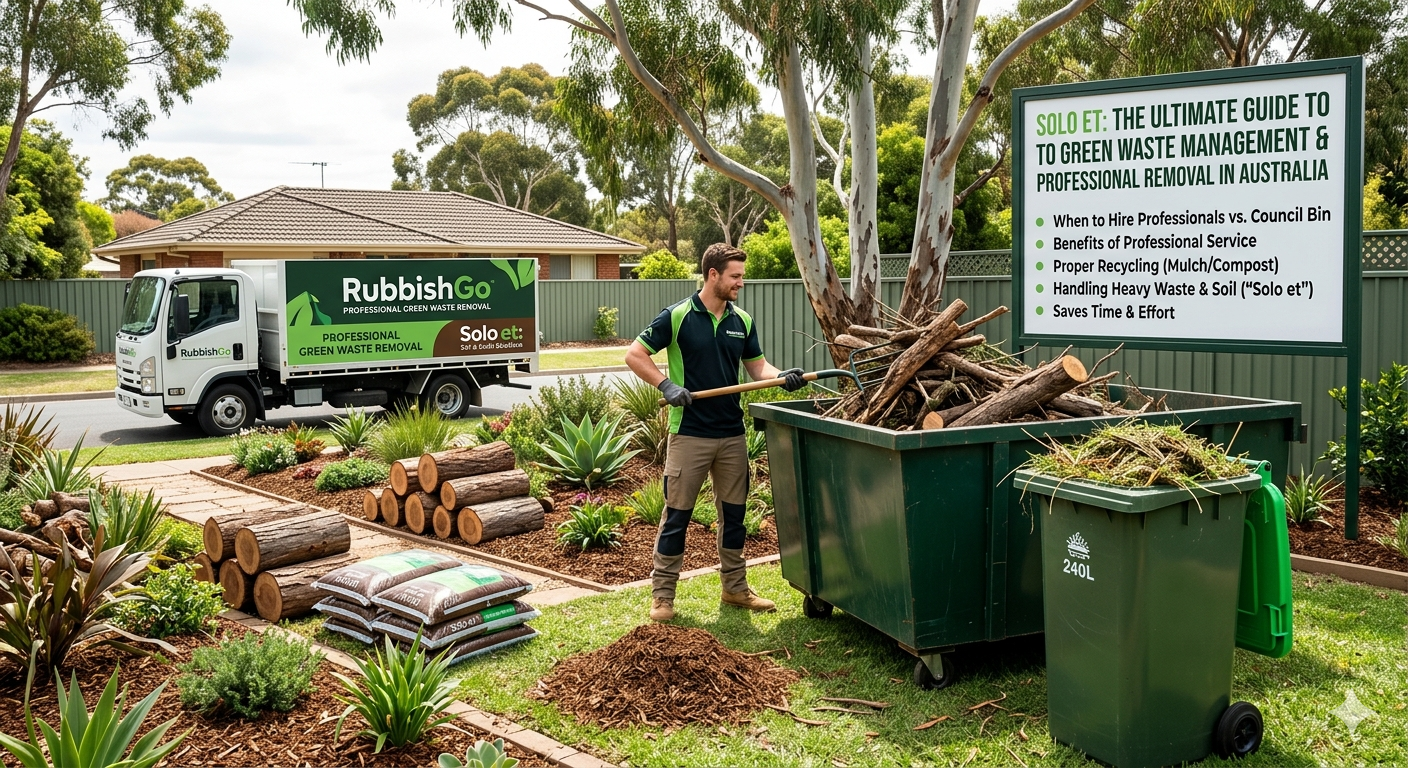
Managing a garden in Australia is a labour of love. From the sprawling backyards of Melbourne’s suburbs to the tropical greenery of Queensland, keeping a property “Solo et” (clean and grounded) requires more than just a lawnmower. While most Australian households rely on their local council’s green wheelie bin, there comes a point where the standard 240-litre bin simply fails to keep up.
If you’ve ever spent a weekend pruning only to realise it will take six months of council collections to clear the pile, this guide is for you. We’re diving deep into the economics, the physical reality, and the environmental impact of green waste removal, helping you decide when to DIY and when to call in the professionals.
1. The Anatomy of Green Waste: More Than Just Grass Clippings
In the industry, “green waste” refers to organic material that can be recycled into mulch or compost. However, not all organic waste is created equal.
- Light Green Waste: Grass clippings, leaves, and small hedge trimmings.
- Heavy Green Waste: Thick tree branches (over 10cm diameter), palm fronds (which are notoriously hard to mulch), and logs.
- Contaminated Waste: Soil, rocks, and treated timber. Note: Most council bins do not allow “Solo et” (soil and earth) because it ruins the composting machinery. This is the first major hurdle for homeowners.
2. Why the Standard Council Bin Often Fails
Council bins are designed for “maintenance,” not “transformation.” If you are just doing a quick mow on a Sunday, the green bin is your best friend. But for anything else, it has three fatal flaws:
A. The Volume Trap
The standard Australian green bin is 240 litres. To put that in perspective, a single medium-sized Lilly Pilly hedge trim can produce upwards of 1,000 litres of loose waste. You are then left with two choices: leave a mountain of rotting sticks in the corner of your yard for two months or find a better way.
B. The Weight Limit
Did you know most councils have a weight limit on bins? If you fill a bin with heavy damp soil or thick logs, the hydraulic arm of the rubbish truck might fail to lift it, or worse, the bin will split. You’ll find a “heavy” sticker on your bin Monday morning, and your waste problem remains.
C. The “No-Soil” Rule
This is where the term “Solo et” (Soil and Earth) becomes critical. Most composting facilities that process council waste cannot handle high volumes of dirt or rock. If you are digging a new garden bed, you cannot put that dirt in the green bin. You need a dedicated removal service that handles mixed organic loads.
3. When to Hire Green Waste Removal vs. Using a Bin
How do you know when you’ve crossed the line from “Standard Cleanup” to “Professional Job”? Look for these triggers:
The Aftermath of a Storm
Australian weather is unpredictable. After a heavy windstorm, your yard might be littered with large Eucalyptus branches. These are too heavy to break down by hand and too bulky for a bin. A professional service can mulch these on-site or haul them away in minutes.
The “End of Lease” or “Pre-Sale” Blitz
If you are moving out or putting your house on the market, “curb appeal” is everything. You don’t have three weeks to wait for the council. You need the yard cleared today. Professional removal provides an instant transformation that adds actual dollar value to your property.
Landscaping and Excavation
If your project involves the word “digging,” your council bin is officially useless. Professional “Solo et” services focus on removing the excess earth and organic debris that comes from leveling a yard or installing a new deck.
4. The Hidden Costs of the “Free” Council Bin
Many homeowners think using the council bin is free because it’s included in their rates. However, there are hidden costs to consider:
- Time Cost: The hours spent “processing” waste cutting branches into 30cm pieces just so they fit in the bin.
- Physical Strain: The risk of back injury from dragging heavy bins or repetitive chopping.
- Property Damage: Large piles of green waste left on the grass for weeks will kill your lawn, leading to expensive reseeding costs.
- Pest Risks: Damp piles of organic matter are breeding grounds for snakes, spiders, and termites.
5. Bin vs. Professional Removal: A Side-by-Side Breakdown
| Feature | Council Green Bin | Professional Removal (e.g., RubbishGo) |
| Capacity | Fixed (240L) | Unlimited (Skip bins or Truck loads) |
| Speed | Fortnightly | Same-day or Scheduled |
| Labour | 100% You | 100% Them (Point and clear) |
| Branch Size | < 10cm diameter | No limit (Logs/Stumps included) |
| Soil/Dirt | Strictly Forbidden | Accepted in specific loads |
6. The Environmental Angle: Where Does Your Waste Go?
In 2024, Australians are more environmentally conscious than ever. Simply throwing garden waste into a general rubbish bin is a “climate sin” because organic waste in landfills produces methane gas.
Professional green waste services ensure a Circular Economy.
- Step 1: Collection of organic matter.
- Step 2: Industrial mulching and heat treatment (to kill weed seeds).
- Step 3: Redistribution to Australian farms and parks as high-grade compost.
By using a professional service, you are ensuring that your old hedge actually helps grow food in the future.
7. How to Prepare for a Professional Removal Service
To get the best value for your money and ensure a smooth “Solo et” experience, follow these tips:
- Stack it Smart: If you aren’t using a skip bin and are hiring a “load and go” service, stack your branches with the “butts” (the cut ends) facing the same direction. This makes it much faster for the loaders to grab, potentially saving you money on labour.
- Separate Your Piles: Keep “clean” green waste (leaves/branches) separate from “Solo et” (soil/rocks). Mixed loads are often more expensive to dispose of at the tip.
- Access is Key: Ensure the removal truck can get close to the pile. If they have to carry waste 50 metres from the backyard to the street, the job will take twice as long.
8. Signs You’ve Outgrown Your Green Bin
If you are nodding your head at more than two of these, stop trying to cram things into your wheelie bin:
- You have more than three “piles” of waste currently sitting on your lawn.
- You’ve broken a pair of loppers trying to cut a branch to “bin size.”
- You are considering buying a second green bin from the council (which usually costs an extra annual fee).
- You have “Solo et” materials like old sod, clay, or potting mix that the council won’t touch.
9. The Professional Advantage: Safety and Expertise
Gardening is one of the leading causes of weekend hospital visits in Australia. Between chainsaw mishaps and falling off ladders while pruning, the risks are real.
Hiring a professional green waste team means:
- Safety: They have the PPE (Personal Protective Equipment) and the right tools (industrial chippers, chainsaws).
- Insurance: If a professional drops a branch on your fence, they are insured. If you do it, it’s coming out of your pocket.
- Clean Finish: A professional team doesn’t just take the big branches; they rake the area so it looks like they were never there.
10. Why “Solo et” Matters for Property Value
The term “Solo et” reminds us that the soil and the earth are the foundations of our home. A cluttered, overgrown yard with piles of debris signals a “distressed” property. Real estate experts agree that a clean, professionally maintained garden can increase a home’s value by up to 5-10%.
Using a service like RubbishGo for a total garden clear-out is an investment, not an expense. It clears the visual “noise” of your property, allowing the architecture and the healthy plants to shine.
11. Frequently Asked Questions (FAQs)
Q: Can I put stumps in a green waste bin?A: Almost certainly not. Most councils have a maximum diameter of 10-15cm. Stumps are dense and heavy; they require specialized machinery to remove and mulch.
Q: Is professional removal expensive?A: When you factor in the cost of your time, the fuel for multiple trips to the tip, tip fees (which are rising across Australia), and the physical toll, professional removal is often surprisingly cost-effective.
Q: Does green waste include old fence palings?A: No. Fences are usually “treated timber” (containing chemicals like CCA). These cannot be composted and must be removed as general hard waste.
Conclusion: Reclaiming Your Backyard
Your garden should be a place of relaxation, not a source of stress. While the humble green bin serves a purpose for the weekly trim, it was never meant to handle the heavy lifting of a true Australian backyard renovation.
Whether you are dealing with the aftermath of a massive landscaping project, clearing out a “Solo et” soil mixture, or simply want your weekend back, professional green waste removal is the logical step. It’s faster, safer, and better for the Australian environment.
Don’t let your garden waste dictate your schedule. If your green waste has grown beyond the lid of your bin, it’s time to call in the experts. For reliable, eco-friendly, and efficient service, RubbishGo is the gold standard in Australian waste management, ensuring your property stays pristine and your “Solo et” needs are handled with professional care.