
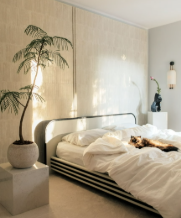
There’s something deeply personal about a bedroom.
It’s the one place in your home where the outside world fades away where noise turns into silence, stress softens, and you finally get to be yourself. But here’s the truth most people don’t realize:
A bedroom doesn’t automatically feel peaceful just because it looks “nice.”
I learned this the hard way.
For the longest time, my room looked decent on the surface. The bed was comfortable, the sheets matched, and the lighting was warm enough. But something always felt… off. It didn’t feel like a retreat. It felt like a setup almost staged, but not lived in.
That’s when I came across the idea of stormuring.
At first, the word sounded unfamiliar. But the concept behind it changed everything for me.
Stormuring is the art of intentionally designing your personal space to calm mental “storms” blending aesthetics, emotion, and function into one cohesive experience.
And once I understood that, everything started to click.
If you’re trying to create a bedroom that doesn’t just look good but feels right, this guide will walk you through exactly how to do it step by step.
What Is Stormuring (And Why It Matters)?
Before we dive into tips, let’s understand the idea properly.
Think of your mind at the end of a long day.
It’s cluttered. Busy. Loud.
Now think about walking into a room that instantly makes you exhale not because it’s trendy, but because it feels aligned with you.
That’s stormuring.
It’s not about copying Pinterest rooms or buying expensive decor. It’s about designing a space that quietly supports your emotional state.
And surprisingly, one of the biggest factors in achieving this is something many people overlook:
Your walls.
1. Start With Proportion: The Foundation of Visual Calm
One of the most common mistakes people make is choosing wall art that’s either too small or awkwardly sized.
I’ve done it myself bought a beautiful piece online, hung it up, stepped back… and immediately regretted it.
It didn’t matter how nice the artwork was. It just didn’t belong.
Here’s a simple rule that changed everything for me:
Wall art should occupy around 60–70% of the space it’s placed in.
But here’s the nuance most guides don’t tell you:
- If you want a minimalist, airy look, go slightly smaller (around 50–55%)
- If you want a bold focal point, go larger (closer to 70%)
For example:
- Above a bed → a wide horizontal piece works best
- Narrow wall → vertical artwork elongates the space
- Large blank wall → multi-panel designs create balance
A trick I personally use?
Cut paper to the size of the artwork and tape it on the wall.
It might feel a bit silly, but it saves you from wasting money and instantly shows whether something feels right.
2. Style Alignment: Don’t Let One Piece Ruin the Room
This is where most people unknowingly break the “stormuring” effect.
You see something beautiful online. You buy it. You hang it.
And suddenly, your entire room feels disconnected.
Why?
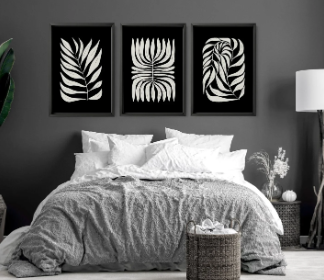
Because beauty alone isn’t enough compatibility matters more.
Your wall art should feel like a natural extension of your room, not something fighting for attention.
Here’s how to think about it:
- Minimal / Scandinavian rooms
→ Soft abstracts, line art, neutral tones - Classic / Vintage rooms
→ Oil paintings, textured artwork, warm palettes - Nature-inspired spaces
→ Landscapes, botanical prints, earthy tones
One mistake I made was adding a bold, high-contrast painting to a soft-toned bedroom.
Individually, it was stunning.
In my room? It felt loud and uncomfortable.
The moment I replaced it with something subtle, everything changed. The room finally felt cohesive and more importantly, calming.
3. Color Psychology: The Secret Behind a Relaxing Space
Color has a powerful psychological impact especially in a bedroom.
At first, I underestimated this.
I thought if something looked good, it would feel good.
Not true.
Bright, saturated colors can actually create tension over time even if they seem exciting at first.
For stormuring your space, follow this simple principle:
Stick to the same color family + keep saturation low.
What this means:
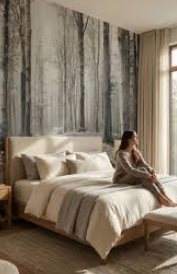
- Choose artwork that blends with your room’s base colors
- Add only subtle variations (like soft blues, muted greens, or warm neutrals)
- Avoid harsh contrasts unless used very intentionally
For example:
If your room is gray and white:
→ Add art with soft blue or beige accents
If your room is dark:
→ Use lighter artwork to balance the mood
Things to avoid:
- Neon or overly bright colors
- Too many conflicting tones
- Artwork that feels visually “busy”
The goal isn’t to impress it’s to relax.
4. Add Personal Meaning: This Is What Makes It Yours
Here’s something no trend can replace:
Personal connection.
You can have the most perfectly designed bedroom in the world but if it lacks personality, it will still feel empty.
Stormuring isn’t about perfection. It’s about presence.
Some of the best additions you can make:
- Travel photos
- Personal memories
- Artwork that reflects your interests
- Handmade or meaningful pieces
I have a friend who framed simple photos from her trips.
They weren’t professional. They weren’t “aesthetic” in the traditional sense.
But every time she looked at them, she smiled.
And honestly, that’s more valuable than any expensive artwork.
Because at the end of the day, your bedroom isn’t a showroom.
It’s your space.
5. Lighting: The Detail That Changes Everything
Lighting is often treated as an afterthought.
But in reality, it can completely transform how your room feels
especially your wall art.
I realized this when I placed a painting in a dim corner.
During the day, it looked fine.
At night? It looked dull, flat, almost lifeless.
The moment I improved the lighting, it felt like a completely different piece.
Here’s what works best:
- Use soft, warm lighting (around 3000K)
- Avoid harsh white lights
- Never place art in dark, neglected corners
- Add a small spotlight above key pieces
Also, avoid direct sunlight it can fade artwork over time.
Good lighting doesn’t just make things visible.
It adds depth, warmth, and atmosphere all essential for stormuring.
6. Balance Over Perfection: Let the Room Breathe
One mistake people make when decorating is trying to “fill everything.”
Every wall. Every corner.
But stormuring works differently.
It values balance over completeness.
Sometimes, leaving space empty creates more calm than filling it with decor.
Think of your room like a conversation.
If everything is speaking at once, it becomes noise.
But when there’s silence between elements it feels intentional.
So don’t rush to decorate every inch.
Let your space evolve naturally.
7. Create a Focal Point (But Keep It Gentle)
Every well-designed bedroom has a focal point.
Usually, it’s the wall behind the bed.
But here’s the key:
Your focal point should guide the eye not overwhelm it.
Instead of loud, dramatic pieces, choose something that:
- Draws attention softly
- Complements the room
- Feels calming rather than intense
Stormuring isn’t about drama.
It’s about subtle impact.
Final Thoughts: Stormuring Is About Feeling, Not Just Design
After experimenting, making mistakes, and redoing my space more times than I’d like to admit, I’ve realized something simple:
A bedroom isn’t successful because it looks perfect.
It’s successful because it makes you feel at peace.
Stormuring is just a way of getting there.
By focusing on:
- Proper sizing
- Style harmony
- Calm color palettes
- Personal meaning
- Thoughtful lighting
You’re not just decorating a room.
You’re creating an environment that supports your mental and emotional well-being.
And honestly?
That’s something no trend can replace.